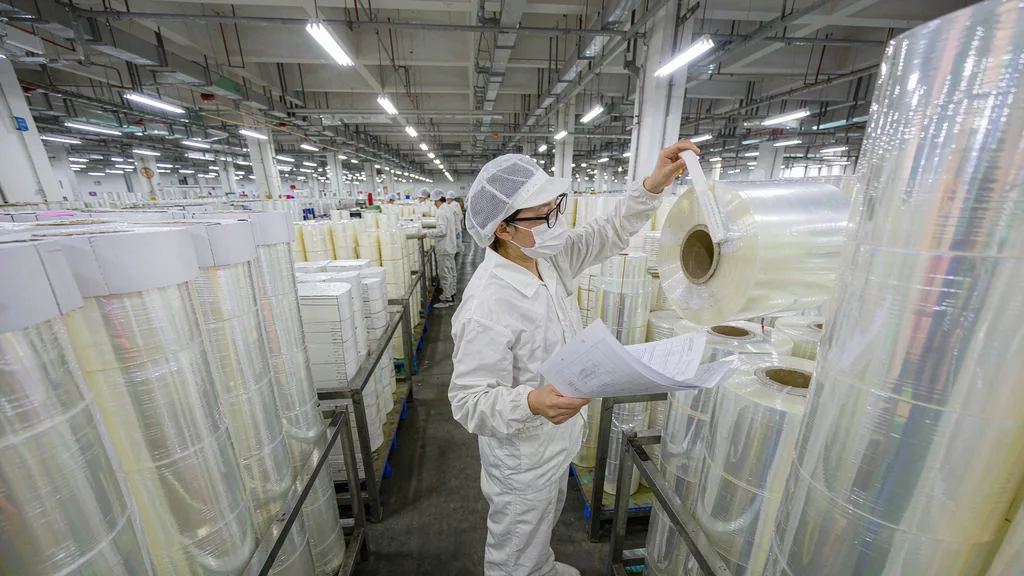

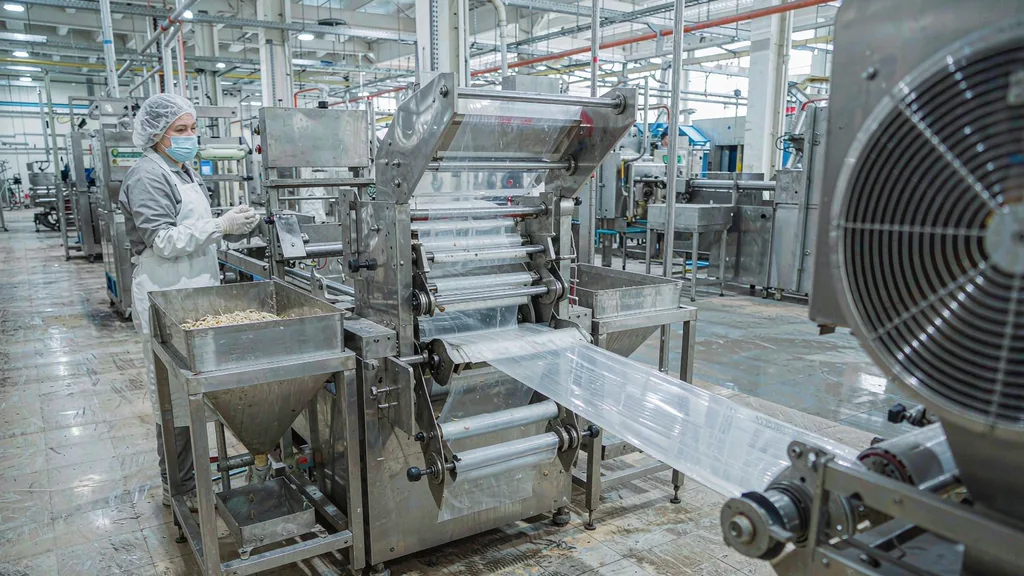
A packaging line changeover usually takes 30 to 90 minutes, and only a third of that is mechanical work. The rest is warm-up, first-off approval and searching for parts. Cutting the mechanical share is easy; cutting the rest requires separating internal from external tasks before the line stops.
Where changeover time actually goes
Most factories measure changeover as one number: last good pack of format A to first good pack of format B. That number hides four distinct phases with different cost structures.
- Teardown, 8–20 minutes: film removal, former and jaw changes, cleaning of product contact parts.
- Setup, 10–30 minutes: new film threading, recipe recall, parameter entry, gauge and date coder change.
- Warm-up and stabilisation, 10–25 minutes: jaw temperature recovery, film tracking, seal pressure settling.
- First-off approval, 5–20 minutes: seal inspection, weight checks, line clearance sign-off.
Only the first two respond to classic lean tools. The third is physics, and the fourth is a quality decision that should not be compressed without evidence.
Why warm-up cannot simply be skipped
Seal jaws are metal blocks with significant thermal mass. After a format change they are cold, and a cold jaw produces a seal that looks acceptable but has peel strength well below specification. On a vertical form-fill-seal machine with 8 mm jaws, reaching a stable jaw face temperature can take 10 to 25 minutes.
There is a temptation to run film through during warm-up to save time. This produces scrap, and worse, it can produce packs that pass visual inspection and fail in distribution three weeks later. If warm-up scrap is a real cost, the fix is a second set of jaws kept at temperature, not a shorter warm-up.
The parameters that drift after a format change
Three settings drift most often, and all three affect seal integrity more than appearance:
- Dwell time, because a new format usually means a different line speed, and dwell is derived from speed on most machines.
- Seal pressure, because a different film gauge needs a different pressure to displace air at the interface.
- Film tension, because a new roll diameter changes unwind tension and therefore how the film sits in the jaws.
Recording these three values per format, and verifying them after every changeover rather than trusting the recipe recall, prevents most start-up leakage.
Separating internal from external work
The single highest-return change in most plants is moving preparation off the line. The table below shows a typical split for a food factory running four pouch formats on one machine.
| Task | Internal (line stopped) | External (line running) |
|---|---|---|
| Retrieve formers and jaws | No | Yes, staged in changeover cart |
| Clean product contact parts | Yes | No |
| Thread new film | Yes | Partly: pre-splice and stage the roll |
| Enter recipe and parameters | Yes | Yes, pre-load and verify |
| Jaw warm-up | Yes | Partly: pre-heat spare jaws |
| Gauge and coder change | Yes | Yes, pre-set offline |
| First-off seal inspection | Yes | No |
Simply staging a changeover cart with the correct formers, jaws, gauges and film for the next format typically removes 10 to 15 minutes of walking per change. Colour-coding by format prevents the wrong former being fitted, which is a more expensive error than a slow change.
Standardise the sequence, not just the parts
A written changeover sequence with a fixed order of operations makes the task trainable and makes deviations visible. The critical ordering rule is that film must be threaded only after the jaws are at temperature, otherwise the film takes a set that causes tracking problems for the first hundred packs.
Film choices that shorten changeovers
Film specification is often treated as a purchasing decision, but it directly affects switch time.
- Consistent gauge across formats. If every format runs on the same film gauge, seal pressure and dwell change less between products.
- Wide heat-seal window. A sealant that seals across a 30 °C range tolerates warm-up imprecision far better than one with a 10 °C window. Ask for the seal curve, not just a recommended temperature.
- Reliable surface treatment. Film with inconsistent dyne level causes ink and adhesive failures that show up as print defects after a changeover, sending operators back to adjust settings that were never wrong. Our guide to corona treatment and dyne levels explains how to check incoming film before it reaches the machine.
- Peelable versus locked seals. Switching between peelable and permanent seals on the same line is a film change, not a jaw change. If both are needed, treat them as separate formats with separate approval steps, as described in this peelable film guide.
Roll splicing and the tail end of a run
A surprising share of changeover time is spent waiting for the last metres of a roll. Pre-splicing the next roll during the run, or specifying a roll length matched to the batch, removes that wait. For short runs, roll length is a specification item: a 3,000-pack batch does not need a 6,000-pack roll.
Brands that run frequent small batches should look at how short-run production changes film and plate economics, because the changeover cost per unit is what makes small runs expensive, not the film price. The same logic applies to kraft paper pouch structures, where a paper facing adds a separate set of tension settings.
First-off approval: what to check and in what order
First-off approval is not a formality. It is the only point where a wrong setting can be caught before thousands of packs are made. A workable sequence:
- Seal appearance at 10x magnification: no channels, no product in the seal, continuous imprint across the full width.
- Peel test by hand: the failure should be cohesive within the sealant, not adhesive at the interface.
- Burst or vacuum decay test on three packs: confirms the whole seal, not just the visible edge.
- Weight check on five consecutive packs: confirms fill consistency after a format change.
- Film tracking over 50 packs: confirms the film is not creeping, which often only appears after warm-up.
- Code legibility and position: a changeover is when date codes land in the wrong place.
Record the actual measured values, not tick boxes. A tick box tells you someone looked; a number tells you whether the line was capable at that moment.
When a longer changeover is the right answer
Not every minute saved is worth saving. Three situations justify a slower change:
- Allergen changeovers. Cleaning verification takes as long as it takes; compressing it creates a recall risk that dwarfs any labour saving.
- First run of a new format. The first changeover to a new format should include a full seal validation, not just a first-off check.
- After maintenance on the sealing system. Jaw parallelism and pressure calibration need re-verification, and that takes time.
The goal is not the shortest possible changeover. It is the shortest changeover that still produces a seal you can defend with data.
Frequently Asked Questions (FAQ)
What is a good changeover time for a packaging line?
For a single-lane vertical form-fill-seal machine changing pouch format, 20 to 40 minutes is a realistic target after internal and external tasks are separated. Multi-lane machines and lines with printed film registration typically need 45 to 90 minutes.
Why do seals fail right after a changeover?
The three usual causes are cold jaws, incorrect dwell time for the new line speed, and film tension that has not settled. All three produce seals that look complete but have low peel strength, so the failure appears days or weeks later.
Can we reduce changeover time by running the line during warm-up?
Running film during warm-up increases scrap and risks packs with weak seals entering the market. A better option is a spare set of jaws kept at operating temperature, which removes most of the warm-up wait without compromising seal quality.
Does film gauge affect changeover time?
Yes. Moving to a thicker film requires higher seal pressure and often a different jaw gap, adding adjustment time. Standardising on two or three gauges across a product range reduces the number of parameters that change between formats.
How many packs should be checked at first-off approval?
A practical minimum is three packs for destructive seal testing, five consecutive packs for weight, and 50 packs for film tracking. A new format needs a full seal validation before release.
Do we need a dedicated team for changeovers?
Operators should own the changeover, with a technician available for sealing adjustments. A separate team removes ownership of seal quality from the people who run the line.
How do we measure changeover improvement without hiding quality losses?
Track changeover time, first-off reject rate and leakage complaints together. A changeover time that falls while leakage complaints rise is not an improvement, it is a transfer of cost to the customer.