
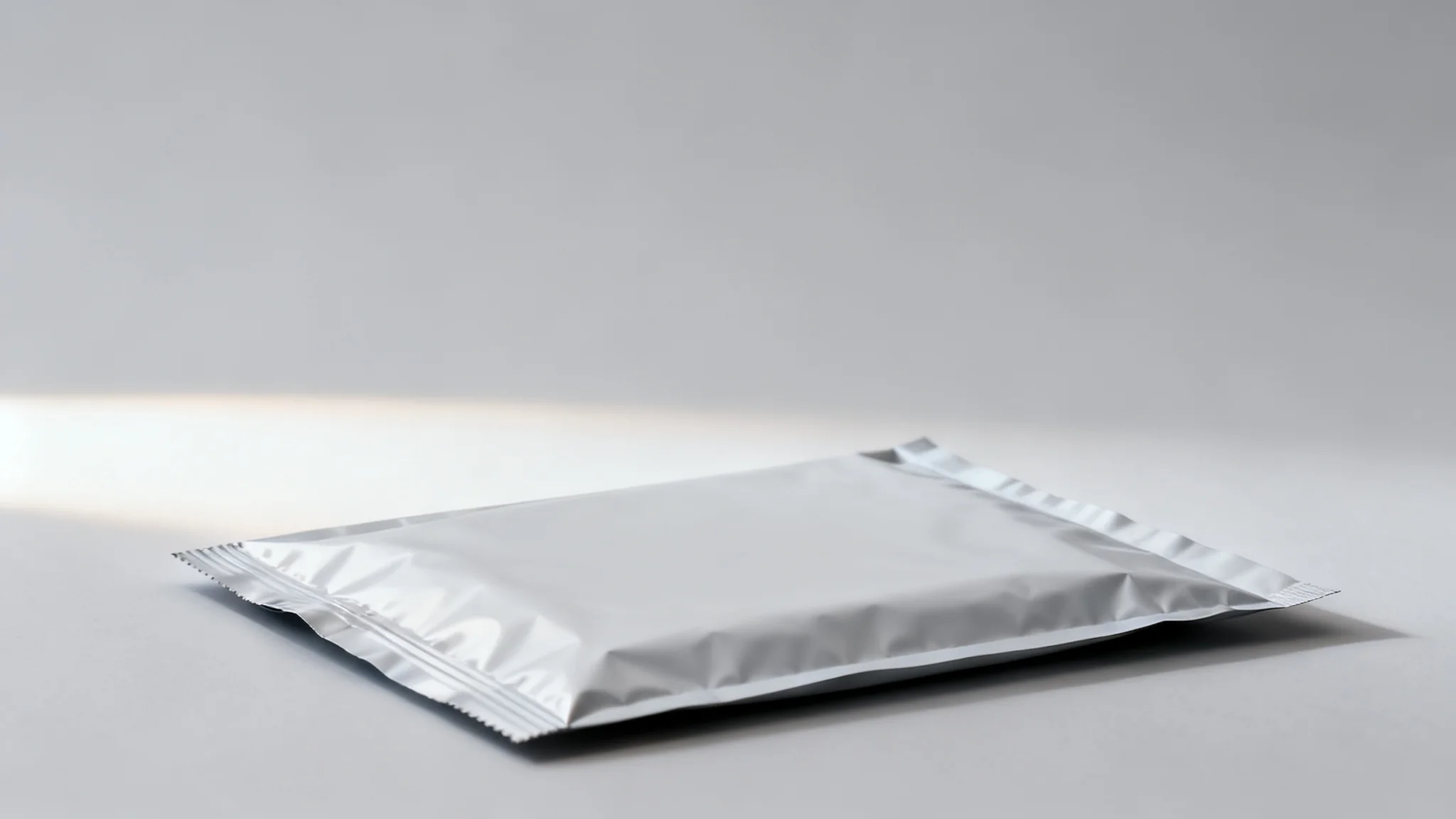
A mailer bag drop test does not predict every parcel outcome, but it reliably exposes the three failure points that dominate real sorting damage: seal edges that open under impact, film that is too thin for corner loads, and bag geometry that lets corners take the whole hit. ISTA 3A packages these hazards into a defined sequence for single parcels moved through a carrier network, which makes it the most practical screen a mailer buyer can run before committing to a production lot.
What Does ISTA 3A Actually Replicate?
ISTA 3A is a general simulation test for parcels shipped through a small-parcel network. It combines a drop sequence, conditioning for atmospheric exposure, and vibration input, so the sample experiences a compressed version of the warehouse-to-door journey rather than one isolated hazard. The value is in the sequence: a bag may pass a single flat drop and still fail after conditioning softens the sealant, or after vibration works the flap loose. Running the sequence in order catches interactions that single checks miss.
Interpreting the standard is straightforward on its official ISTA test procedures page, and the practical takeaway for mailer buyers is simple: the test is a screen for design weakness, not a certificate that every parcel arrives perfect. Networks differ in handling intensity, products differ in fragility, and the test population is always a sample. What a pass does give you is a common language with the supplier: failures can be discussed by location and mechanism instead of by anecdote, which shortens the correction loop considerably.
Key Takeaways
- Seal edges fail before film faces in most drop tests, so inspect edges first after every drop.
- Film thickness sets the puncture margin, but gauge tolerance at the bag edges matters as much as nominal gauge.
- Corner failures point to bag geometry and inner protection, not automatically to stronger film.
- Test filled bags from a real production lot; empty film samples hide the failure modes the test exists to catch.
How Do Seal Edges Fail in a Drop Test?
Two mechanisms dominate. The first is peel initiation: an impact flexes the bag, and a seal with a weak or contaminated start peels a few millimeters, which then unzips under subsequent handling. The second is bond insufficiency: the sealant layer never reached full bond strength during conversion, so the seal separates cleanly at low stress. You can tell them apart after the test. Clean separation with smooth surfaces points to conversion conditions; fibrous tearing with partial peel points to design and stress concentration.
When a seal fails, the follow-up measurement is seal strength characterized under ASTM F88/F88M, which quantifies the force the seal carries and shows if the failure was marginal or fundamental. Pair that measurement with the drop observations and the corrective action usually becomes obvious: sealing temperature and dwell for bond issues, seal width or corner design for stress issues.
Does Film Thickness Decide the Outcome?
It decides part of the outcome. Thicker film raises the puncture margin for dense or sharp contents and reduces the chance that a corner punches through the face. But a mailer bag drop test also shows the opposite failure: bag film that is thick yet brittle in cold or conditioned conditions can crack at folds, and film that is thin but well supported by an inner carton can pass. Treat gauge as one variable in a system that also includes seal quality, bag size relative to contents, and the inner packaging that ships with the order. A change in any of these shifts the drop outcome, which is why fixing thickness alone rarely resolves a repeat failure.
The check that matters is gauge consistency across the bag. Ask the converter for the tolerance they hold, then verify with a few spot measurements on samples from the actual lot, including the edge areas where film thins. A nominal specification that drifts thin at edges will fail the corner drops even though the data sheet looks comfortable.
Where Do Corners Give Way First?
Corners fail where three conditions meet: a dense item, a tight bag, and a drop onto the corner orientation. The film stretches, the item migrates to the corner, and the impact concentrates on a few square millimeters. The fix is rarely more film alone. A slightly larger bag with the item centered, a simple inner sleeve, or a corner-focused fold in the bag design each spread the load. During testing, record which corner orientation failed, because a repeated single-orientation failure is a geometry signal, not a material signal.
Test Setup Checklist
- Samples from one production lot, not hand-made prototypes, with the closure applied as in production.
- Bags filled with the real product or a mass-and-shape replica, including any inner carton the order normally carries.
- Conditioning of samples before the sequence, so sealant behavior reflects the shipping climate.
- A failure record sheet that notes drop orientation, damage location and seal condition after each step.
- Agreement in advance on what counts as failure: product damage, seal opening, film puncture or flap release.
Conclusion
This guidance applies to anyone shipping single parcels through a carrier network and deciding the bag specification before production. Run the mailer bag drop test as a design screen, read the failures by location, and respond with the matching correction: seal measurements for edge failures, gauge and tolerance checks for face punctures, and geometry or inner protection for corner damage. Buyers who test one filled production lot before scaling rarely repeat a field failure; buyers who approve on appearance alone usually fund the same lesson twice. For context on how mailers fit into wider protection strategy, compare the service and solutions overview, shortlist formats in the flexible packaging types catalog, and read the export packaging damage prevention guide for the layering logic around the mailer itself.
Frequently Asked Questions
Does passing ISTA 3A guarantee no damage in every parcel network?
No. A mailer bag drop test under ISTA 3A screens the design against a defined simulation of parcel handling, which is why it catches seal, film and corner weaknesses so consistently. It does not reproduce every route, climate or carrier practice. Treat a pass as permission to scale with a defined baseline, and keep a small reserve of tested lot samples for comparison when field claims appear.
Should bags be tested empty or filled?
Filled, always. Empty film samples cannot show corner loading, seal peel under product mass, or puncture from the contents themselves. Use the real product when possible, or a replica matched in mass, hardness and edge sharpness. Include the inner carton or sleeve that ships with the order, because it changes where the load lands and often decides the outcome for the corner.
How many samples does a meaningful drop test need?
A small set from one production lot is enough to expose design weaknesses, provided the set covers the drop orientations in the sequence. If every sample fails at the same seal corner, one more sample will not change the conclusion. Scale the sample count with the value at risk: a higher-volume launch justifies more samples and a written failure record, not because the test needs them but because the evidence supports supplier discussions later.
What should you send the supplier after a failed mailer bag drop test?
Send the failure record: photos of each damage location, the drop orientation, the lot identification and a short note on bag conditioning. A supplier who receives a structured mailer bag drop test report can map the failure to conversion parameters within one review cycle, while a supplier who receives only the claim must guess between film, sealing and design causes, and the correction usually arrives one iteration late.