

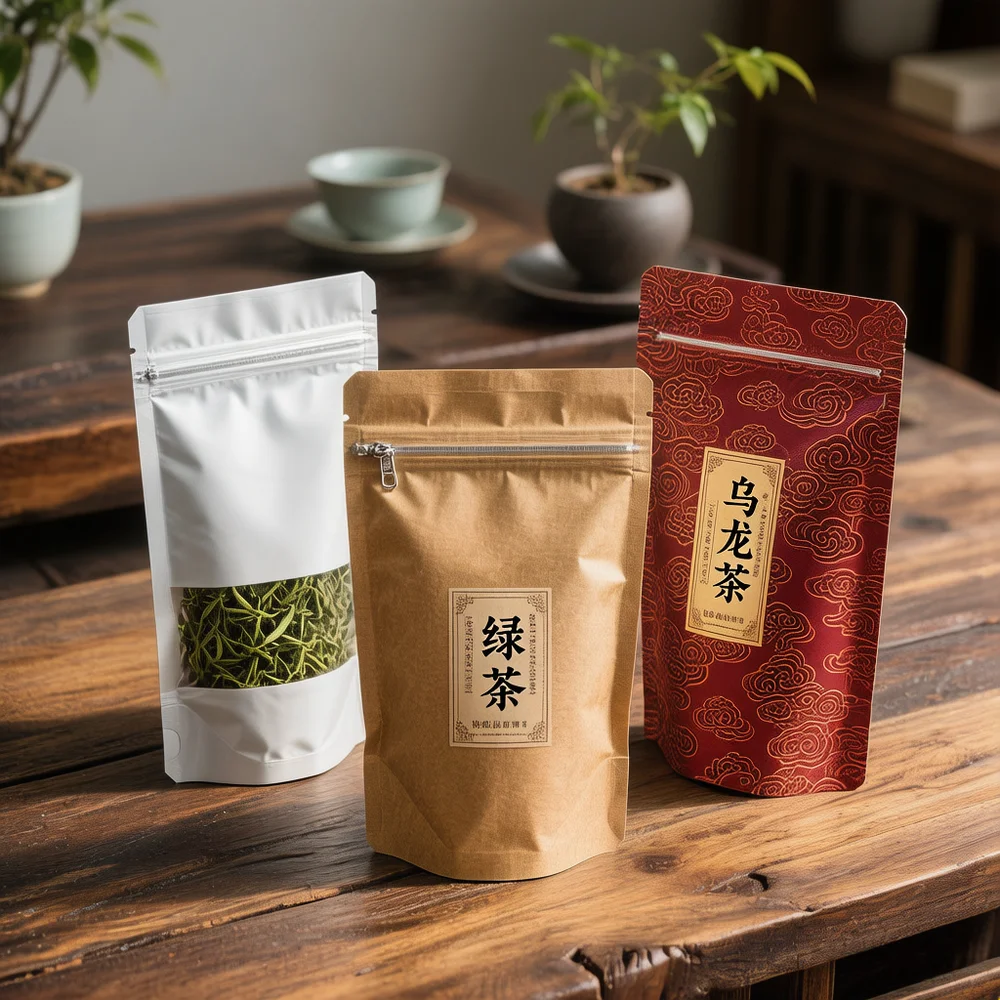
Custom tea pouch packaging is a topic every tea brand encounters when it upgrades its product line. Whether you are a specialty tea brand just entering the market or an established tea company moving several tons of product a year, the right custom pouch solution has a direct influence on freshness, brand presentation and repeat purchases. This guide walks through the four dimensions that matter most: material selection, pouch type comparison, freshness technology and functional configuration.
1. Why is custom tea pouch packaging different from other food packaging?
Tea is an agricultural product that reacts strongly to its surroundings. Light, oxygen, humidity and nearby odors can all accelerate quality loss, so custom tea pouch packaging cannot simply copy a standard food packaging design. It demands material selection and structural engineering tailored to how tea actually behaves.
Tea also carries strong cultural and brand associations. When consumers choose tea, they respond to the texture, design language and storytelling of the packaging. A well-designed tea pouch does more than protect the product – it communicates the brand’s narrative and the tea’s origin.
The wide range of tea categories – green tea, black tea, oolong tea, pu-erh tea, flower tea and more – creates very different packaging requirements. Green tea needs light protection and moisture resistance, pu-erh tea needs breathability so it can age, and flower tea needs a tight seal to keep aromas from mingling. Custom tea pouch packaging therefore has to be designed differently for each tea type. For more packaging selection knowledge, refer to our earlierGuide to Choosing Among 6 Types of Plastic Packaging.
2. Step one of custom tea pouch packaging: choose the material structure
Material is the core factor that determines how well custom tea pouches preserve freshness. Different tea types place very different demands on barrier performance:
Kraft paper/aluminum foil/PE: the classic high-barrier structure
This is the most common lamination structure in custom tea pouch packaging. The kraft paper outer layer provides a natural touch and appearance, the aluminum foil middle layer blocks nearly all oxygen and light, and the PE inner layer delivers reliable heat sealing. Working as a system, the three layers hold back light, oxygen and moisture, which suits green tea, black tea, oolong tea and other teas that need strict freshness protection.
PET/aluminum foil/PE: a high-transparency display solution
If you want consumers to see the shape and color of the tea leaves through the packaging, choose a PET outer layer instead of kraft paper. PET offers high transparency and good printability, so the front panel can carry large visual designs. Note, however, that a transparent structure cannot block light on its own – an outer box or an aluminum foil inner liner is needed to make up for it.
Mono-material recyclable structures: a new choice under the eco-friendly trend
With environmental awareness growing, all-PE and all-PP mono-material recyclable structures are becoming a new direction in custom tea pouch packaging. These structures close the performance gap with high-barrier coatings while keeping the whole pouch recyclable. If your tea brand targets export markets or positions itself around environmental values, this is a solution worth considering. To understand the brand value of eco-friendly packaging, readAn Analysis of Premium Tea Packaging Pricing Strategies.
3. Step two of custom tea pouch packaging: choose the pouch type
Pouch type has a direct effect on how tea packaging displays and how consumers experience it. Three pouch styles suit tea products particularly well:
Side-seal gusset pouch: stable standing, excellent desk display
The side gussets of a side-seal gusset pouch expand naturally after filling and form a stable triangular base, which makes it ideal for long-term display on tea tables, desks and similar surfaces. Compared with traditional center-seal pouches “that are finished and thrown away”, a gusset pouch acts more like a permanent brand presence on the desk – every time consumers brew a cup, your brand receives a quiet impression.
Eight-side seal flat-bottom pouch: the first choice for premium tea
The eight-side seal pouch uses a bottom plate to stand as steadily as a box once it is filled. It offers the largest display area of any format – the front, sides and bottom can all carry brand printing. For premium tea products displayed on shelves in specialty supermarkets or tea stores, the eight-side seal pouch is the first choice among premium custom tea pouch solutions. The side panels can also carry origin stories, brewing guides and other content, giving the brand more room to tell its story.
Three-side seal pouch: an economical choice for small-weight trial packs
Three-side seal pouches have a simple structure and the lowest cost, which makes them a natural fit for 5g-10g trial packs and travel packs. Many tea brands use three-side seal pouches for new-product samplers, tempting consumers to try before they buy the full size. If you plan to launch a multi-flavor sampler set, three-side seal pouches are the most cost-effective option. For more pouch type comparisons, refer tothe Custom Coffee Pouch Packaging Guidefor its pouch type analysis.
4. Step three of custom tea pouch packaging: freshness technology configuration
Freshness technology configuration directly determines the shelf life of the tea and how well its flavor holds up:
Oxygen absorbers and desiccants: the standard for extending freshness
Most custom tea pouches contain oxygen absorbers and desiccants. The oxygen absorber removes residual oxygen to stop oxidation, while the desiccant controls humidity and prevents moisture damage. Used together, the two can extend green tea freshness from 1 month to more than 6 months.
Vacuum packaging: suitable for compressed tea and small-weight products
Vacuum packaging removes the air from the pouch so the tea has minimal contact with oxygen. This approach suits compressed tea products such as pu-erh cakes and white tea cakes, as well as 5g-20g small packs. Note that vacuum packaging is not appropriate for teas that need natural aging, such as some raw pu-erh varieties.
Nitrogen-flushed packaging: a flavor-locking solution for premium tea
Nitrogen-flushed packaging replaces the air inside the pouch with high-purity nitrogen, eliminating oxygen without applying the compression that vacuum packaging puts on tea leaves. This solution is widely used for premium green tea and famous tea categories; although it costs more, the freshness result is clearly better than ordinary sealed packaging. For food packaging material standards, refer toAnalysis of food packaging materials and sanitary certification standards.
5. Step four of custom tea pouch packaging: function and design configuration
Beyond freshness, custom tea pouch packaging can integrate several features that improve the consumer experience:
- Resealable zipper:lets consumers reseal the pouch repeatedly after opening, keeping the remaining tea fresh. For packs over 50g, a zipper is close to a must.
- Transparent window:a partial transparent window on the kraft paper body lets consumers see the shape, color and condition of the tea leaves at a glance, boosting purchase confidence.
- Tear notch:laser scoring or a tear notch lets consumers open the pouch without tools.
- Inside printing:printing a brewing guide, origin story and tasting notes on the inside of the packaging gives consumers “an extra surprise”.
Functional configuration still has to be balanced against product positioning. Not every feature suits every product – over-configuration raises costs and weakens price competitiveness. We recommend choosing the smallest set of features that fits the core consumption scenarios of the tea category.
6. Recommended packaging solutions for different tea types
| Tea type | Recommended material | Recommended pouch type | Freshness solution | Special features |
|---|---|---|---|---|
| Green tea | kraft paper / aluminum foil / PE | Eight-side seal or gusset pouch | oxygen absorber + desiccant | Light protection + zipper |
| Black tea | PET / aluminum foil / PE | 8-side seal pouch | Oxygen absorber | Transparent window + zipper |
| Oolong tea | kraft paper / aluminum foil / PE | side gusset bag | oxygen absorber + desiccant | Inside brewing guide |
| Pu-erh tea | Cotton paper + kraft paper outer pouch | side gusset bag | No oxygen absorber needed (needs breathability) | Tear notch |
| Flower tea | PET / aluminum foil / PE | Three-side seal or stand-up pouch | Oxygen absorber (prevents odor mixing) | transparent window |
7. Frequently asked questions about custom tea pouch packaging
Q1: What is the minimum order quantity?
Digital printing starts at 1,000 meters (about 2,000-3,000 finished pouches); gravure printing starts at 10,000 meters. We recommend validating market response with small-batch digital printing first, then moving to high-volume gravure production. To learn about the advantages of digital printing, refer to our analysis of2026 Shanghai Packaging Exhibition digital printing trends.
Q2: How long does customization take?
Digital printing takes 7-10 working days; gravure printing takes 15-25 working days. The spring tea season (March-May) is the packaging procurement peak, so we recommend starting at least 30 days in advance.
Q3: How do you choose the printing process?
For mature products with stable annual volume, choose gravure to lower unit cost; for new product launches or brands with many SKUs, choose digital printing for flexibility. If your tea brand is still iterating and the logo or design may change every year, digital printing avoids the plate-making cost of each update.
8. Summary
Custom tea pouch packaging is a systematic decision that combines material matching, pouch type selection, freshness technology and functional configuration. Each dimension has to be weighed against the tea’s characteristics, brand positioning and target market. An excellent custom tea pouch solution should hit three goals at the same time: freshness protection, brand display and cost control.
PurestPack focuses on custom flexible packaging solutions for the tea, coffee and food industries. Whether you need small-batch digital printing to test the market or high-volume gravure production, we can provide a matching custom tea pouch solution. Visit ourtea packaging product pagefor more details. Your tea deserves packaging that matches it – and finding a professional custom tea pouch partner is often the first step in a brand upgrade.
For related technical articles, refer to our packaging knowledge base.
Questions about or need a custom packaging solution? Welcome toContact PurestPack. We offer one-stop service from material selection and structural design to printing sampling and mass production, and our professional team provides free customization advice.