

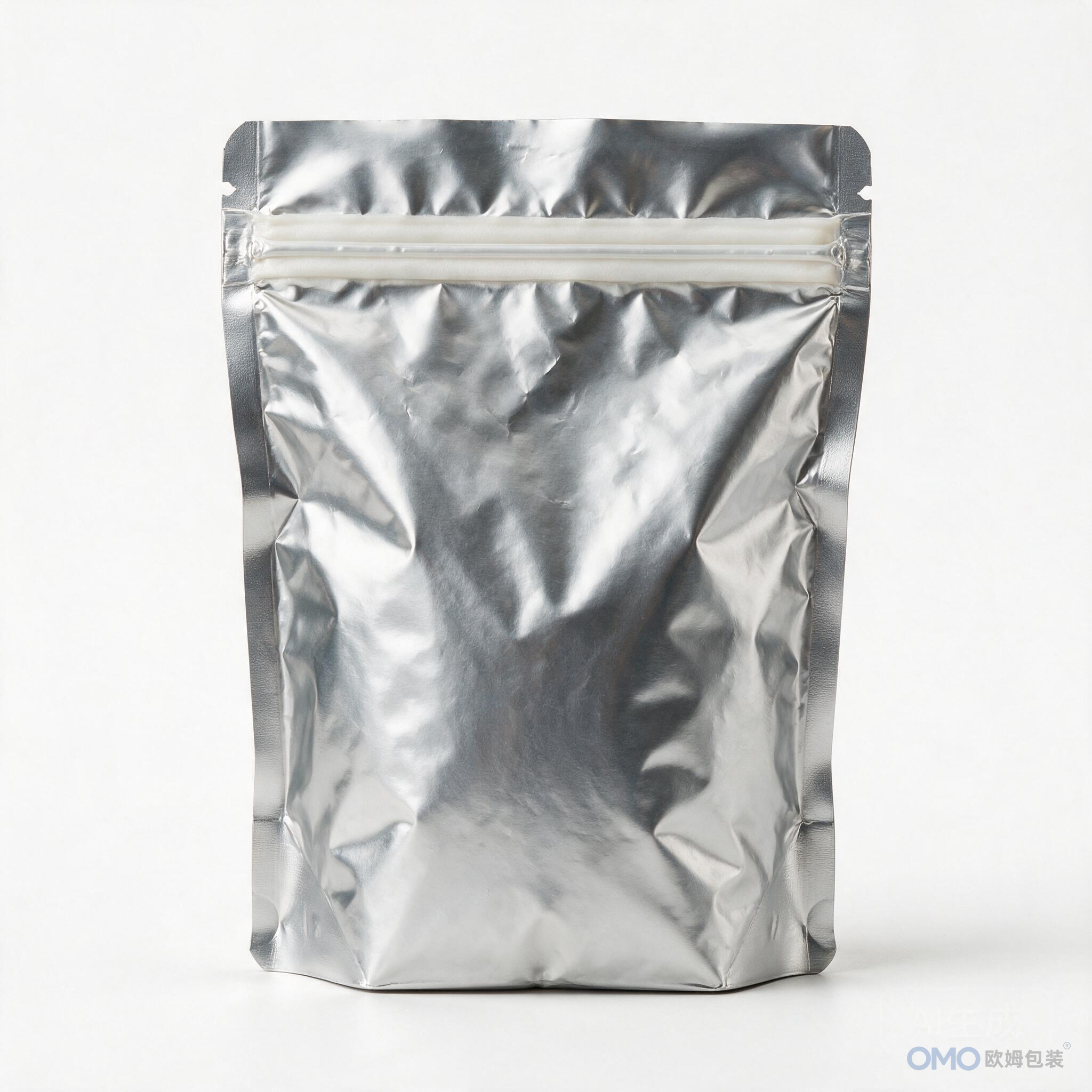
Foil pouches sit at the very top of the food packaging barrier hierarchy. From fresh coffee bean packaging to retort sterilization packs for high-temperature cooked meals, they guard quality and flavor with an almost total barrier. Yet many buyers struggle to explain the difference between pure foil and metallized pouches — the two names sound alike, but the products differ fundamentally in structure, performance and application. Read on for a side-by-side look at how the two compare.
The core difference between pure foil and metallized pouches
Both carry “aluminum”, yet their structures and manufacturing routes have almost nothing in common. Pure foil pouches use aluminum foil 6–9 microns thick — a continuous metal sheet rolled down from aluminum ingots and present in the laminate as its own separate layer. Metallized pouches, by contrast, carry an ultra-thin aluminum deposit (roughly 300–500 angstroms) vacuum-evaporated onto PET or CPP film — the aluminum is, quite literally, “plated” onto the plastic surface. Out of that single structural difference flow major gaps in barrier, transparency and price.
Barrier performance differences
The foil ply in a pure foil pouch is an unbroken metal sheet that shuts out nearly 100% of oxygen, water vapor, light and aroma — a true “total barrier” pack. Its oxygen transmission rate can approach 0 cm³/(m²·24h·atm), and that is precisely why no other material is trusted for ultra-oxygen-sensitive goods such as coffee, tea and pharmaceuticals. The metallized pouch’s aluminum layer is far thinner and pocked with micropores: it beats ordinary plastic film but trails pure foil by a wide margin, typically running 1–5 cm³/(m²·24h·atm) — the right territory for products with medium-to-high barrier needs. In PurestPack’s product system, we recommend foil or metallized solutions to customers based on their specific barrier requirements.
Foil pouch applications
Barrier defines the application map. Pure foil leads where protection is non-negotiable: whole-bean and ground coffee, where total exclusion of light and oxygen keeps the roast fresh; retort meals, where foil teams up with PA and CPP to survive 121°C sterilization; pharma and supplements, which demand rigorous moisture and oxygen control; and premium tea, particularly delicate high-aroma leaves that rely on foil to lock in fragrance. Metallized pouches, in contrast, serve mainstream snack, cosmetics and home & personal care packaging, where the trade-off favors cost and looks over maximum barrier.
The special role of foil pouches in coffee packaging
No product illustrates the value of foil better than coffee. Freshly roasted beans give off CO2 for days, while volatile aroma molecules drift away and oils oxidize into stale notes. A foil pouch carrying a one-way degassing valve lets the CO2 escape yet bars oxygen from entering — still the finest freshness system for coffee on the market. Pure foil and metallized versions are both popular here. If you are specifying packaging for a coffee product, refer to PET Materials in Food Packaging to understand what each layer in the laminate contributes.
How to choose foil pouches
Begin by defining the product’s barrier needs. Highly sensitive items — coffee, pharmaceuticals, retort food — justify pure foil; ordinary snacks and home & personal care can rely on metallized pouches and keep costs down. Second, weigh layer count and material combination: the common structures are PET/AL/PE, PA/AL/CPP and PET/AL/PA/PE, each with its own heat resistance and strength profile. Third, check sealing performance — the foil layer makes heat sealing harder, calling for the right adhesives and sealing parameters. Fourth, think about the end of life: pure foil pouches are difficult to recycle because of the foil layer, and metallized pouches, though they use less aluminum, are equally hard to separate for recycling.
Environmental challenges and solutions for foil pouches
The environmental drawback of foil pouches stems from their multi-layer construction. In pure foil pouches, the foil and plastic layers resist separation, shutting the pack out of traditional plastic recycling. Metallized pouches fare little better: the ultra-thin aluminum layer, though minuscule in quantity, still degrades the quality of recycled material. The industry is attacking the problem along two lines. One is high-barrier coating technology that replaces the foil layer with transparent oxide coatings (AlOx, SiOx), yielding recyclable, fully transparent high-barrier packaging. The other is chemical recycling, which breaks multi-layer structures back down into monomer feedstocks. Challenges notwithstanding, foil pouches — barrier performance being what it is — will remain the mainstream choice for premium food packaging for a long time to come.
Foil pouches are the “gold standard” of premium food packaging, with pure foil and metallized versions each owning their scenarios. Choosing the right foil solution means striking the best balance among barrier, budget and environmental requirements. Welcome to Contact PurestPack for a professional custom foil pouch solution, or visit our English official website www.purestpack.com for more global packaging solutions.