
A target fill weight does not determine a coffee bag’s dimensions by itself. Two coffees sold as 250 g packs may occupy different volumes, and the same pouch can feel very different once a zipper, valve and bottom gusset are added. Use the product and packing line to choose a starting format, then approve the dimensions with filled samples. This guide covers that sizing decision. For material and valve selection, see PurestPack’s whole-bean packaging guide.
Start with the coffee and the intended fill
Give the supplier the net weight you plan to sell, the actual coffee used for the trial, and whether it is whole bean or ground. Record the roast-to-pack interval and any degassing step. The amount of space the coffee occupies can vary between products, so a size chosen from net weight alone should remain a starting point.
Also identify the filling method. A manual filler, a vertical packing line and a premade-pouch line have different handling and sealing requirements. If you use a co-packer, ask for its acceptable pouch dimensions and a sample of the filled pack before finalising artwork. A visually attractive empty bag is not proof that it can be filled and sealed consistently.
Define every dimension before comparing bags
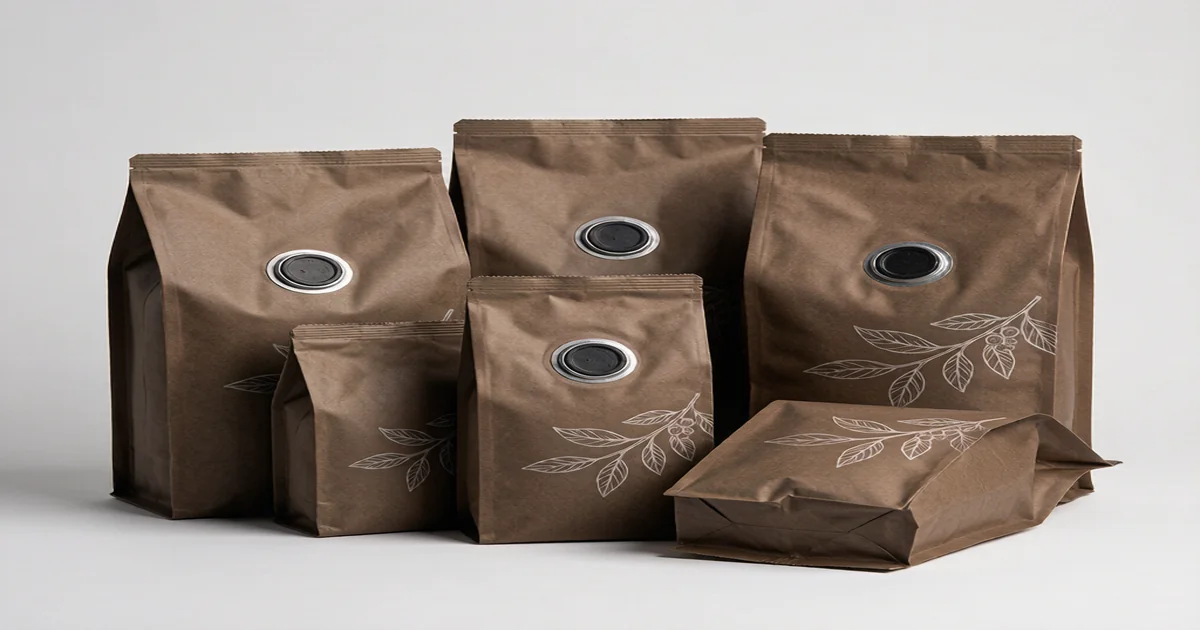
Ask for a dimensioned drawing of the proposed pouch. At minimum, confirm the finished width and height, the gusset or flat-bottom dimensions, and the space available above the filled coffee for sealing. Mark the positions of the zipper, tear notch and one-way valve if the design uses them. These features occupy space and can change the practical fill level even when two bags share the same stated width and height.
Agree how each supplier measures the pouch. A side-gusset, stand-up and flat-bottom bag are not described by the same two numbers alone. Request the usable internal space and print area on the drawing instead of assuming that an outside measurement equals fill capacity. Reserve room for the final seal and any line gripping or feeding requirements specified by the filler.
Use format ranges only to shortlist samples
PurestPack’s product catalog gives reference dimensions for several bag formats used with coffee. The ranges below describe catalog options, not a weight-to-size chart or a promise that every size in the range is available with every material, zipper or valve.
| Catalog format | Reference size range | What to confirm on the sample |
|---|---|---|
| Stand-up zipper pouch (S-02) | 120 × 200 to 260 × 350 mm | Bottom gusset, zipper clearance, fill level and top seal |
| Flat-bottom pouch (S-03) | 150 × 230 to 300 × 400 mm, including the bottom | Base geometry, filled stability and case packing |
| One-way-valve coffee pouch (F-07) | 125 × 230 to 250 × 350 mm | Valve position, clearance from seals and filled-pack pressure |
These are reference size ranges from specific catalog entries. Request an approved drawing for the actual bag structure before placing an order. If a zipper and valve are both required, their positions should be checked together on that drawing.
Approve the size with filled samples
Trial at least the intended coffee and net weight in each shortlisted bag. Fill through the production method you plan to use, close the bag as it will be closed in production, and examine the final seal area. The coffee should not crowd the zipper or final heat seal. Check whether the filled pouch stands or stacks as expected and whether the printed panel remains legible.
Then put filled samples through the handling that matters to your business: shelf display, carton packing and parcel delivery if you sell online. Record the selected dimensions, material, closure and valve position from the approved sample. If you change the coffee, target weight, bag structure or filling equipment later, repeat the fill and seal check before reusing the same artwork.
What to send for a useful size quotation
Send the target net weight, coffee form, filling method, preferred bag shape, closure and valve requirements, expected order quantity, target market and artwork status. Include any machine limits from your co-packer and photos or dimensions of a current pack if available. Ask the supplier to identify which dimensions are provisional until a sample is filled.
PurestPack offers digital and gravure printing for custom pouches. Digital printing starts at 500 pieces; for eligible orders, production takes 7–10 days after final artwork approval. Gravure printing starts at 5,000 pieces, with a 15–20 day production period after final artwork approval. Sampling, artwork changes and shipping add time, and the proposed size and printing route need project confirmation.
For the wider choice of format, materials and printing, use the coffee packaging guide. You can also compare PurestPack’s stand-up pouch and flat-bottom pouch services. When you have the intended coffee and pack weight, send the specification for a sample and quotation.
FAQs
Can I use the same bag size for whole beans and ground coffee at the same net weight?
Treat it as a candidate size, then fill samples with each coffee. Check usable space, zipper or valve clearance and the final seal before approving one shared specification.
Why do pouches with the same width and height hold different amounts?
Gusset and base geometry, seal allowances and component positions can change usable space. Compare dimensioned drawings and filled samples instead of relying on outside width and height alone.
How do I confirm that a size works on my filling line?
Ask the filler or co-packer for accepted dimensions and gripping or feeding requirements. Run the proposed pouch with the intended coffee and filling method before finalising artwork.
How should I check whether the filled pouch fits shipping cartons?
Pack filled samples in the intended carton. Check case fit, stacking and the handling expected for the sales channel, including parcels where relevant, before approving the format.
Does the printing MOQ apply across multiple bag sizes?
Digital printing starts at 500 pieces and gravure at 5,000 pieces. Send quantities for each proposed size and artwork, then confirm how the MOQ and printing route apply to that particular order.