

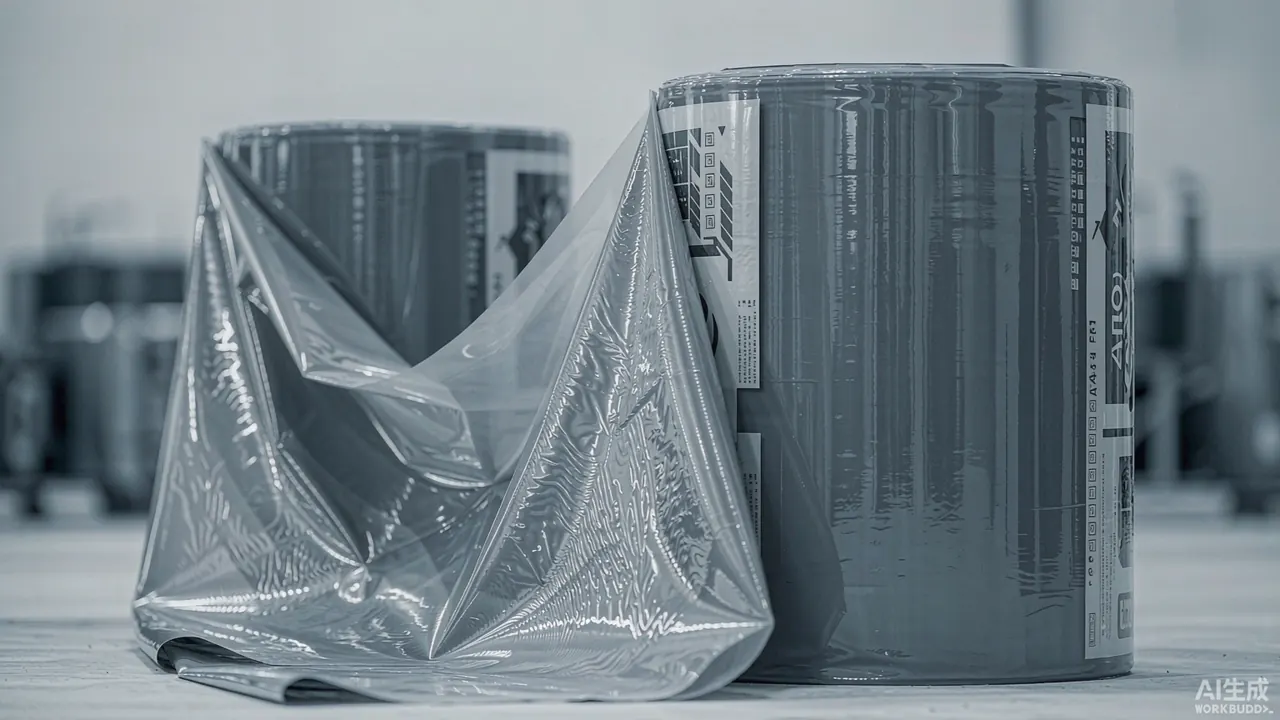
Most buyers spec a pouch by its format — stand-up, three-side seal, spout — and only find out later that the film structure is what actually decides shelf life, seal reliability and landed cost. The film is the part you cannot see once the bag is printed, yet it does nearly all the protective work. This guide walks through the four materials you will meet on almost every flexible packaging quote, what each one is good at, and how factories combine them into a laminate that fits your product.
Why film structure matters more than the bag shape
A flexible package is rarely a single layer. It is a laminate: two or three films glued or extrusion-coated together, each layer assigned a job. One layer carries the print, one provides the barrier, one forms the heat seal. Get the combination wrong and you get precisely the failures buyers complain about — flavor loss in coffee, brittle seals on freezer items, or a pouch that looks fine on the line and leaks in the carton two weeks later.
So before discussing formats, it helps to be fluent in the raw materials. The four below cover the large majority of custom flexible packaging.
PE (Polyethylene): the workhorse seal layer
Polyethylene, usually in the form of LDPE or LLDPE, is the most common inner layer because it seals easily at low temperature and resists moisture. If your product is dry or only mildly sensitive to oxygen, a PET/PE or BOPP/PE structure will carry it a long way at a reasonable cost. PE is also the material behind most recycled-content and mono-material initiatives, which matters if you sell into markets with recycling mandates. The trade-off is modest oxygen barrier and relatively low heat resistance, so PE alone is a poor choice for retort or long-shelf-life wet food.
PET (Polyester): the print and strength backbone
BOPET (biaxially oriented polyester) is the layer you print on in most laminates. It is dimensionally stable, takes gravure and digital ink well, and adds puncture resistance and gloss. A typical food pouch starts with a printed PET outer layer and bonds it to a PE seal layer. PET itself has only average barrier, so it is the supporting player rather than the protector — the barrier comes from what you put between or behind it.
PP (Polypropylene): the hotter, stiffer cousin of PE
BOPP and CPP show up where you need a higher seal temperature, better clarity, or a crisper hand-feel. PP is common in snack and confectionery laminates and in applications that pass through hotter filling lines. It is also a frequent choice for mono-material PP structures aimed at recyclability. The downside versus PE is a narrower sealing window, which puts a bit more pressure on the converter’s process control.
Aluminum foil: the barrier you reach for when nothing else is enough
When oxygen, light and aroma all have to stay out — think retort meals, sensitive powders, cured meats — aluminum foil is still the reference material. A PET/AL/PE laminate delivers near-total barrier in a thin, lightweight web. The cost is real: foil is pricier than metallized film, it cannot be mono-material recycled with today’s mainstream streams, and it demands careful handling because creases can fracture the barrier. For most products the question is not “do I want foil” but “do I need foil,” and that depends on how long the product sits and what it contains.
Building a structure: match the layer to the job
A useful habit is to read a laminate left to right as outer, barrier, seal. Print lives on the outer film (PET or BOPP). The middle is where barrier is engineered — foil, metallized PET, or an EVOH tie layer. The inner film is the sealant (PE or CPP), chosen so its melting point lines up with how the bag is filled and sealed. Our Packaging Materials section collects deeper write-ups on each resin, and the Flexible Packaging category covers how these structures show up in real formats.
For a concrete comparison of two seal-layer resins, the breakdown in this PA vs PE difference guide is a good companion read, since nylon layers behave very differently from polyethylene under drop and flex stress. And if your product is food, the selection logic in this food packaging bag selection guide maps barrier needs to specific bag types.
A short checklist before you request a quote
Before sending specs to a converter, pin down four things: the required shelf life and storage temperature, whether the fill is hot or ambient, how much oxygen and moisture the product tolerates, and any recycling or compliance mark the market demands. Those answers decide whether you need foil at all, whether PE is sufficient as a seal layer, and whether a mono-material structure is even on the table. Hand the factory a clear brief and you typically cut a round or two of sampling.
Bottom line
There is no single “best” flexible film — only the right combination for a given product, channel and regulation. PE wins on seal and cost, PET on print and strength, PP on heat and clarity, foil on barrier. Learn to read a laminate as outer-plus-barrier-plus-seal, and supplier quotes stop looking like a list of acronyms and start looking like engineering decisions. If you are scoping a structure for a specific SKU, share the product and shelf-life target and we will propose a laminate with test criteria attached.