

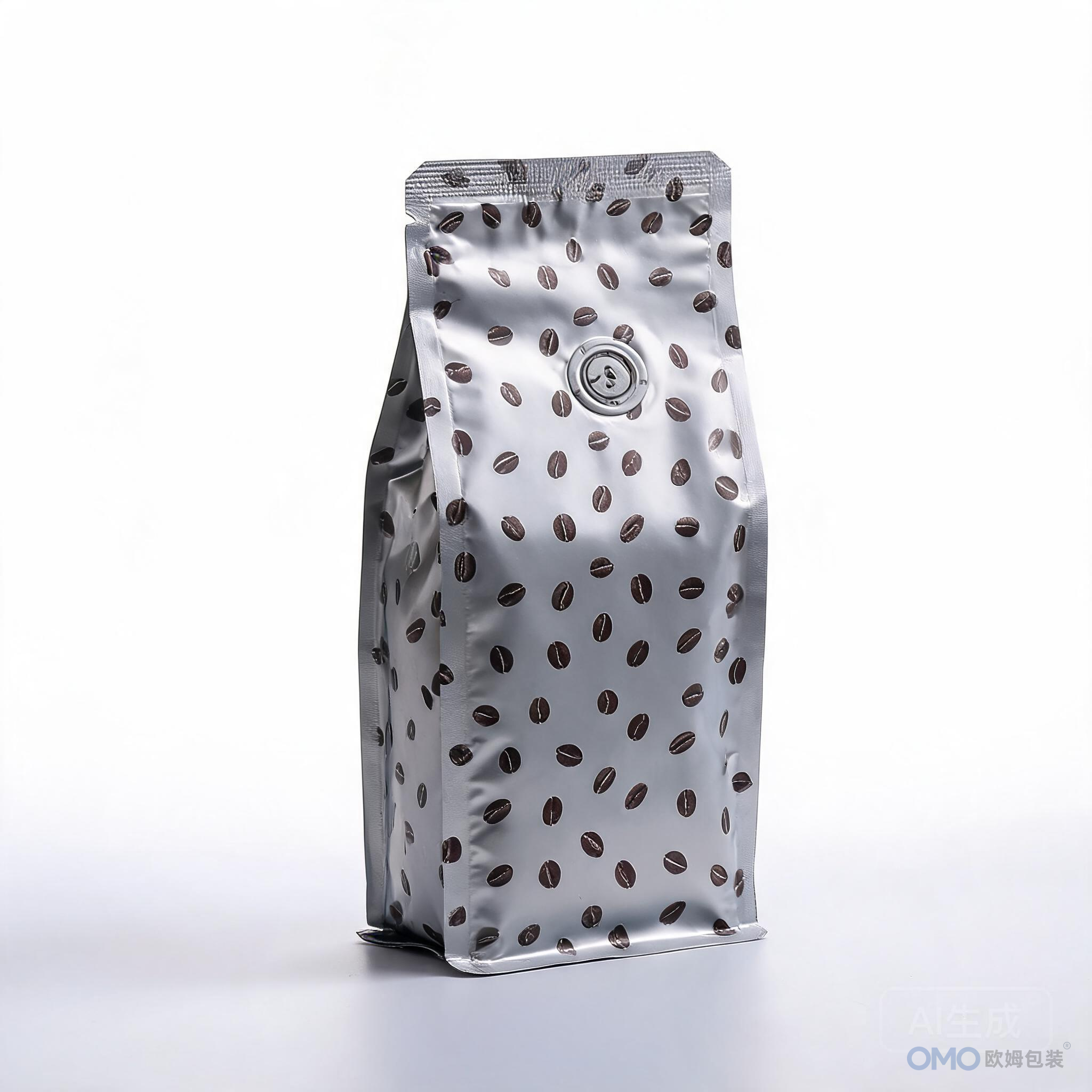
If you sell coffee, the pouch is one of the few investments that quietly shapes every customer’s first impression of your product. The same beans packed in a generic plastic bag and in a purpose-built coffee pouch can taste noticeably different weeks later — and look entirely different on the shelf. New coffee brands tend to ask the same three questions: which pouch format fits my beans, why does nearly every quality coffee pouch carry a small round valve, and what is that valve actually doing? Drawing on what we see daily on the factory floor, this guide breaks down coffee pouch structure, laminate selection, valve mechanics and the practical points worth checking before you place an order.
Why do coffee pouches need high-barrier materials? Starting with coffee’s “natural enemies”
A freshly roasted bean is chemically unstable. It keeps releasing carbon dioxide for days after roasting, while the oils and aromatic compounds on its surface start reacting with oxygen the moment they are exposed to it. Flat aroma, stale flavor and rancid oils all trace back to these two reactions. That sets the brief for any coffee pouch: keep oxygen and light out, and let gas escape from within. Nearly every decision about laminate structure and valve design follows from this pair of requirements.
Most specialty coffee pouches are therefore built on a three-layer laminate in which each layer has one job. The outer layer — PET or a matte-finish film — carries the print and gives the pouch enough stiffness to stand upright and look premium on a retail shelf. The middle layer is the barrier: aluminum foil or a metallized film that shuts out oxygen and UV light. The inner layer, typically PE or CPP, is the surface that heat-seals and touches the beans, so food safety is non-negotiable here. Foil-based laminates remain the reference standard for whole-bean coffee — for a closer look at the material side, see our article Complete Guide to Aluminum Foil Pouches.
Why is the degassing valve the “soul” of a coffee pouch? One-way valve principle explained
Degassing does not stop when the beans leave the roaster. In a fully sealed pouch, the accumulating CO2 keeps raising internal pressure: the pouch swells and deforms first, and in the worst case the seals give way entirely. Yet simply punching a vent hole trades one problem for another, because it gives oxygen a path straight back in. The degassing valve resolves this standoff elegantly — it is a one-way valve that opens automatically once internal pressure crosses a set threshold, releases the CO2, then reseals as the pressure drops, so outside air never travels inward.
In other words, a valved pouch lets coffee breathe out, never in. Valve quality varies more than most buyers expect, so it deserves a check before committing to a supplier: a food-grade silicone valve body, a stable and repeatable opening pressure, and performance that survives repeated pressurization instead of failing after the first few cycles. A cheap valve fails in either direction — it sticks shut and leaves the pouch ballooned, or seals poorly and lets oxygen creep back in. And since coffee pouches are usually opened more than once, most are paired with a resealable zipper; our The Complete Guide to Zipper Pouches walks through the options.
How to choose a coffee pouch? Match by product type
The right pouch depends on what you are actually selling. For whole specialty beans, the default choice is a foil-laminate stand-up pouch with a one-way valve, commonly sized from 250 g to 1 kg; matte printing and a small window add shelf presence without sacrificing barrier. For ground coffee, grinding multiplies the surface area exposed to air, so oxidation runs even faster — barrier requirements do not drop, and if you pack immediately after grinding, a vacuum pouch fitted with a one-way valve is another valid route. For drip bag coffee, the inner bag itself is filter paper plus non-woven material, so the freshness burden falls entirely on the outer pouch: a nitrogen-flushed foil bag with an easy-tear opening. For liquids such as cold brew and coffee concentrate, you move into spouted or stand-up pouches with high-barrier laminates, where seal strength and puncture resistance matter more than in any other category.
Two rules apply across every category. First, print with food-grade inks between the laminate layers (reverse printing) so that ink never touches the coffee. Second, take light blocking seriously at the design stage — dark or foil structures measurably slow the oxidation of coffee oils.
Summary and Recommendations
Choosing a coffee pouch comes down to balancing three functions: barrier, venting and sealing. The high-barrier laminate locks flavor in, the one-way valve lets CO2 escape without letting oxygen back, and the zipper or easy-tear opening keeps the pouch convenient to use. For a coffee brand, the pouch is never just a container — it is the product’s freshness system and its business card at the same time. Get the structure and the valve right, and the coffee that reaches your customer still tastes the way it did when it left the roaster.
Planning a custom coffee pouch run? Contact us for samples and quotes — we are happy to review your laminate, valve and print options together. For more flexible packaging resources, browse the rest of our packaging knowledge articles.