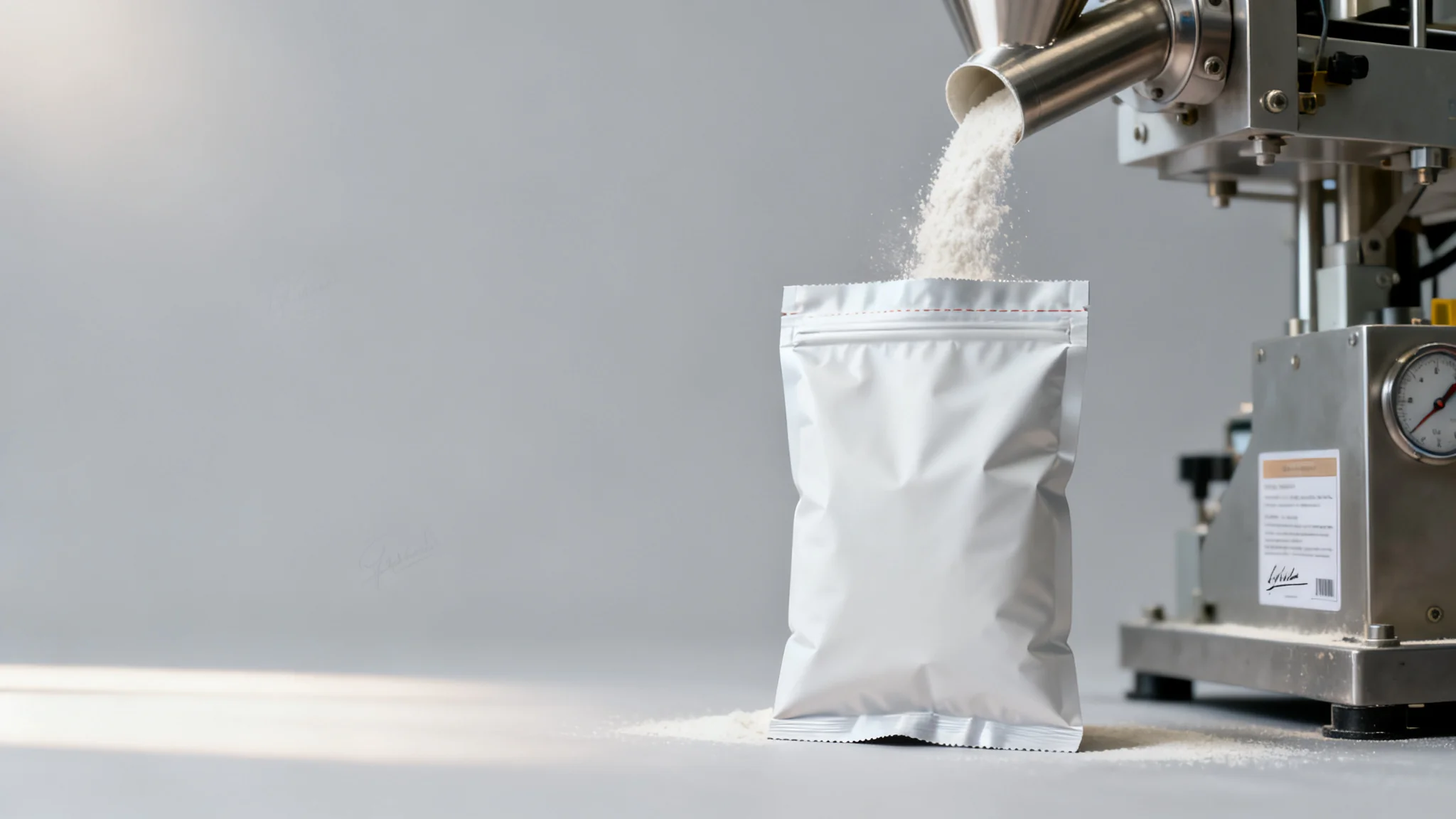

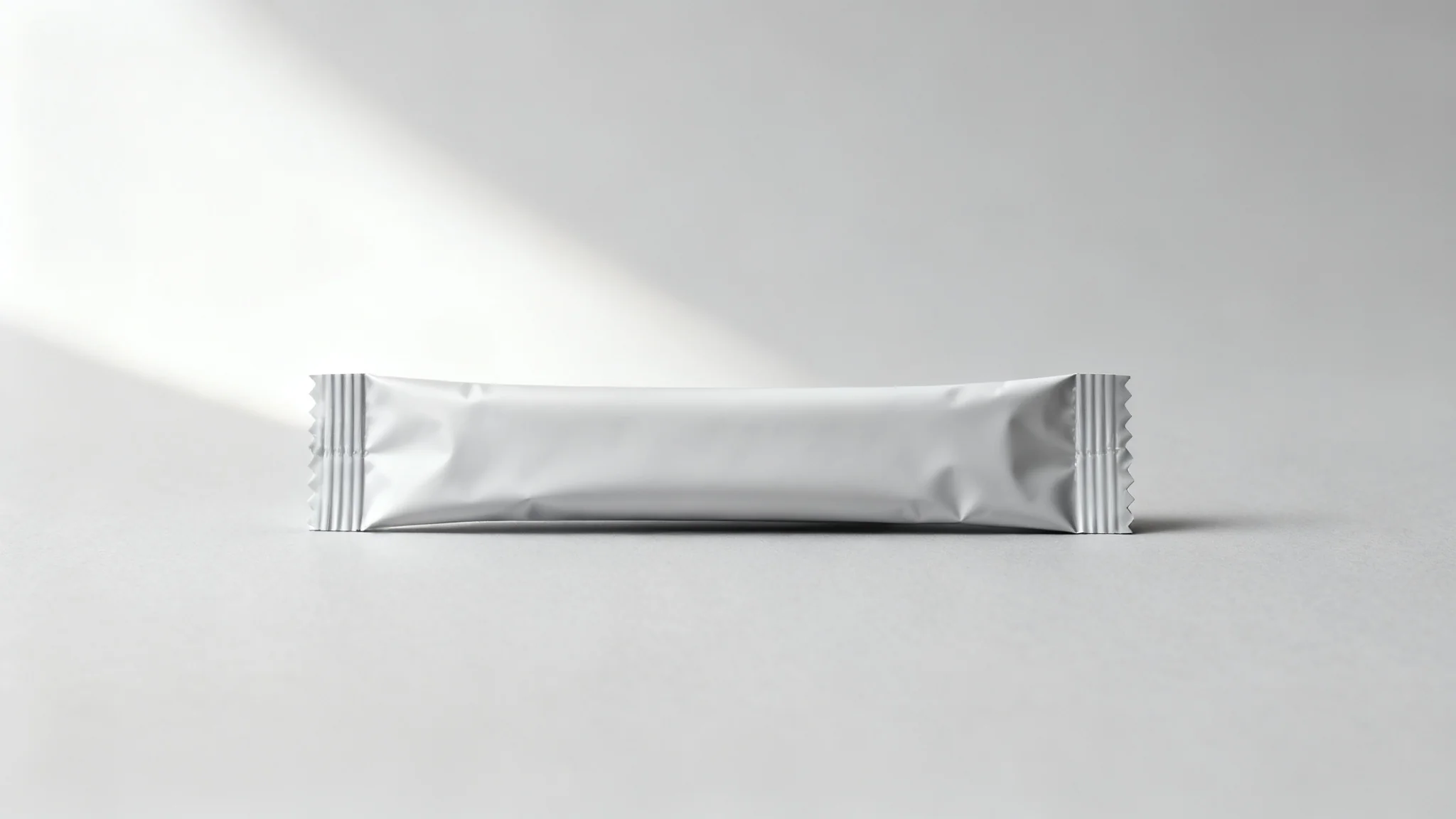
A coffee stick packaging film that runs well at line speed has to clear three hurdles at once: enough stiffness to form a straight, pulling-friendly tube; a seal window wide enough to forgive the powder dust that always finds its way to the jaws; and barrier performance that matches the coffee’s shelf-life target. Optimize any one of the three in isolation and the other two usually give way. This article walks through how stiffness, sealing and speed constrain each other on a stick pack line, and gives you a checkout sequence to run before a production trial.
What Changes Between a Stick Pack Line and a Wider Sachet Line?
Stick pack machines pull a narrow web, fold it around a forming collar, and fill through a small-dosing hopper at high cycle rates. Three consequences follow for the film. The lane width leaves little room for misaligned web tracking, so thickness gauge consistency across the roll matters more than on a wide sachet line. The forming collar works the film harder, so stiffness and slip need to be predictable from the first meter to the last. And the high cycle rate compresses the dwell time under the sealing jaws, which moves the seal window from a datasheet footnote to a production-critical number.
Why Does Film Stiffness Decide Tube Forming?
On a narrow lane, a limp film wrinkles around the collar instead of forming a clean tube, and the wrinkles fold into the cross seals as pleats that leak. A film that is too stiff, in turn, fights the collar and resists the folding sequence, which shows up as tracking drift and teardrop seals. Stiffness comes from the laminate build and thickness, and it interacts with slip: too little slip and the film drags on the collar, too much and the web overshoots the registration. Because there is no single stiffness number that fits every machine, the practical specification is a trial roll on your own former, with the jaw pressure and collar settings your operators actually use.
How Wide Is the Real Seal Window?
Every sealant layer has a temperature band where seals come out strong without burning through or distorting the laminate. The band printed on a datasheet is measured on clean film in a lab; the band that matters on your line is narrower, because powder dust, condensation and machine vibration all erode it from the edges. When comparing coffee stick packaging film candidates, ask for sealing curves measured on the actual laminate and then test at the low and high ends of the band on your machine. A film whose usable window shrinks to a few degrees under real conditions will haunt every shift change, even though its datasheet looks identical to a competitor’s.
Powder Dust: The Quiet Seal Killer
Instant coffee powder is fine, light and electrostatically clingy. During dosing it migrates into the seal zone, and particles trapped in the seal create channels that slowly leak aroma and admit moisture. Countermeasures are mostly mechanical and operational: isolate the dosing zone from the sealing zone, ground the machine to bleed static, and keep the jaws on a cleaning schedule matched to the coffee’s dust behavior. On the film side, a sealant with a slightly wider window and good hot-tack tolerates more contamination before seals fail. None of these measures works alone; the film and the line share the problem, so the fix has to be specified together.
What Limits Line Speed at Small Fill Weights?
At fills between one and fifteen grams, the machine usually can run faster than the film can seal. The limits stack up in this order: dwell time available under the jaws, how quickly the sealant reaches bond strength, hot-tack behavior while the pack is still hot, and film stiffness at high acceleration rates. Jumping to a faster sealant or a thicker stiffness profile solves one limit and can create another, for example a stiffer film that now tracks poorly. The productive approach is to identify which limit actually binds on your line, change one variable at a time, and log seal integrity at each speed step instead of chasing the machine’s rated maximum.
Where These Points Apply — and Where They Do Not?
This applies to vertical form-fill-seal stick pack lines running granular or powdered instant coffee, where the film is bought as rollstock and every property is exercised at speed. The priorities shift for pre-made sachet fillers, where film stiffness matters less than bag stiffness on the magazine, and for liquid stick products, where seal cleanliness around the product replaces powder dust as the dominant issue. If your line runs mixed products through the same film spec, expect to compromise deliberately rather than accidentally: pick the binding constraint for your dominant SKU and verify the rest.
A Checkout Sequence Before the Production Trial
- Write down the binding constraint from your last campaign: was it seals, tracking or speed?
- Request sealing curves and slip values for each candidate laminate, measured on the real structure rather than the base sealant.
- Run each candidate at three speeds, including the speed you actually plan to sell against, and keep sealed samples from every step.
- Test seal strength and leak rate on the kept samples before reading any trend into one shift’s results.
This checklist takes a day of line time and routinely saves weeks of post-launch troubleshooting, because it converts the film discussion from opinion into logged evidence.
Key Takeaways
- Stiffness, seal window and barrier interact; specifying one without the other two is how stick pack film projects stall.
- The seal window that matters is the one measured under dust and vibration, not the datasheet band.
- Powder dust is a shared problem between the film and the line, so countermeasures must be specified together.
- A structured checkout sequence on your own machine beats any datasheet comparison.
Conclusion
Selecting a coffee stick packaging film is a line problem first and a materials problem second. Start from the constraint that actually binds on your machine, demand sealing and slip data on the real laminate, and run a disciplined three-speed checkout before committing volume. Keep the coffee’s barrier target in the conversation from the start so speed gains do not quietly trade away shelf life; if your quality benchmark is the SCA coffee standards, make sure the film choice protects the cup those standards describe. For structure options, our custom coffee packaging category and quad seal coffee bags show how different builds are specified, and our ground coffee packaging guide covers how barrier decisions change after grinding and roasting.
Frequently Asked Questions
What stiffness specification should I give a film supplier for stick packs?
Describe the machine before the material. Give lane width, forming collar diameter, jaw design and target speed, then ask the supplier to propose a laminate build and thickness that forms cleanly on that geometry. For a coffee stick packaging film, stiffness is a derived property of structure plus thickness, so quoting an abstract number rarely transfers between machines. A trial roll on your own former remains the only spec that matters, and candidates should be compared on the same roll position and jaw settings.
Is a wider sealing window always the better choice?
No. A wider window buys tolerance against dust and drift, but it usually comes from a softer or thicker sealant that can slow the line or weaken hot-tack on narrow cross seals. The useful question is how much window your line actually needs, which you learn from the three-speed checkout: if seals hold across the whole speed range with margin to spare, a slightly narrower window is an acceptable trade for faster cycling or better stiffness.
How do I keep instant coffee dust out of the seals?
Start upstream of the jaws: isolate the dosing zone, ground the machine to reduce static cling, and tune the auger or volumetric filler so the dose column does not splash fines at cutoff. Then manage what remains with jaw cleaning intervals matched to the coffee’s dust behavior and a sealant chosen for contamination tolerance. Seal strength sampling on kept packs is the verification step; it confirms the dust controls are holding without waiting for customer complaints.
Can one film serve both one-gram and fifteen-gram stick fills?
Sometimes, but only when the machine settings for both fills fall inside the same seal window and the stiffness suits the heavier dose’s drop dynamics. The lighter fill is usually the harder case, because dosing accuracy and dust behavior dominate, while the heavier fill stresses cross-seal strength. Verify both ends of the range on the actual line and treat any middle setting as unproven until a trial run confirms it.