

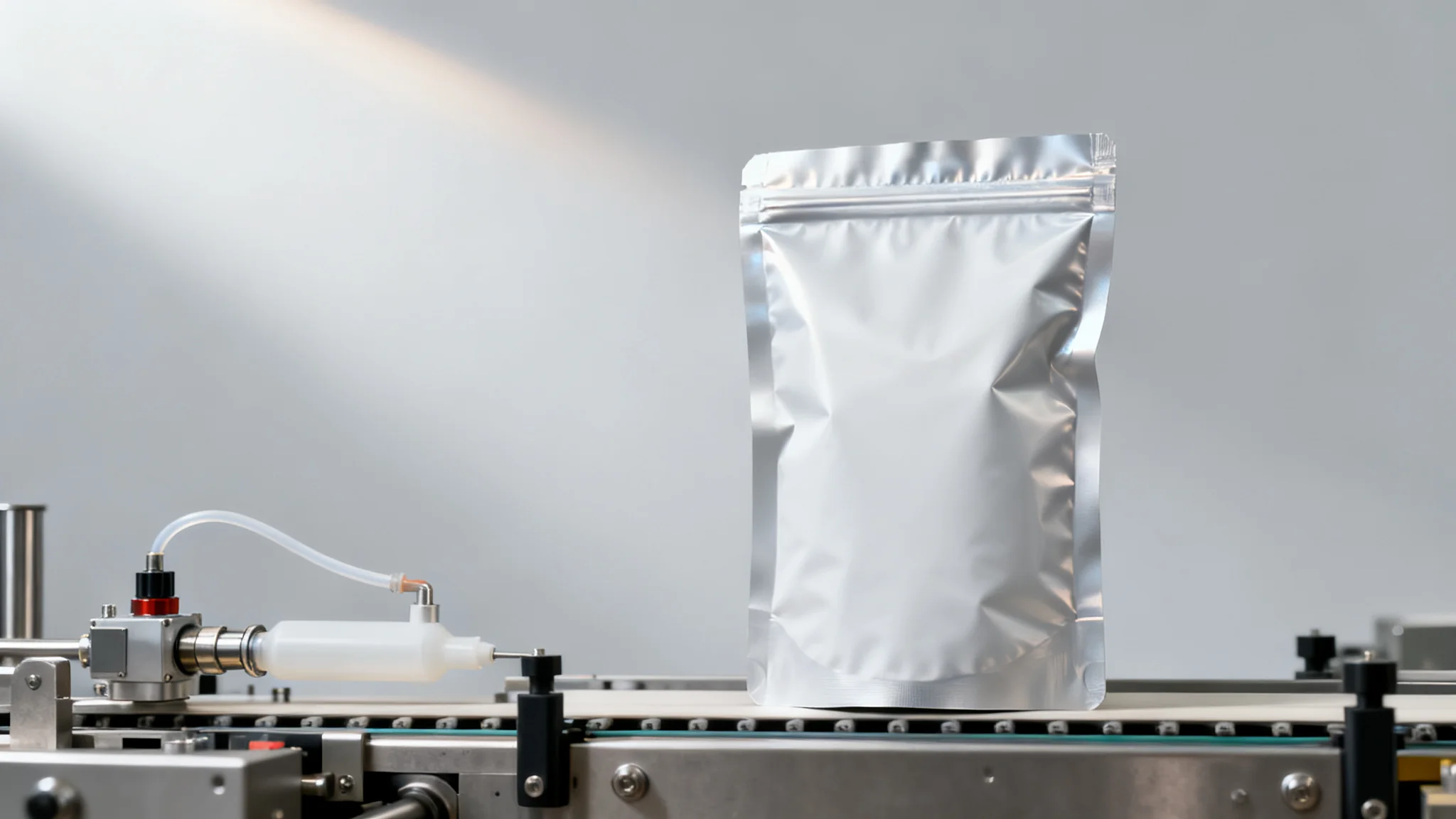
Filling moisture cure adhesives without pre-cure is an environmental control problem before it is an equipment problem. The film, the filling machine and the air around the filler decide if the product stays liquid until the customer opens it or gels somewhere in the warehouse. This guide walks the line-side variables in order: what triggers premature cure, what the fill station must control, how much air is acceptable in the pack, and how long the window from fill to final seal can honestly be.
Why Does a Pouched Adhesive Start Curing Before It Ships?
One-part moisture-cure products begin reacting the moment they meet water vapor. In an unopened drum the reaction is slow because the surface area is small; in a thin pouch film the barrier is thinner, the fill temperature may have raised the reaction rate, and any moisture in the headspace air reacts immediately with the product surface. Most pre-cure complaints trace to three sources: humid plant air introduced at filling, moisture that passed through the film or the seals, and residual water in the filling equipment itself — dosing pumps and hoses that were rinsed with water the day before are a classic hidden source.
The pack itself can also be the culprit. A film whose inner layer swells or extracts in contact with the product, or a seal that channels vapor along a crease, defeats good plant discipline. That is why line-side controls and film qualification have to be judged together, not separately.
What Does the Filling Station Need to Control?
Four variables, in the order they bite:
- Air humidity around the filler — drier is better, and consistency matters as much as the absolute level.
- Product and equipment temperature — warm adhesive reacts faster and holds less dissolved moisture.
- Exposure time between opening the container and sealing the pack.
- Residual moisture in the dosing path, which is a cleaning and purge discipline question.
Of the four, humidity is the one plants most often leave unmanaged. The fix is rarely a full cleanroom: dry-air supply directed at the filling zone, sealed dosing lines and a documented purge routine usually move the numbers more than expensive equipment changes.
Film compatibility belongs in the same review. A chemical-resistance screen against the actual product — the logic behind test methods such as ASTM D543 — should precede any long filling trial, because a sealing layer that swells in contact with the adhesive will create weak points no sealing recipe can rescue. For a worked example of line-side discipline on a different liquid class, see our guide on filling solvent liquids into pouches.
How Much Air Should Stay in the Pack?
As little as practical, for two separate reasons. First, headspace air carries water vapor that reacts immediately with the product surface; a pack filled to the neck has a smaller reaction budget than a half-empty one. Second, trapped air compresses during transport and stacking, forcing product into the seal area where it can contaminate the sealing surfaces and create micro-channels.
Practical answers include filling to a defined fill height, using a nozzle that displaces air rather than whipping it into the product, and gentle settling or vacuum where the product tolerates it. Foam introduced by a poorly set nozzle is a hidden headspace multiplier — the same discipline discussed in our refill pouch filling and foam control guide applies directly to viscous adhesives.
Do Desiccants and Nitrogen Blanketing Belong on Every Line?
No — treat them as tools with a cost, not defaults. A desiccant sachet inside a sealant pack raises questions of its own: it competes for headspace space, it must be food- or industrial-grade compatible, and it can be mistaken for a contamination defect by the end user. Nitrogen blanketing and dry-air purge both work, but they add gas supply, nozzles and controls that a small filling operation may not need if product volume per pack is high and the film barrier is strong.
The decision rule is simple: estimate the moisture budget — headspace volume, expected vapor ingress through film and seals, and the product’s tolerance for pre-reaction — and buy controls that fit that budget. Lines that fill small volumes of highly sensitive product into thin films usually need active drying; lines filling large pouches into foil laminates often get away with dry plant air and good discipline.
The Time Window From Fill to Final Seal
Every second a filled, unsealed pack sits open is a second of uncontrolled exposure, but the honest way to manage this is a documented window validated by testing rather than a stopwatch rule borrowed from another plant. Set the window from three inputs: the reaction speed of the product, the humidity recorded at the station, and the oldest pack you are willing to ship. Then enforce it the boring way — one operator, one timer, one log line per batch.
The final seal itself deserves equal attention. Seal strength on the adhesive-facing layer is verified by a method such as ASTM F88, and the sealing window should be qualified on the exact film-product combination, because adhesive residue on the seal area changes the effective sealing parameters. Contamination-free seals are part of the moisture plan, not a separate quality topic.
Scope: Which Products and Lines This Applies To
This applies to one-part moisture-cure silicones, MS hybrid sealants and cyanoacrylate-free construction adhesives filled on rotary or inline pouch machines. It does not transfer unchanged to two-part systems, where the dominant risks are ratio error and pot life, or to water-based dispersions, where the enemy is evaporation rather than cure. Solvent-bearing products add flammability and vapor-recovery considerations at the filler that sit outside this guide — start from the product’s safety data before copying any line practice.
If your product range spans several cure chemistries, resist the temptation to run one universal procedure. The controls that keep a foil-packed silicone stable can be unnecessary for a PE-packed hybrid, and every unnecessary control is a cost your customer pays for in the end.
A Line-Side Checklist for the First Production Run
- Verify the film lot, the inner-layer compatibility screen and the seal window on the actual product.
- Record humidity and temperature at the fill station for the full shift, rather than only at setup.
- Purge and dry the dosing path; log the cleaning routine as part of the batch record.
- Define and enforce the maximum open time between fill and final seal.
- Pull reference packs at start, middle and end of the run for aging checks.
What Should Every Batch Record Capture?
Four lines minimum: station humidity and temperature at fill, the time from first open pack to last seal, the film and fitment lot numbers, and any deviation from the documented open-time window. When a customer later reports gelled product, these four lines separate a film or seal problem from a process problem within one discussion. Lines that skip the record usually spend more time arguing about causes than they would have spent writing it down.
Key Takeaways
- Pre-cure is a moisture-budget problem: headspace air, plant humidity and film barrier add up to one number.
- Humidity control at the filler beats heroic controls downstream.
- Desiccants and nitrogen are tools with costs — size them to the moisture budget, not to habit.
- The open-time window and the seal quality are one system; document and enforce both.
Conclusion
Filling moisture-cure adhesives without pre-cure comes down to controlling moisture at three points: the air at the fill station, the air left in the pack, and the path through film and seals after closing. Qualify the film against the real product, set a validated open-time window, keep the seal area clean, and record enough per batch to diagnose failures later. Run that discipline before adding desiccants or blanketing gases, and add them only where the moisture budget demands.
Frequently Asked Questions
Can we fill moisture cure adhesives on a standard liquid pouch line?
Yes — filling moisture cure adhesives on a standard pouch line works, with controls that a food-liquid line does not need. The filling hardware rarely has to change; what changes is the air and the discipline around it — dry-air supply at the fill zone, a dried and purged dosing path, and a documented open-time window between fill and seal. Add a compatibility screen of the inner layer against the real product before the first long run, because an adhesive that swells the sealing layer will defeat otherwise good plant discipline. The screen can be a small immersion test or a stored coupon check; what matters is that it runs on the actual adhesive, before the line does.
How fast must a pack be sealed after filling?
Faster than an unmanaged gap, but the real answer is a validated number, not a stopwatch rule copied from another plant. Set the open-time window from the product’s reaction speed, the humidity actually recorded at the station, and the age of the oldest pack you are willing to ship — then enforce it with a timer and a per-batch log line. Plants that skip the record usually lose the ability to tell a process failure from a film failure later.
Do we need nitrogen blanketing for one-part silicones?
Not automatically. Nitrogen or dry-air purge helps when the moisture budget is tight — small fills, thin films, high sensitivity. Size the control to the budget: headspace volume, expected vapor ingress through film and seals, and the product’s tolerance for pre-reaction. Adding gas supply that the budget does not need is a cost the customer pays for in the end. Start without it, measure the first aged batches, and add controls only where the data says the budget is actually leaking.
What proves the line is staying under control?
Three things together: batch records that capture station humidity, open time and film lots; aged reference packs pulled from the start, middle and end of each run; and periodic seal-strength checks on the adhesive-facing layer using a method such as ASTM F88. When a customer reports gelled product, those records separate a film or seal problem from a process problem within one conversation — which is the whole point of keeping them.