
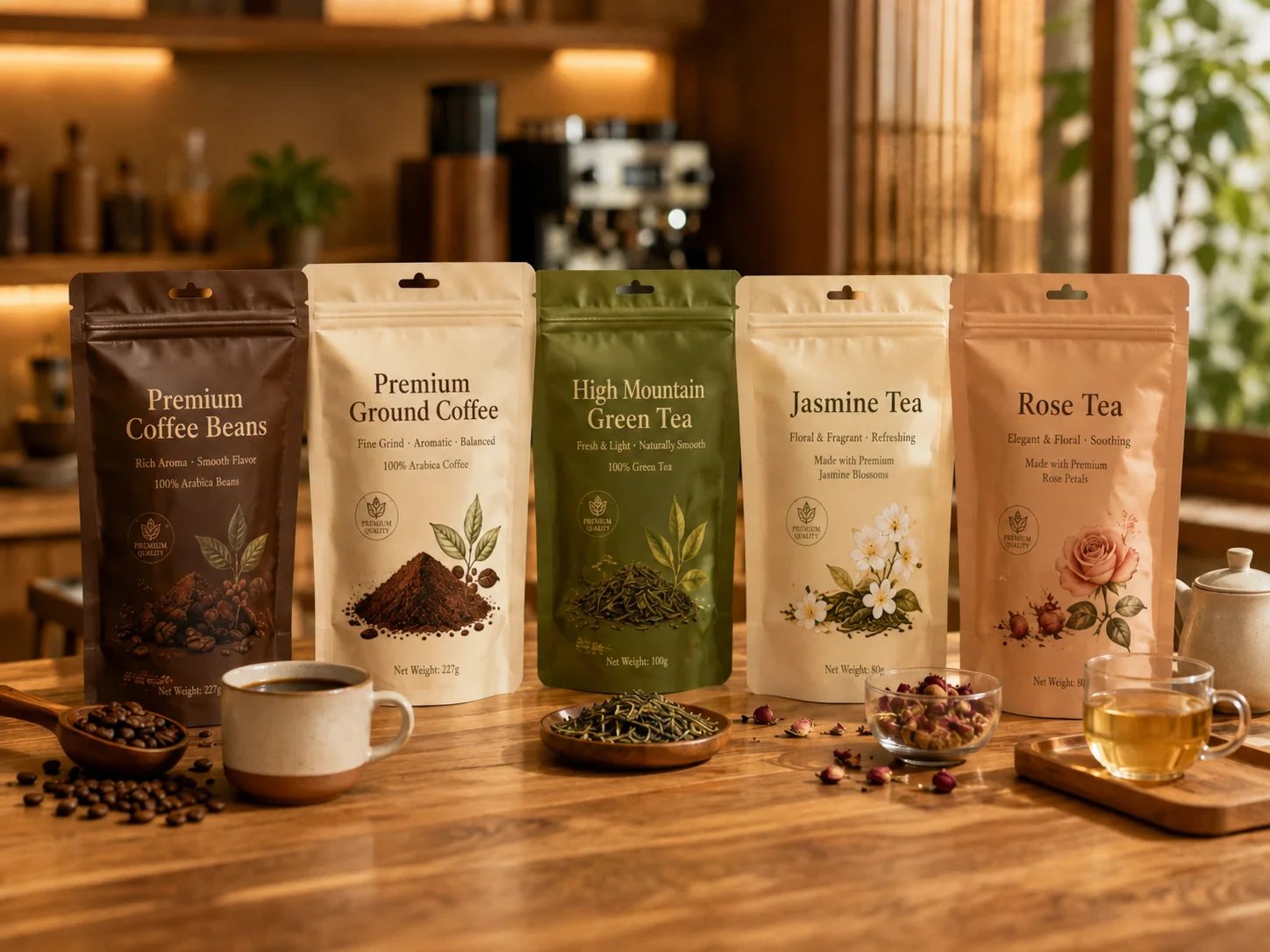
Stand-up and flat-bottom coffee pouches can both carry printed branding, a zipper and a one-way valve where the proposed structure permits them. The useful difference is how each bag fills, stands, displays and packs into cases. Choose between them with filled samples and a line trial, not an empty mock-up or a weight label.
What changes between the two shapes?
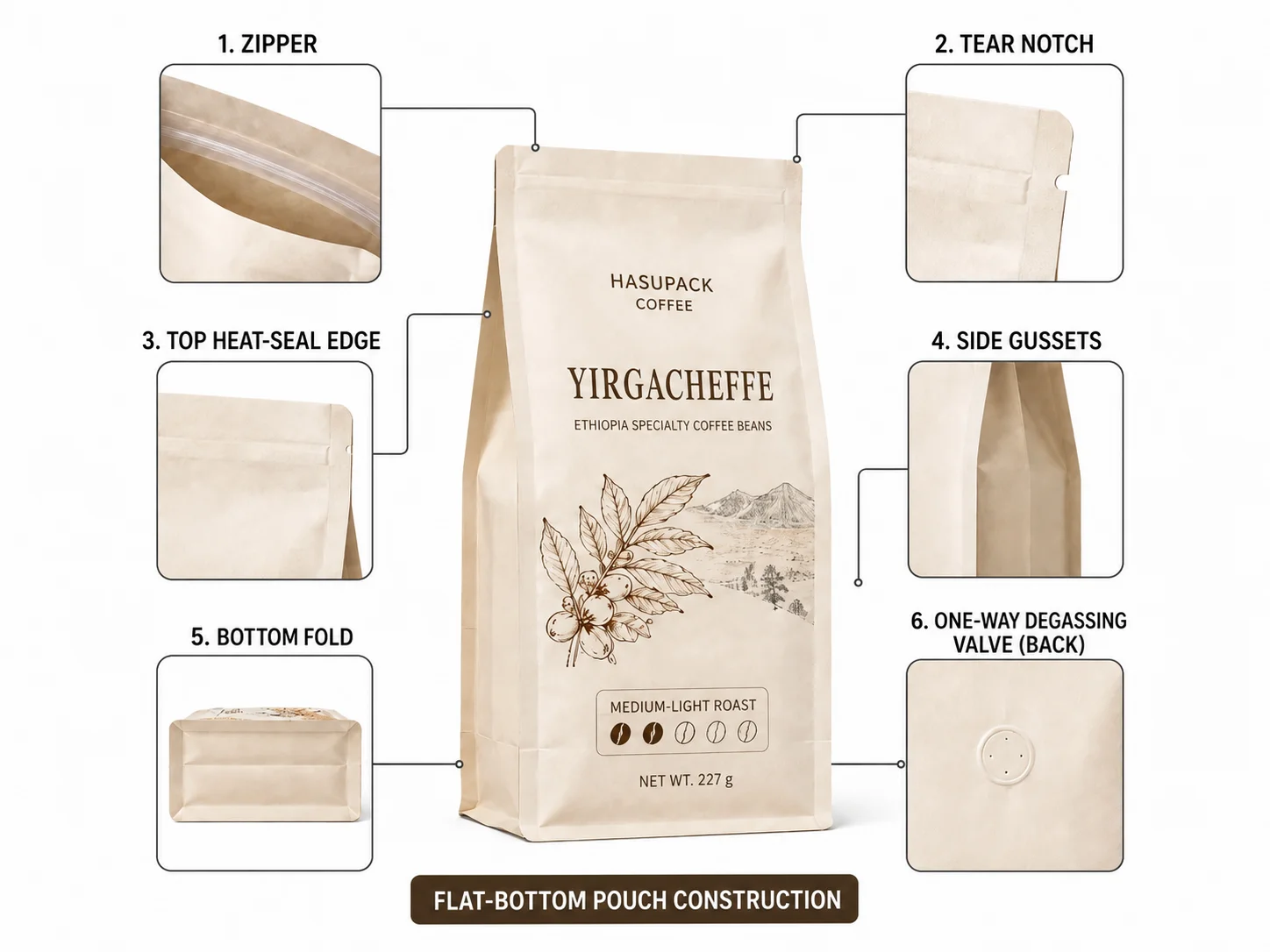
A stand-up pouch uses a bottom gusset that opens as the bag fills. A flat-bottom pouch has a formed base and several presentation panels. The shape affects how much usable space a given external size provides, where seams and folds land, and what the filled bag looks like on a shelf. It also affects how the pack feeds on some premade-pouch lines and how it fits a shipping case.
PurestPack’s product catalog lists coffee among the uses for its stand-up zipper pouch (S-02) and flat-bottom pouch (S-03). That supports considering both formats, but the catalog does not make one universally better for every coffee, net weight or filler. Ask for a drawing and a sample of the exact size and components being quoted.
Compare filled volume and handling
Fill each candidate with the intended whole beans or ground coffee at the target net weight. Check the space above the coffee, zipper access and final seal. Compare the filled footprint and stability on the shelf. Then pack the filled bags in the actual case or parcel format and check case count, stacking and scuffing on the printed panels. A format that presents well individually may use carton space differently.
Ask the filler or co-packer for accepted dimensions and feeding requirements before finalising artwork. If the line grips a particular edge, the bag’s panel and seal layout can matter as much as the external width. Use the coffee pouch size guide for the dimension checklist and sample approval sequence.
Keep the barrier decision separate from the shape
Neither shape guarantees an oxygen or moisture barrier. The film structure, seals, valve and actual filling conditions determine the protective pack you can test. Specify the shelf-life target and ask for suitable barrier data and filled-pack trials for each candidate. If a one-way valve is required, show its position on the drawing so it clears folds, seals and the area used for artwork. See the coffee materials and valves guide for the related checks.
Quote equivalent specifications
Request a quote for the same coffee, net weight, target material performance, closure, valve, print coverage and order quantity in each format. Ask the supplier to separate bag and component costs, printing setup, samples and freight. A unit-price comparison is only useful when both samples pass the filling, sealing and distribution checks.
PurestPack offers digital and gravure printing for custom pouches. Digital printing starts at 500 pieces and gravure at 5,000 pieces; eligibility for a particular size and structure is confirmed per project. For the broader specification process, see the coffee packaging guide. You can also view the stand-up pouch and flat-bottom pouch services before sending your sample brief.
FAQs
Will the same outside dimensions hold the same coffee weight in both formats?
Not necessarily. Gussets, bases and seams change usable space. Fill samples of each format with the intended coffee at the target weight and check zipper and final-seal clearance.
Which format will run better on my packing line?
Ask the filler for accepted dimensions and feeding or gripping requirements, then trial both filled formats on the intended line before approving artwork.
Does a flat-bottom pouch protect coffee better than a stand-up pouch?
Shape alone does not determine barrier performance. Compare the proposed films, seals and valve arrangements, then validate filled packs under the intended storage conditions.
How should I compare the formats for shipping?
Pack filled samples in the intended cases or parcels. Check case count, stacking and scuffing of printed panels under the handling relevant to your route.
Which format will cost less for my coffee launch?
Request project quotes for both formats using the same target material performance, closure, valve, print coverage and order quantity. Compare setup, component, sample and freight costs after both formats pass fill and handling trials.