

Let’s start with a phenomenon:
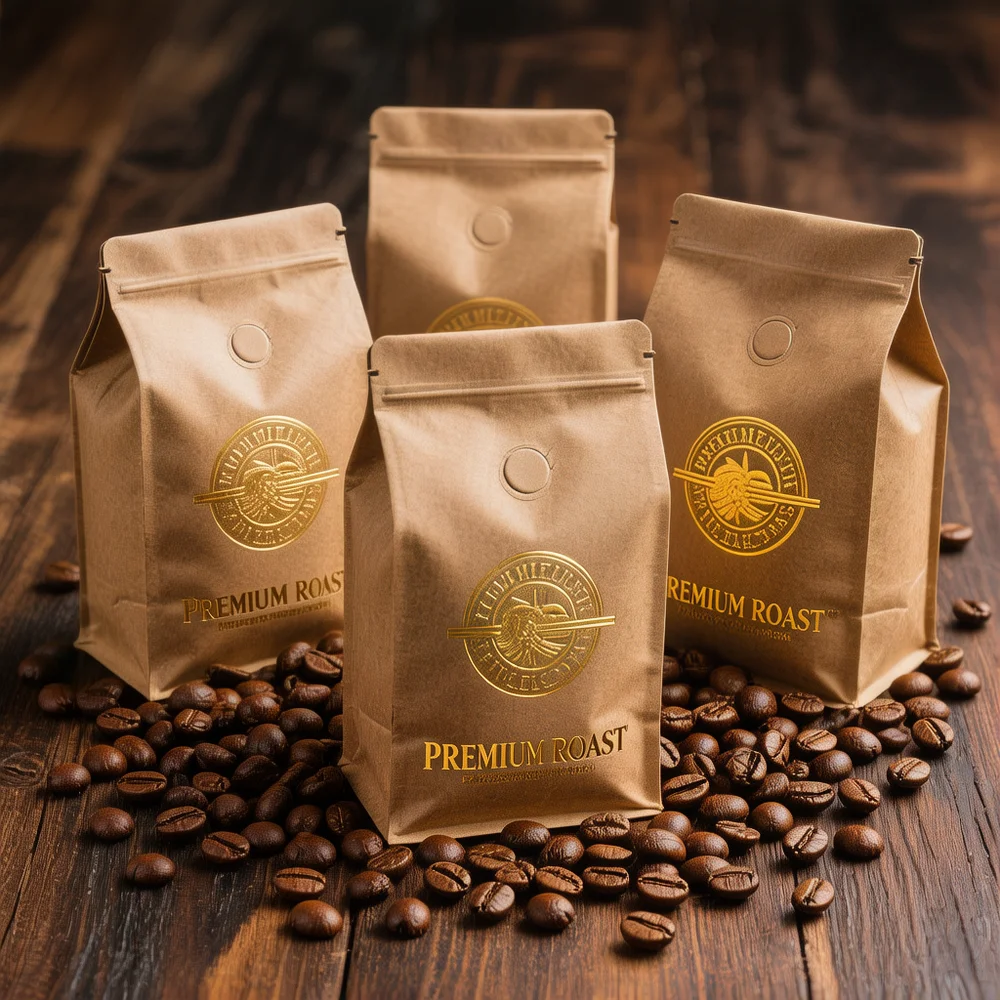
Picture a specialty coffee shop. Two bags of beans rest side by side: one a plain kraft pouch with a handwritten label, the other a custom 8-side seal pouch finished in matte lamination, with a foil-stamped logo and a one-way degassing valve. They hold the same estate’s beans from the same roast batch, yet the second can be priced30%-50% higher than the first – and it moves off the shelf faster.
This is not theory; it’s thepackaging premium effect playing out in real commercial environments.
For specialty roasters, independent tea labels and any food brand chasing differentiation, packaging is far more than”a container” – it is the most direct, most persistent physical point of contact between brand and consumer.
1. Why packaging is the”silent salesperson”?
On the twin battlefields of e-commerce and the physical shelf, a shopper typically decides in3-7 seconds. In that window, packaging performs three jobs:
- Signal the category——””I’m a bag of coffee”” versus “”I’m a bag of tea”” – shoppers read this in color, texture and form within half a second.
- Suggest the quality tier – matte film versus shiny plastic, kraft texture versus plain white card, hot-foil stamping versus flat printing – these tactile and visual cues shape a subconscious verdict of””premium”” or ””mass-market””.
- Plant memory anchors – distinctive silhouettes, such as the 8-side seal and cube pouches, register far more strongly than rows of identical flat packs. At repurchase,“that square coffee pouch” sticks in the mind far better than ”that red coffee pouch”.
This is why a growing number of independent coffee roasters and premium tea brands happily spend more on packaging – they understand thatevery dollar withheld from packaging can cost ten dollars in the fight for consumer mindshare.
2. Three Coffee Packaging Trends and a Selection Guide
Trend 1: from”plastic pouches”to”kraft laminated pouches” – the triumph of natural texture
The past five years have brought one dominant visual shift to coffee packaging: thede-plasticized look. Consumers no longer equate a glossy plastic pouch with premium; on the contrary,matte kraft finish now reads as ”handcrafted, natural, artisanal”.
The change is not purely cosmetic. Kraft laminated pouches offer concrete advantages:
- Tactile premium: the coarse kraft grain under the fingers whispers ”natural”, matching the origin stories at the heart of specialty coffee.
- Eco-friendly cues: kraft’s organic appearance signals ”degradable and renewable” – even though the inner layer still requires functional plastic.
- Print contrast: restrained one- or two-color graphics on a kraft base deliver a premium impression more readily than busy artwork on a fully printed plastic pouch.
Selection advice: if your positioning revolves around ”single-origin””small-batch roasting””specialty pour-over”, lean toward akraft paper / aluminum foil / PE laminate: the kraft surface supplies the natural feel, the foil core carries the barrier, and the PE inner layer locks in dependable heat sealing.
Trend 2: from”standard stand-up pouches”to”8-side seal/cube pouches” – the shelf advantage of 3D forms
8-side seal pouches (also known as flat bottom or box pouches) and cube pouches are the fastest-rising formats in specialty coffee. Against conventional three-side seal or stand-up pouches, the decisive differences are:
| Comparison dimension | Traditional stand-up pouch | 8-side seal pouch / cube pouch |
|---|---|---|
| Shelf posture | Leans at an unstable angle | Stands vertically, like a small box |
| Display area | Front and back only | Front + two sides + top + bottom, 360° usable |
| Stackability | Cannot be stacked | Can be stacked flat, higher transport and warehousing efficiency |
| Consumer perception | “a bag of coffee” | “a box of specialty coffee” |
| Brand story space | Front and back only | Sides can carry origin stories, brewing guides and brand stories |
Industry observation: at identical price points, coffees packed in 8-side seal pouches win shelf listings in premium supermarkets and new retail channels far more often – buyers recognize thatthese packages project stronger shelf presence.
Trend 3: the one-way degassing valve, from”functional part”become”trust symbol”
Every coffee bean pack carries a one-way degassing valve, yet most brands treat it as a mere functional component. Smarter brands transform it intoa visible badge of quality:
- Print a ”Press & Smell” cue beside the valve, converting the pack intoan interactive experience
- Match the valve to the brand palette, folding even this tiny component into the brand identity system
- Add radiating graphics around the valve to pull the shopper’s gaze toward this ”proof point of quality”
Small details create outsized impressions. The shopper who lifts the pouch, presses the valve and inhales that burst of coffee aroma has already experienced something competitors’ packs cannot offer.
3. Tea Packaging: from”gift-orientation”to”everyday aesthetics” transformation opportunity
Tea packaging in China has long swung between extremes: lavishly overbuilt gift boxes – triple-layer cartons, satin lining, metal tins – and bare resealable pouches. Between them lies a large unmet middle: packaging that fits daily use yet still conveys quality and value.
Opportunity 1: kraft stand-up pouch + transparent window
Tea buyers share one fundamental need: “”I want to see the tea.”” That instinct is why traditional tea houses showcase leaves in clear glass jars. But glass has no place in e-commerce or on the move.
The answer: a kraft stand-up pouch with a partial transparent window. Shoppers instantly see the leaf shape, color and wholeness, while the kraft body keeps the natural feel. It costs a fraction of a gift box yet reads as far more premium than a fully opaque pouch.
Opportunity 2: the side-seal gusset pouch’s”stand-up narrative”
Side-seal gusset pouches are a seriously underused asset in tea packaging. Once filled, the gussets open out into astable triangular base, so the pouch rests securely on tea tables, desks and shelves for weeks on end.
Unlike the center-seal pack that gets shoved into a cupboard once open, a gusset pouch becomes a“permanent”brand presence on the desk — every brewing session earns the brand another moment of silent exposure.
Opportunity 3: small-weight portion packs + brand story cards
As”single-serve”and”office tea drinking”scenarios spread, demand for compact 50g-100g tea packs is climbing quickly. The central design problem: how to tell the brand story in such a small canvas?
A method that works: print the brewing guide and brand story on the inside of the pack. When the consumer opens it, they meet an elegant layout on origin, processing and brewing tips instead of blank foil — an ”unboxing surprise” that lifts brand affection and fuels social sharing.
4. How digital printing lets”small brands”compete with”big brands”
Digital printing rewrites the economics of packaging. Traditional gravure printing usually requires a minimum order of 10,000 meters or more, and plate-making fees alone can run into thousands of yuan. For a young coffee or tea brand, that math is brutal:
- Three SKUs (different origins, different roast levels) and the plate-making bill alone can top 10,000 yuan.
- A seasonal flavor test means committing a full minimum run of packaging before a single bag has sold.
- And while your brand is still evolving, a logo or design refresh each year means new plates every time.
Digital printing flips the game on its head.
- Zero plate-making fees: Digital files go straight from screen to press, wiping out plate costs entirely.
- Low minimum order: Orders from 1,000 meters, made for small-batch, multi-SKU brand strategies.
- Fast iteration: A revised design yields digital samples within 24 hours, so brands can gauge market reaction to different looks quickly.
- Versioned marketing: The same product can ship limited, holiday or co-branded editions, each printed separately with zero additional plate charges.
For specialty coffee and tea brands, the real payoff of digital printing is not”saving money”, but“lowering the cost of trial and error” — you test the market cheaply and move to gravure at scale only after the winning packaging has proven itself.
5. Eco-friendly packaging: no longer”Bonus”, but”ticket”
Coffee and tea sit squarely in the ”natural agricultural product”category, and shoppers hold these categories to a higher environmental standard than most others. If your brand still ships in non-recyclable laminated plastic while competitors have moved to recyclable or recycled-content packs, consumers will respond with their wallets.
Realistic eco-friendly options on the market today include:
- Mono-material recyclable structures: all-PE or all-PP builds replace the classic PET/AL/PE multi-layer laminate so the entire pack can be recycled.
- Post-consumer recycled (PCR) materials: a share of PCR resin in the middle or inner layer trims virgin plastic consumption.
- Compostable packaging: bio-based, biodegradable resins such as PLA, fit for niches like short-shelf-life products.
- Lightweight design: structural optimization trims material usage and shrinks the carbon footprint at the source.
Key note: If you serve export markets (especially Europe), the EU PPWR regulation makes recycled-content requirements for packaging mandatory in 2030. Going green now is not about following trends — it is about keeping your products eligible for the European market two years from now.
6. Three real-world approaches to brand packaging upgrades
Scenario A: a specialty coffee roaster — from”white-label packaging”to”branded packaging”
A second-tier city roaster moving roughly 500kg of beans a month had long used generic white-card stand-up pouches with sticker labels. The pain point surfaced at offline coffee festivals: lined up beside competitors, the packaging had zero brand recognition.
Upgrade plan: Custom 8-side seal kraft laminate pouches with a brand-color foil-stamped logo, a one-way degassing valve and a QR code on the back carrying brewing parameters. Unit cost climbed about 0.8 yuan, yet the retail price moved from 68 yuan/250g to 98 yuan/250g — and volume went up, not down. The packaging conveyed a”professional feel”that made the higher price easy to accept.
Scenario B: a tea brand — from”gift-only”to”everyday aesthetics”
An e-commerce tea brand selling 50g premium small packs started with plain three-side seal aluminum pouches. Its problem: repurchase was weak, because customers said the”pouch had no keep value and was thrown away once the tea was finished”。
Upgrade plan: Side-seal gusset kraft pouches with a transparent window, a brewing guide printed on the inside and a resealable zipper. Once the tea is gone, buyers keep the pouch for other leaves or dried goods, and the brand’s logo and artwork stay visible in their kitchen or office every single day — converting single-use packaging into a long-term brand touchpoint.
Scenario C: a pet treat brand — borrowing from coffee packaging experience
The pet treat industry is now borrowing heavily from coffee packaging (8-side seal pouches, degassing valves, kraft textures, multi-version digital printing), because the two audiences overlap strongly: young, quality-driven buyers who happily pay more for ”products that look better”. Their decision logic is the same —“my cat/dog deserves better”and”I deserve better coffee”are essentially one consumer psychology.
7. Conclusion: packaging is ultimately about”being chosen”
Every day, tens of thousands of new products flood e-commerce platforms and retail shelves. The odds of your product simply being noticed are not much better than a lottery ticket — unless your packaging stands out.
Good packaging does not ”tell”shoppers how excellent the product is; it lets them reach that conclusion themselves the moment they pick it up:””This looks great, I want to try it.””
PurestPack focuses on custom flexible packaging solutions for the coffee, tea, pet treat and food industries. From pouch format guidance and material selection to design sampling and mass production, we provide brands withone-stop packaging customization services— including small-batch digital printing options, eco-friendly material choices and global delivery capability.
Your product deserves packaging worthy of it. And finding a packaging partner who truly understands packaging is often the first step in a brand upgrade.
View Huasu Packaging’s articles to learn more packaging design concepts.
Have questions or need a custom packaging solution? Welcome toContact PurestPack. We provide one-stop service from material selection and structural design to printing sampling and mass production, and our professional team offers free customization advice.