

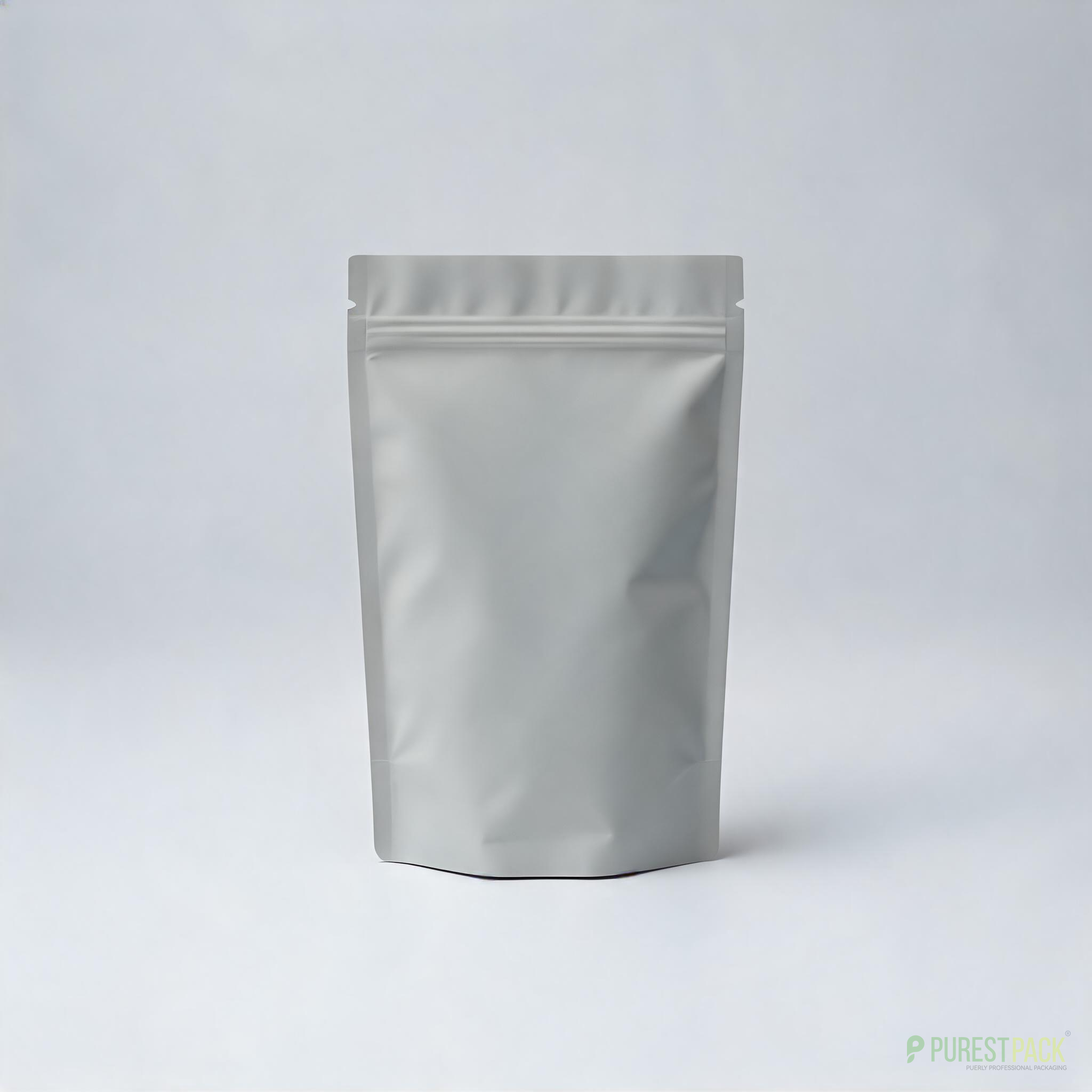
Flat bottom pouches sit at the premium end of flexible packaging, and the price difference is real: on the same print specification, a flat bottom pouch usually costs more per unit than a stand up pouch of similar fill weight. Knowing where that cost comes from makes the decision easier, because the extra spend buys structural performance rather than decoration.
Why Flat Bottom Pouches Cost More to Make
Three factors drive the unit price. The first is structure. A flat bottom pouch is built from a folded gusset that opens into a rectangular base, which means more film per pouch and more sealing operations than a pillow bag or a three side seal pouch. The base alone adds corner seals that have to be formed accurately on every pouch.
The second is conversion. Forming a flat base at production speed requires precise film tension control and a well maintained bag making line. Setup waste is higher on this format than on simpler structures, and that waste is most visible on short runs where the number of good pouches is small.
The third is material. Flat bottom pouches are usually specified for products that need protection, so they are often built as laminates with a barrier layer, a resealable zipper, a degassing valve or a handle. Each added feature increases film cost and adds a production step.
What the Extra Cost Actually Buys
The clearest benefit is shelf presence. A flat base keeps the pouch standing squarely on the shelf without leaning or collapsing as the fill level drops, which is why premium coffee and pet food brands treat this format as a baseline rather than an upgrade.
Stability also improves with weight. Above roughly 500 grams, a stand up pouch tends to bulge and lean, while a flat bottom structure distributes the load across the base and stays upright. For one kilogram and two kilogram packs, this difference decides whether the product can be merchandised properly at all.
Finally, the format offers print area. The front and back panels are flat and uninterrupted, so artwork reads cleanly and the brand can carry more information, certification marks and regulatory text without crowding the design.
Where Flat Bottom Pouches Earn Their Price
Coffee is the classic case: whole bean and ground coffee sold in 250 gram to one kilogram packs, often with a valve and a tin tie or zipper. Pet food is the second: dry food and treats in one to five kilogram bags benefit from the load bearing base and the large print panel. Premium snacks, granola, protein powders and freeze dried products follow the same logic, especially when the brand is selling against shelf life as much as flavour.
Where the product is high value and the pack weight is meaningful, the incremental pouch cost is a small fraction of the retail price. On a one kilogram coffee bag that is exactly the trade most brands are willing to make.
When a Stand Up or Side Gusset Pouch Is the Better Buy
Below about 250 grams, the structural advantage largely disappears, and a stand up pouch delivers the same shelf presentation for less money. Short runs and test launches are another case: if the artwork may still change, paying for a complex structure on a small batch is rarely justified.
A side gusset pouch remains a strong choice for traditional coffee retail and for products that want a slimmer silhouette. If the priority is cost per unit rather than standing stability, these formats are hard to beat.
How to Narrow the Cost Gap
Material simplification is the largest lever. Where the recycling rules of the destination market allow it, a mono-material structure removes layers and costs less than a foil laminate while still supporting a recyclable claim. Reducing the number of pouch sizes across a range also helps, since a larger run per SKU spreads setup waste over more units.
Print method matters as much as film. Digital printing keeps short runs affordable and avoids plate costs, while gravure becomes cheaper per pouch once volumes justify the cylinders. Planning the order quantity to sit above a breakpoint often costs less in total than a smaller, more frequent order, and resealable features should be specified only where the consumer will genuinely use them.
Next Steps
Start with the pack weight, the target shelf life and the retail environment. Those three answers usually settle the format question before any quotation is requested. If the weight sits above half a kilogram and the product is sold on shelf presence as well as price, the flat bottom structure is normally the right specification.
Send your specification and we will propose a structure, a film build and a sample plan: contact Purestpack to start the project, or review our capabilities on the production capacity page and browse the packaging knowledge base for further guidance.