

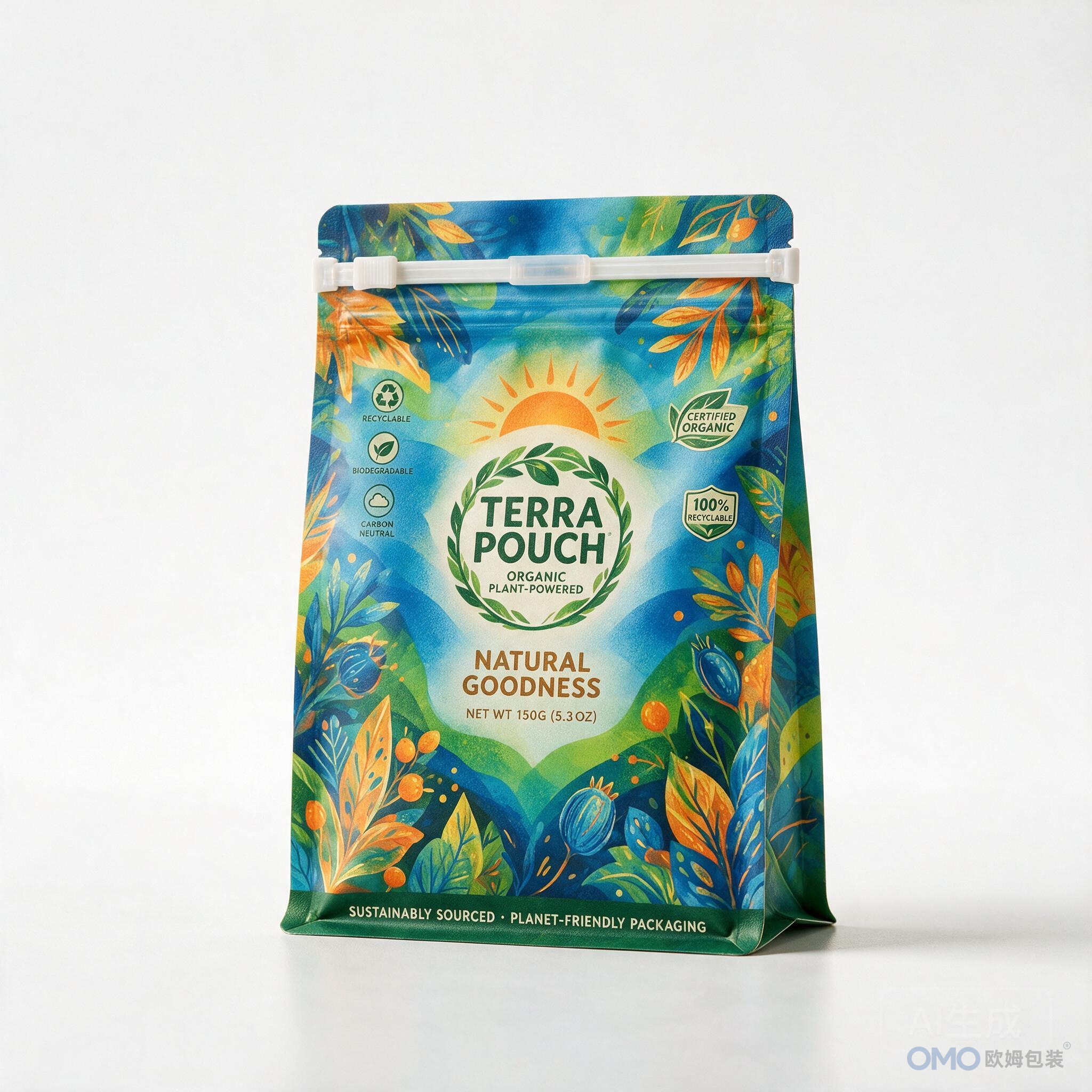
The Stand-up pouch has grown into one of the most popular flexible packaging formats of the last ten years. Brands across juice, sauces, snacks and pet food keep switching their products into this shape. Why has it caught on so widely? How is a stand-up pouch actually constructed, and which film combination should you pick? This guide covers all of it.
1. What is a stand-up pouch? Core structure explained
In simple terms, a stand-up pouch is a flexible bag with a base that unfolds when filled, allowing the pack to sit upright on its own. Its anatomy consists of three main components:
- Pouch body: the multi-layer laminate that handles both barrier protection and the printed design.
- Bottom: a flat base, created by dedicated folding and heat-sealing steps, that lets the pouch stand.
- Seal area: the heat-sealed region along the top or sides, where zippers and spouts are often added.
Three-side-seal bags have to be laid flat or propped up by an outer carton, but a stand-up pouch supports itself. That one difference translates into far better shelf presentation and makes the pack easier for shoppers to handle and put away.
2. Stand-up pouch material combinations: choosing the right structure is key
2.1 Standard three-layer structure
Most stand-up pouches start from a three-layer film construction:
- Outer layer — most commonly PET (polyester film), which carries the print, withstands heat and supplies mechanical strength.
- Middle layer — aluminum foil (AL) or EVOH, which blocks oxygen, light and moisture at a high level.
- Inner layer — PE or CPP (cast polypropylene), the sealant that comes into direct contact with the food.
2.2 Choosing a material combination
- PET/AL/PE (or CPP) — the go-to high-barrier structure for coffee, tea, milk powder, seasonings and other products with demanding shelf-life needs.
- PET/VMPET/PE — a metallized alternative that offers decent barrier for less money than full foil, a good fit for snacks with average freshness requirements.
- PET/PE — a clear construction without a barrier layer, intended for short-term packs of dry goods and frozen items.
- PA/PE — chosen for its puncture resistance, ideal for vacuum packs and meat that still contains bones.
3. Advantages of stand-up pouches: why brands all use them
3.1 Stronger shelf appeal
Because the bag stands upright, it offers a substantially bigger branding surface. Flat-laid or hanging packs show a single panel, whereas a stand-up pouch presents a polished print on both the front and back, so brand messaging, key claims and usage instructions can all be read at a glance.
3.2 Better cost-effectiveness
Compared with rigid containers such as plastic jars or glass bottles, stand-up pouches save roughly 30–50% on material cost. There is no wasted volume from bottle shapes in shipping, and the lighter weight trims freight charges as well. For most brands, the stand-up pouch is a simple route to lower cost and higher efficiency.
3.3 Functional versatility
Today’s stand-up pouches can also carry a range of practical features:
- Zipper — easy to open and reseal again and again for products used over several sittings.
- Spout — suitable for liquids like juice and sauces.
- Easy-tear notch — lets consumers tear the pack open without needing scissors.
- Euroslot — enables hanging display on pegboards and hooks.
4. Applications of stand-up pouches
Today the stand-up pouch is used across nearly every corner of the food and home & personal care categories:
- Beverages: juices, yogurt drinks and sports beverages in spouted packs.
- Sauces and seasonings: ketchup, salad dressings, hot-pot base and similar products.
- Dried fruit and snacks: nuts, candy, chocolate and other items from the same aisle.
- pet food: dry cat and dog food, plus treats.
- Home & personal care products: refills for laundry detergent and shampoo.
- Infant and baby food: fruit purees and small-size baby meal packs.
5. Considerations for custom stand-up pouches
When you order stand-up pouch packaging, pay attention to these parameters first:
- Capacity and dimensions: width, height and gusset width together decide the fill volume. A broader base makes the pouch more stable, but it also uses more film.
- Material selection: as described earlier, pick a barrier structure that matches how long the product must stay fresh.
- Functional configuration: do you need a zipper, a spout or an easy-tear notch? Every added feature raises the unit cost.
- Printing method: gravure fits high volumes and rich color, while digital printing suits short runs and quick sampling.
All in all, the stand-up pouch has earned a spot at the center of modern packaging thanks to its shelf impact, cost savings and functional flexibility. Whether you are a newcomer or a well-known brand, it is a format worth serious thought in your next packaging project.
Need custom stand-up pouches? Get in touch with PurestPack and we will take you from design and sampling through to full production.