

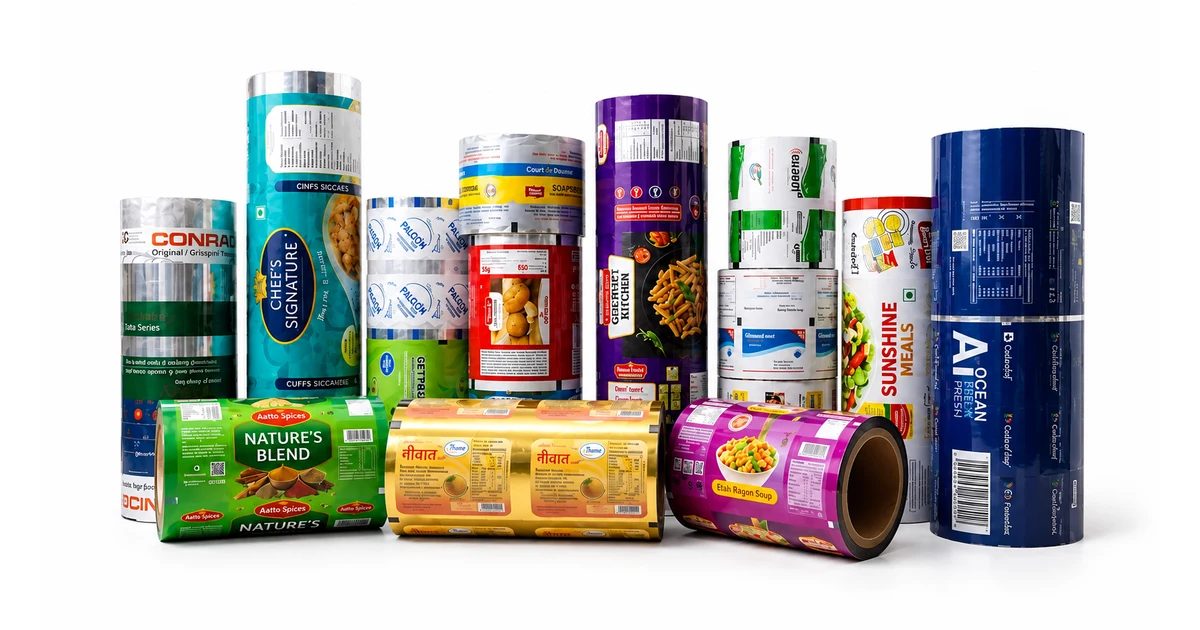
Choosing a custom printed roll stock manufacturer starts with your packaging machine and product, not with artwork or roll width alone. Film can look correct on a table yet track poorly, seal inconsistently or place print incorrectly on the line. To obtain a useful recommendation and a comparable quotation, give each supplier the same machine, product, pack, roll and artwork information.
This guide organizes the sourcing process around the risks a buyer must control: machine fit, a complete roll specification, trial evidence, print approval and repeat-order consistency. It is designed for brands, co-packers and operations teams buying printed film for VFFS, HFFS or flow-wrap equipment.
Start with the packaging machine and product
A supplier cannot confirm machine fit from roll width alone. Begin with the machine make and model, forming method, sealing arrangement and the product being packed. If you have film that already runs successfully, provide its specification and a clearly identified sample. Machine documentation can help clarify limits and setup requirements, but project-specific settings should be reviewed with the machine manufacturer or a qualified packaging engineer.
Prepare the following inputs before asking for a price:
- Machine manufacturer, model and packaging format.
- Current successful film specification or sample, if available.
- Product characteristics, fill weight or volume and fill temperature.
- Target pack dimensions, seal method and expected line speed.
- Roll width, print repeat, core size, maximum outer diameter and winding direction.
- Quantity per artwork, destination, artwork status and target delivery window.
Share known problems as well as target performance. Wrinkling, tracking, curl, blocking, weak seals or registration variation give the supplier useful context. Avoid asking for a material substitution without describing why the current structure needs to change.
Also identify who owns the equipment decision. The brand, co-packer, machine supplier and printed packaging film supplier may each hold different parts of the specification. Put those inputs into one controlled RFQ and resolve conflicts before approving film. When comparing an FFS film manufacturer, ask whether recommendations are based on your actual equipment data or only on a general application example.
Define the complete roll specification before comparing prices
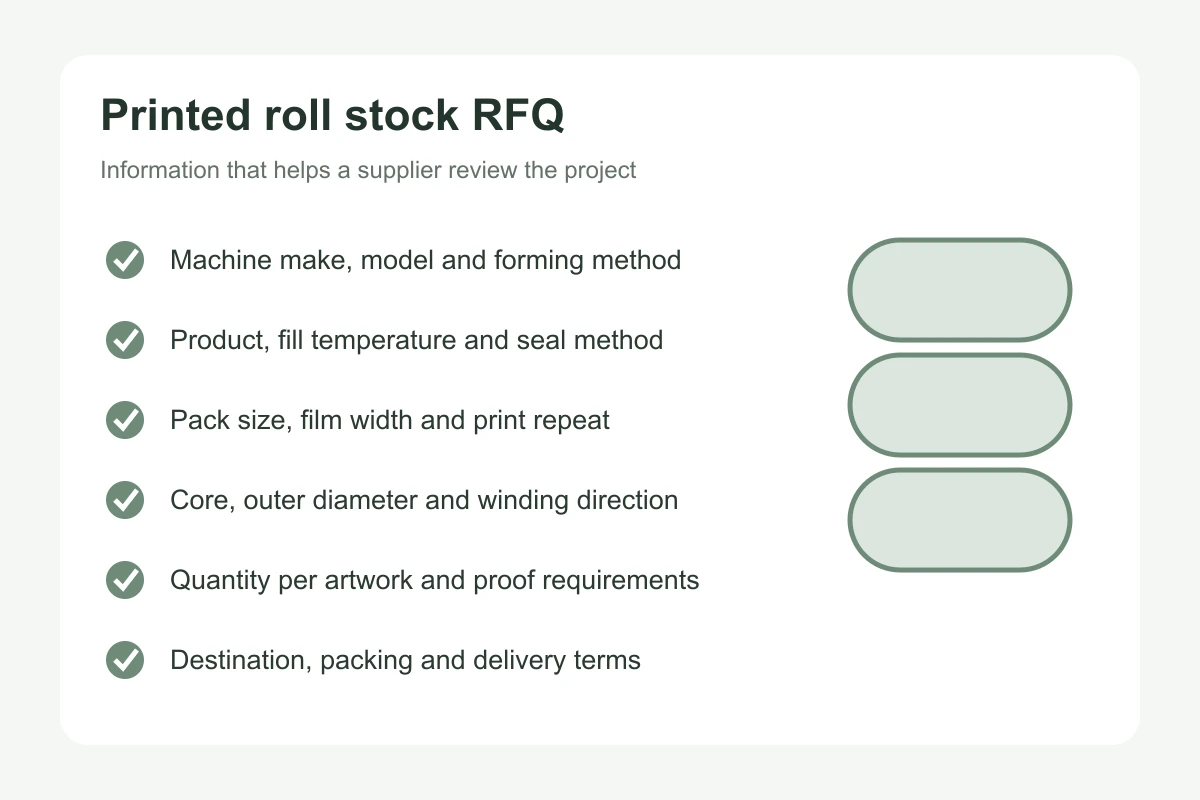
“Printed film” is not a complete purchasing specification. The quotation should identify the agreed material construction and thickness basis as well as the physical roll requirements. Ask the supplier to record roll width, repeat length, core inside diameter, maximum roll outside diameter, winding direction and any relevant splice requirements.
Winding direction is especially easy to misunderstand because naming conventions vary. Use a diagram showing which side of the film faces outward, the leading edge of the artwork and the direction the web enters the machine. When possible, confirm it against an approved physical roll rather than relying on a number alone.
| Decision point | Information to request | Evidence to verify | Why it affects the order | Buyer action |
|---|---|---|---|---|
| Machine fit | Machine model, forming method and seal configuration | Machine documentation and successful film sample | The same roll width does not confirm runnability | Provide complete machine details |
| Film structure | Layer construction and thickness basis | Written specification with stated assumptions | Product protection and sealing depend on the full structure | Obtain technical approval where required |
| Roll geometry | Width, repeat, core, outer diameter and winding | Roll drawing or approved sample | Incorrect geometry may prevent loading or tracking | Check against machine limits |
| Print control | Artwork version, eye mark and colour approval method | Dieline, proof and approved reference | Version or register errors can make film unusable | Name one final approver |
| Trial plan | Sample type, roll length and acceptance criteria | Written trial plan and recorded results | A visual proof cannot confirm line performance | Run the trial under representative conditions |
| Quotation | Quantity basis, tooling, packing and Incoterm | Itemised commercial offer | Different assumptions distort unit-price comparisons | Normalize every supplier quote |
Ask how the supplier approaches machinability
Machinability is the combined result of the film, the printed and laminated web, roll build, equipment condition and operating setup. Buyers should treat properties such as friction, web tension behaviour, curl, gauge consistency and sealing as verification questions rather than stand-alone marketing numbers.
Ask the flexible packaging rollstock supplier which inputs are needed to review line compatibility, what tolerances will appear in the proposed specification and what evidence is appropriate before production approval. If the project changes material, thickness, pack speed or sealing conditions, agree on a trial plan. Do not assume a result achieved on one machine transfers automatically to another.
The custom roll stock overview provides a starting point for discussing format and printing requirements. Final compatibility should be based on the actual project inputs.
Review print, registration and artwork controls
Printed roll stock has to align the artwork with the package repeat and the equipment’s registration system. Ask for the exact dieline, artwork file requirements, repeat direction and eye-mark requirements. Confirm which elements are fixed, which can vary between designs and how colour will be approved.
A digital proof is useful for checking text, graphics, dimensions and version control, but it may not represent every production characteristic. Clarify what the proof is intended to approve. Keep the approved artwork file, proof and specification under the same revision reference so a later reorder does not accidentally use an outdated version.
If a barcode is included, the brand owner should confirm data, placement and verification requirements with the appropriate standards and retail partners. Do not leave barcode approval until after cylinders, plates or production files have been released.
Separate proofing from a line trial
Sample terminology can conceal important differences. A colour proof helps review appearance. An unprinted material sample can support basic handling or sealing work. A printed sample roll may help assess print and machine interaction. A production trial evaluates a defined film on the intended equipment under agreed conditions.
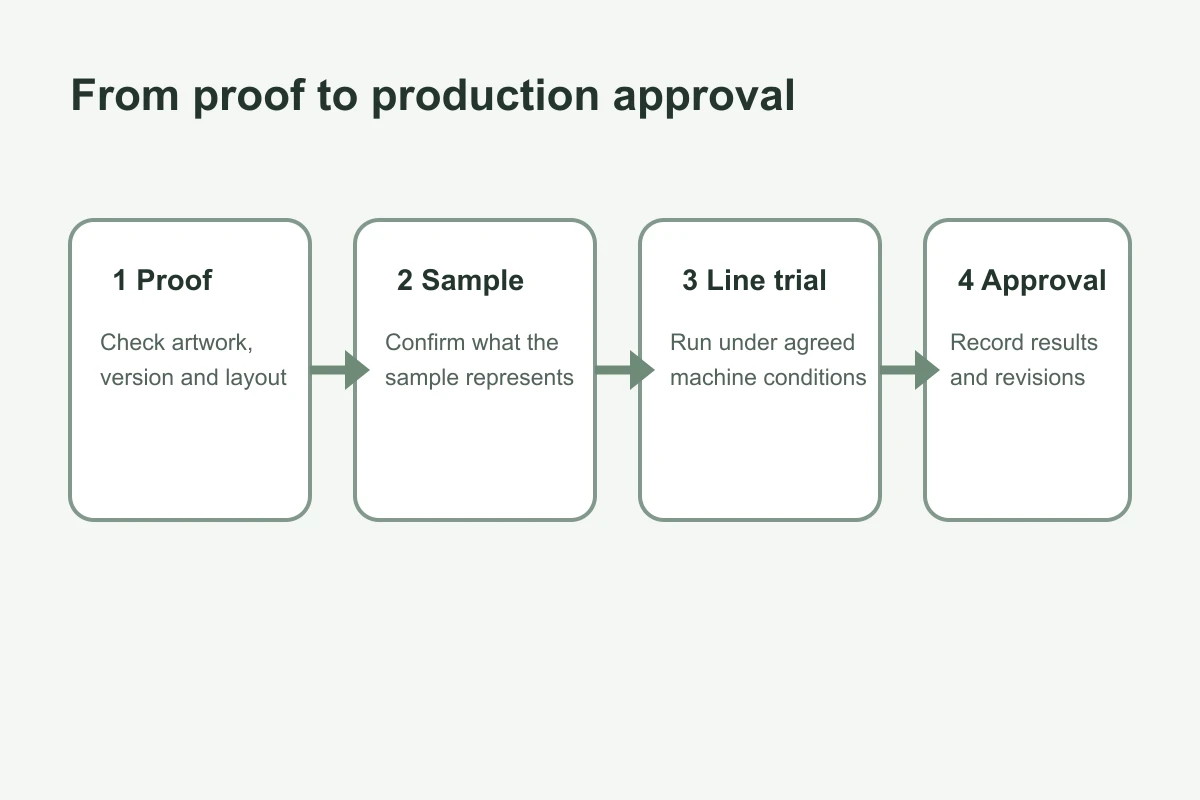
Before ordering a trial roll, define who will run it, which machine and product will be used, the representative operating conditions and the acceptance criteria. Record roll identification, setup changes, observations and results. A trial that succeeds only after undocumented adjustments is difficult to reproduce.
Questions to ask about samples and trials
- Does the sample use the proposed material construction and thickness?
- Is it printed by the proposed production route?
- What roll dimensions, winding direction and splice conditions will be supplied?
- Which visual, sealing and line-running checks should be recorded?
- Who approves the trial, and how will approved changes update the final specification?
Compare supplier quotations on the same basis
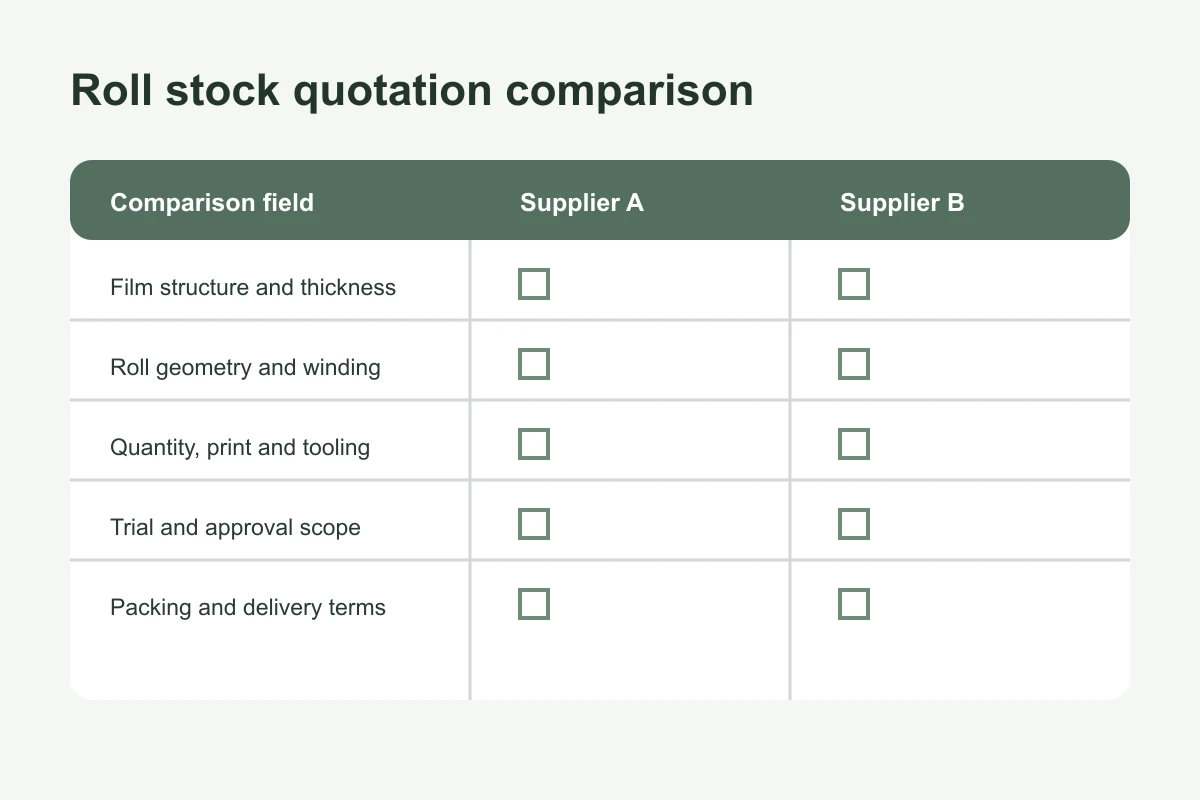
A lower quoted unit price may represent a different film structure, thickness, roll size, order allocation or delivery term. Normalize the specification before comparing suppliers. State quantity per design rather than only a combined order total, and confirm whether tooling, proofs, trial material, packing and freight are included.
For each quotation, check:
- Material construction, thickness basis and performance assumptions.
- Roll width, repeat length, core, outer diameter and winding direction.
- Quantity per artwork and the quotation’s quantity tolerance.
- Printing route, artwork preparation, proofing and tooling.
- Trial or sample scope and approval responsibility.
- Packing method, Incoterm, destination and quotation validity.
- Reorder identification and the process for approving substitutions or changes.
Quantity decisions should also account for the number of designs and the risk of carrying obsolete packaging. Our guide to custom flexible packaging MOQ will explain how quantity per specification and artwork affects sourcing. When comparing the full financial commitment, use the custom flexible packaging cost framework once it is published.
Plan repeat orders and specification control
Repeatability depends on controlled information. Ask how the manufacturer identifies approved artwork, colour references, film specifications, winding direction, splice requirements and packing. The purchase order should point to the approved revision rather than relying on phrases such as “same as last time.”
Require written approval before material substitutions, artwork changes or other specification changes. On your side, keep a retained sample and the relevant approval documents where practical. If equipment, product or operating conditions change, tell the supplier before placing the reorder.
Technical background on common structures is available in our guide to flexible packaging materials, but the final structure still needs project-specific review.
Copyable printed roll stock RFQ list
Send the following in one request: product and fill conditions; machine manufacturer and model; packaging format; successful film sample or current specification; finished pack size; film width and repeat; core and outer diameter; winding direction; splice requirements; quantity per design; artwork files; colour reference; sample or trial needs; packing requirements; destination; Incoterm; and requested delivery window.
Mark any unknown field instead of guessing. A qualified supplier can then identify the information needed before confirming the recommendation.
Frequently asked questions
What information does a roll stock manufacturer need?
The manufacturer needs the product, filling conditions, machine make and model, pack dimensions, successful film reference where available, material or performance requirements, roll dimensions, winding direction, artwork, quantity per design and shipping destination.
Can a supplier quote roll stock without the packaging machine model?
A supplier may provide an indicative quotation from partial information, but roll width alone does not confirm machine fit. The machine model, roll limits, forming method and sealing setup help the supplier define a more reliable specification and trial plan.
Should buyers request a trial roll?
A trial roll is useful when the material, dimensions, equipment conditions or operating requirements create meaningful uncertainty. Agree on what the trial must prove and how results will change the final specification before ordering it.
How should printed roll stock quotations be compared?
Compare identical film structures, thickness basis, roll geometry, print requirements, quantities per design, tooling, trials, packing and delivery terms. List every exclusion and assumption, then evaluate the complete order rather than unit price alone.
Request a project-specific roll stock review
Send PURESTPACK the machine model, existing film specification or sample, packed product, pack dimensions, roll requirements, quantity per design and destination. After the requirements have been reviewed, request appropriate samples and a project-specific quotation.