

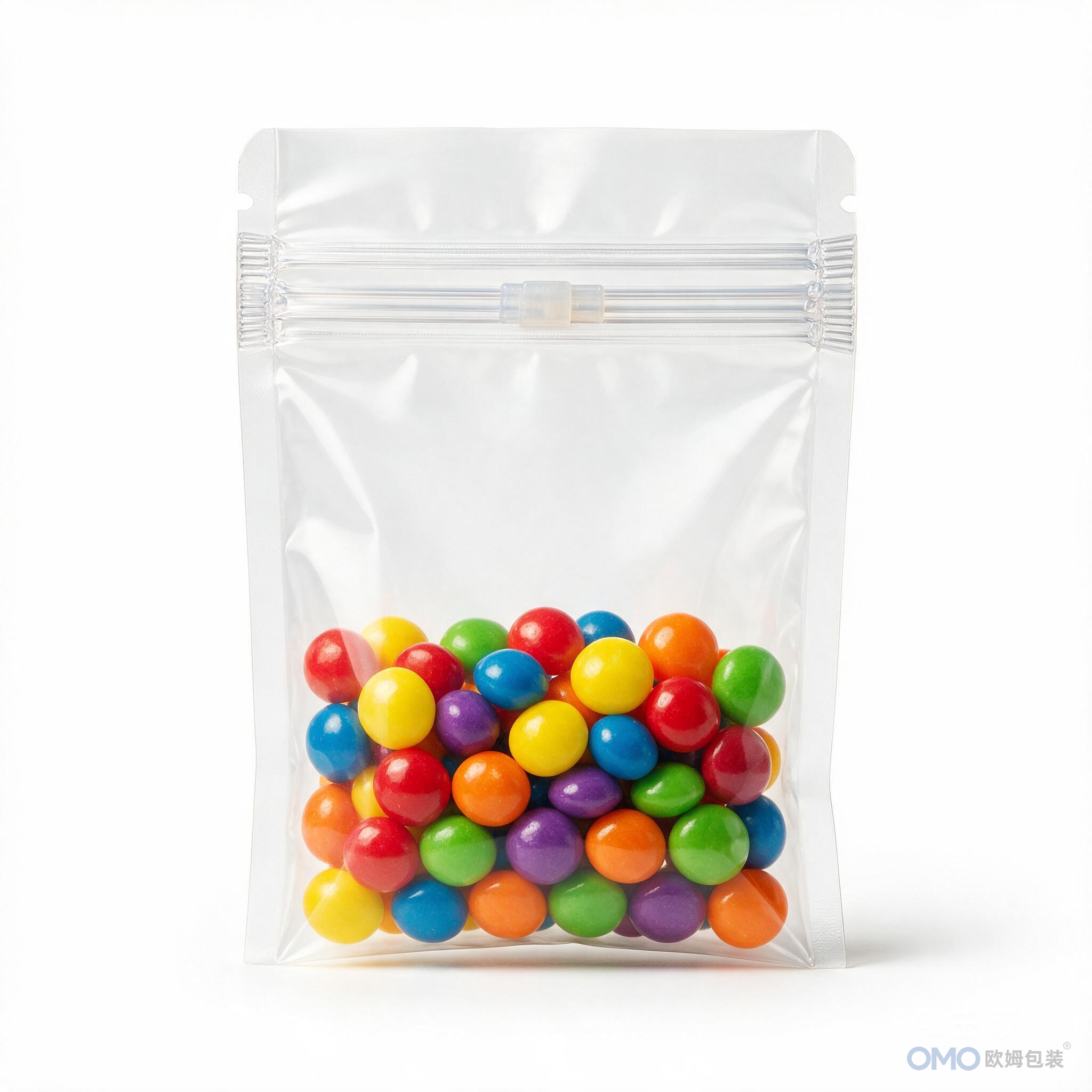
Few formats are as familiar as the zipper pouch. Whether it is stationery in a drawer or snacks in a cupboard, this pack type has won adoption everywhere for a single reason: it can be opened and reclosed, over and over. But the surface simplicity masks genuine depth — the right film, the right zipper style and the right production route all matter. This guide walks through zipper pouch essentials, from build-up all the way to sourcing.
1. Zipper pouch structure and working principle
The engine of a zipper pouch is the closure strip at the mouth: two opposing profiles, a male ridge and a female groove. Squeeze the two together and the ridge locks into the groove to create the seal; pull them apart and the mouth opens. Depending on the profile design, zippers sort into three broad families:
(1) Press-to-close zipper: the dominant style, which snaps shut when the two strips are pressed between the fingers. Operation is intuitive, and the unmistakable “click” gives shoppers immediate confirmation that the pack is closed. Press-to-close closures are low-cost and fully mature, which explains their presence on everything from snack bags to frozen vegetable packs.
(2) Slider zipper: driven by a small plastic cursor, rather like the zip on a jacket. A slider delivers a firmer seal and opens with far less finger effort — a clear win for older users with limited grip strength and for packs reopened many times in a day. Premium tea and coffee brands rely on sliders for exactly this reason.
(3) Male-female zipper: conceptually close to press-to-close but built with thicker, heavier profiles that engage more positively. The result is a stronger seal, appropriate for applications such as pet food and dry goods where sealing demands run high. The catch is that closing the pouch takes visibly more pressure.
No matter which style you pick, zipper pouch sealing quality is decided upstream, by the precision of the profile mold and the polymer recipe it is formed from. A properly engineered zipper pouch keeps sealing reliably after hundreds of open-close cycles.
2. Zipper pouch materials and specifications
The strip itself is normally molded from LDPE (low-density polyethylene) or LLDPE (linear low-density polyethylene), both of which bounce back well under repeated flexing. The pouch body, by contrast, can be tailored freely to what is being packed:
(1) PE single-layer zipper pouches: the budget option — a one-material build with a PE body and PE zipper that is fully recyclable. Fine for short-term storage of dry goods, stationery and hardware parts. Barrier performance is only average, so these pouches are not suited to foods that must stay fresh for months.
(2) PET/PE laminated zipper pouches: the PET layer supplies stiffness, gloss and printability, while the PE layer guarantees heat sealing and secure zipper bonding. One laminate that covers both display and function — today the default zipper pouch across food categories such as nuts, candies and biscuits.
(3) Foil-laminated zipper pouches: bring an aluminum foil ply into the PET/PE stack and barrier performance climbs sharply. These are the choice for demanding products — coffee beans, tea, spices — where oxidation and aroma loss must be held in check. For stand-up pouch zipper variants and additional material guidance, see our Complete Guide to Stand-Up Pouches.
On sizing, thickness, width and zipper placement are all customized around pack capacity, product shape and the filling line. Practical benchmarks: zipper widths generally span 50–150mm and film thickness 60–120μm.
3. Zipper pouch applications
The zipper pouch travels remarkably far; a handful of sectors carry most of the demand:
Food packaging: the biggest market by a distance. Snack nuts, candies and jerky; bakery breads and biscuits; frozen vegetables and seafood; and tea, coffee and milk powder — all depend heavily on zipper closures. Being able to reseal lets consumers use a little at a time while the rest of the pack stays fresh.
Home & personal care products: laundry pods, dishwasher tablets and bath bombs fit naturally. After each use the zipper shuts out moisture and keeps the contents loose and free-flowing.
pet food: large cat food, dog food and treat bags lean on zipper pouches as well. Because a bag of pet food is consumed over weeks, the zipper does genuine work preserving crunch and aroma.
Industrial and office: electronic components, hardware and stationery also run on zipper pouches. A clear PE body makes contents quick to spot and sort.
We professionally produce every kind of zipper pouch — from press-to-close to slider, from PE single-layer to multi-layer laminates — with small-batch customization supported. Contact our technical team for samples and quotes.
4. Key points for buying zipper pouches
When sourcing zipper pouch products, watch these quality indicators closely:
1. Zipper engagement force: the sweet spot is between too tight (consumers struggle to close) and too loose (the seal feels weak). Qualified zipper pouches typically measure 10–30N. Values outside that band usually point to an imprecise mold or a poor material blend.
2. Zipper fatigue life: whether the closure keeps sealing after heavy use is the real test of quality. A dependable zipper pouch should hold its seal through 100+ open-close cycles with no visible loss of performance.
3. Zipper-to-pouch bonding strength: the heat seal that welds strip to film is the weakest link in the whole pack. If it fails, the zipper lifts away from the body and the pouch is written off. Acceptance criteria normally require the zipper heat-seal strength to stay at no less than 80% of the body seal strength.
4. Seal integrity testing: filling the pouch with water and turning it upside down is the quickest and most direct leak check available. In volume production, vacuum decay and dye penetration methods are the standard batch tests.
5. Food safety compliance: for anything food-related, zipper materials must satisfy food contact regulations. PE itself is inherently safe, but make sure the color masterbatch and additives inside the zipper conform to standards such as GB 9685.
5. Common questions in zipper pouch customization
Custom orders keep circling back to a familiar set of questions:
Q1: Can the zipper be placed anywhere on the pouch? In theory the zipper can go anywhere near the mouth, but the conventional position is 10–30mm below the top edge. Place it lower and usable capacity drops; place it higher and the opening becomes clumsy.
Q2: What is the typical MOQ for zipper pouches? Zippers require dedicated tooling, so the standard press-to-close MOQ normally starts around 5,000–10,000 pieces. For trial batches, stick to sizes that share standard molds to pull the threshold down. For more packaging customization details, refer to our packaging customization process guide.
Q3: Can zipper pouches hold liquid products? Standard press-to-close zipper pouches cannot — liquid bleeds through the zipper gap during transit. For liquids, opt for a slider zipper pouch or a dual-seal design that pairs the zipper with a heat seal.
We offer zipper pouch customization from artwork through finished delivery, backed by 15 years of industry experience. Contact us now for free sampling!
A zipper pouch may look simple, but every detail — from zipper mold precision to body material selection — shapes the final user experience and freshness. We hope this article helps you buy and customize more wisely. For any questions, feel free to reach out to our professional team at any time.