

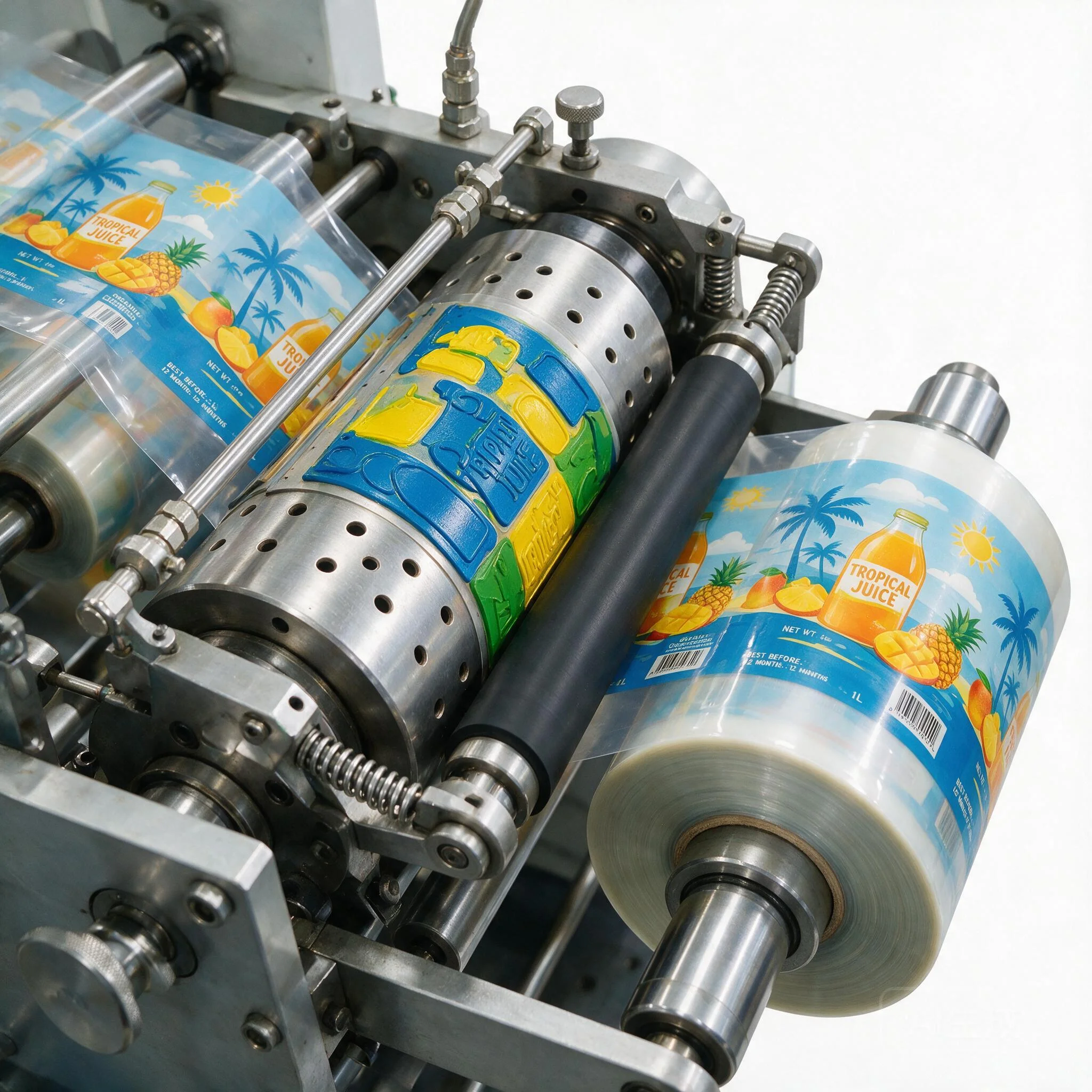
When most buyers request quotes for custom pouches, their attention locks onto one number: the unit price, or how much each bag costs. It is only after production gets underway that the stream of “extra fees” living outside the quote surfaces — plate-making, setup, revisions, die-cutting, waste and more. Time and again, these hidden costs add up to far more than the budget anticipated. In this article we put every hidden cost in packaging printing on the table, so your next budget is built on something solid.
1. Plate-making fees: the biggest upfront investment
Plate-making is one of the primary cost centers in packaging printing, and because the three main processes create plates in completely different ways, the expense varies enormously:
- Gravure plate-making: gravure relies on custom metal cylinders, and every color in the artwork needs its own. A 6-color gravure job therefore calls for six cylinders, each priced between CNY 500 and CNY 2,000 depending on diameter and engraving detail — so the plate bill alone typically lands between CNY 3,000 and CNY 12,000.
- Flexo plate-making: flexo plates are made from photopolymer and cost far less, charged by area rather than by cylinder — a plate around A4 size runs CNY 200–500 per color. The identical 6-color design comes in at roughly CNY 1,200–3,000 in flexo.
- digital printing: digital takes plates out of the equation completely, which is its biggest selling point. Files are sent straight to the press, there is no plate charge to absorb, and that advantage becomes very significant on short-run custom work.
2. Setup/changeover fees: the machine keeps burning money while idle-running
With plates in hand, the next step is mounting the cylinders, adjusting registration and balancing the colors — in industry terms, the “setup” or “changeover”. Throughout this phase the press is running without turning out a single sellable pouch, and the bill for that dead time is passed to the customer.
Setup is generally charged on elapsed running time. The all-in hourly cost of a gravure press — electricity, labor, depreciation, consumables — sits around CNY 500–1,500, and a typical setup spans 1–3 hours. That works out to CNY 500–3,000 spent before the first good pouch exists. Flexo presses change over in about 30 minutes to an hour, so the corresponding charge is noticeably lower.
This is also the reason minimum order quantities run high — setup is a fixed cost, which makes the per-pouch overhead explode on small orders. For strategies to work around it, take a look at Tips for Negotiating with Packaging Factories.
3. Revision fees: change the design, pay again
If design files change during sampling or in the middle of production, most factories charge for every modification:
- Gravure revisions: once a cylinder is engraved, altering the artwork means re-engraving — a single color change costs CNY 500–2,000, essentially new plate-making. For small text tweaks or partial updates, some plants provide “repair” options around CNY 200–500 per color, though repaired cylinders generally do not last as long.
- Flexo revisions: photopolymer plates are simply remade from scratch — usually CNY 100–300 per color.
- Digital printing revisions: cost nothing. Correct the file and print again. During sampling and experimentation, this flexibility is a huge advantage.
That leads straight to the key recommendation: make sure the design files are fully confirmed and final before plate-making begins. Ideally, test the design first with digital or physical samples, and only commit to cylinders after everything has been signed off. A single careful confirmation can save thousands of yuan in revision charges.
4. Die-cutting fees: the “tooling cost” of pouch forming
Producing pouches requires cutting dies — especially for unusual formats such as shaped pouches, spouted pouches and 8-side-seal designs. A cutting die is a custom-made tool mounted on the pouch machine that blanks out the exact pouch profile.
For straightforward three-side-seal or center-seal pouches, the die cost runs about CNY 200–500. Specialty shapes go up to CNY 500–2,000 because the dies are more intricate and need tighter tolerances. A die is usually good for 100,000–300,000 cycles, and large reorders typically get the fee waived — but only while the pouch shape remains unchanged. Alter the shape, and you are buying a new die.
5. Waste fees: the “inevitable waste” in production
Some level of waste is unavoidable in packaging production. The losses generally fall into these categories:
- Startup waste: defective output generated during changeover, normally folded into the setup fee.
- Splice waste: in printing or lamination, when one roll ends and the next is spliced onto it, the material around the splice gets discarded. A film roll typically carries 1,000–3,000 meters, and every splice wastes roughly 5–20 meters.
- QC sampling waste: the material taken for quality inspection samples.
- Remnants: the tail end of a roll that is too short to make a complete pouch.
The industry-standard waste rate is 3%–8%, depending on product complexity and process; an intricate 8-color gravure run combined with lamination and pouch-making can climb to 10%. Factories normally build waste into the quote — but asking exactly how the rate is calculated can head off arguments at final settlement.
6. Other easily overlooked costs
- Sampling fees: producing physical samples consumes film and labor, typically CNY 200–1,000 per sample, though some factories refund it once a bulk order is placed.
- Testing fees: third-party reports — food-grade testing, migration testing — are invoiced separately, roughly CNY 500–3,000 per item.
- Rush fees: orders squeezed into a busy schedule usually attract a 20%–50% surcharge.
- Shipping: freight on bulk deliveries, particularly to remote destinations or through dedicated logistics lines, generally sits outside the quoted price.
Summary: ask about these items before requesting a quote
Next time you request a quote, nail down every one of the following points:
- What does plate-making cost, and how many colors are included?
- How does the factory bill for setup and changeover time?
- What is the charge for modifying the design?
- What does the die cost, and is the fee waived on repeat orders?
- What waste percentage is built into the pricing?
- Can sampling fees be refunded against the bulk order?
- Is freight included in the price, or billed separately?
Only once all of these are settled does the figure on the quote become a budget you can rely on. Packaging customization is never a one-time transaction — the more thoroughly you communicate up front, the fewer unpleasant surprises you will hit later.
Questions about packaging customization? Welcome to contact PurestPack and visit Contact Us