

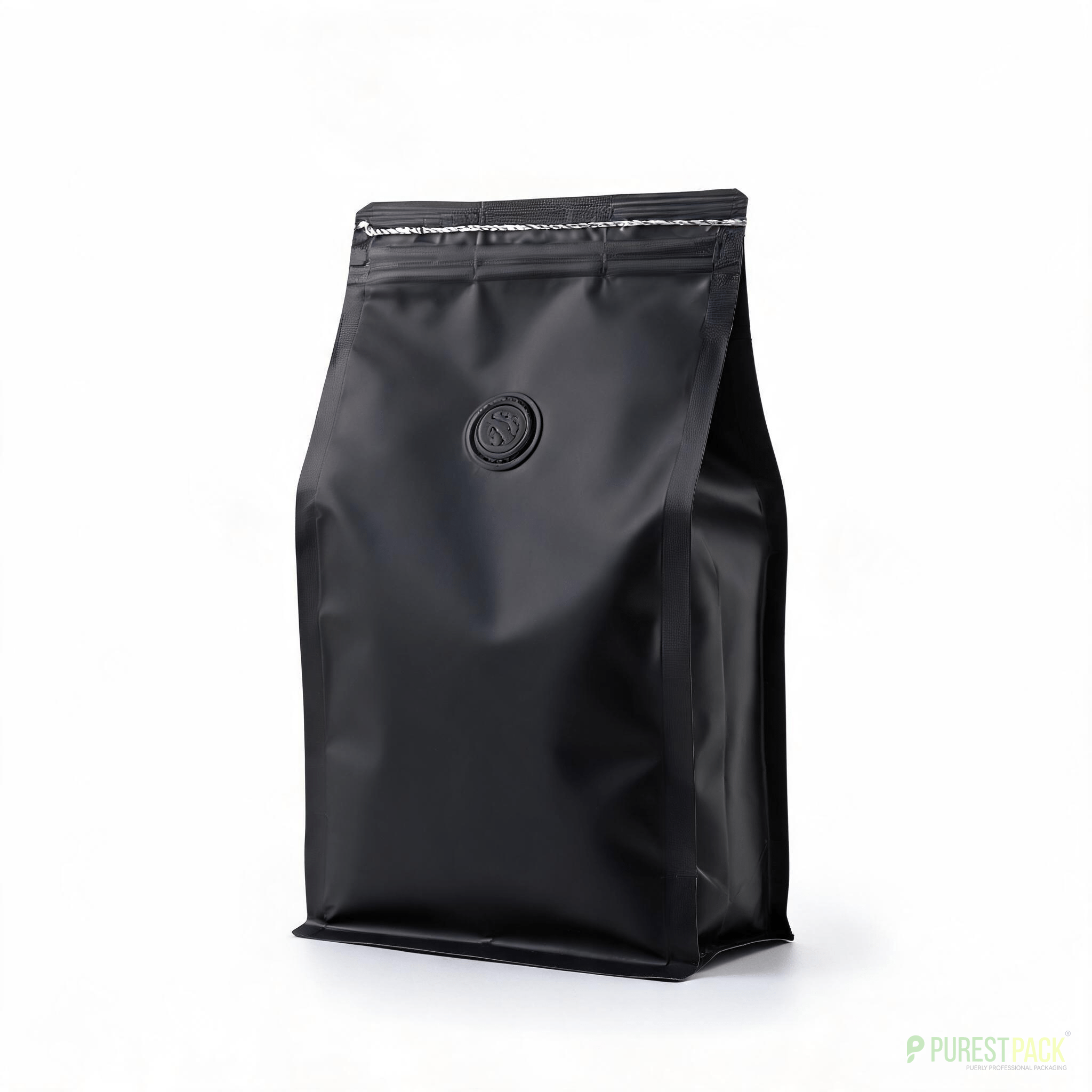
Coffee pouch packaging decides how a roast tastes three months after it leaves the roastery. Aroma compounds, carbon dioxide from fresh roasting and moisture from the environment all push against the film structure, so the pouch has to be engineered rather than simply printed. This guide walks through the barrier films, valve choices, pouch formats and quality checks that Purestpack applies when building custom printed coffee pouches for roasters and private label brands.
Why Coffee Needs a High-Barrier Pouch
Roasted coffee releases carbon dioxide for several days after roasting. If that gas cannot escape, the pouch inflates, the seal is stressed and the coffee inside develops a flat, stale profile. Oxygen works in the opposite direction: it oxidises the oils that carry aroma, which is why an unprotected bag can lose most of its aromatic character within a few weeks.
Moisture is the third pressure point. Paper and mono-layer film let humidity migrate in both directions, softening the roast and dulling the acidity that specialty buyers pay for. A properly specified coffee pouch packaging structure therefore has to solve three problems at once: allow CO2 out, keep oxygen and moisture away from the product, and stay mechanically strong through filling, transport and retail handling.
Barrier Film Structures
Most coffee pouches are built from laminated films, where each layer carries a specific job. A standard PET/PE structure provides a printable outer skin and a heat-sealable inner layer, which suits short shelf life and fast turnover. Adding a metallised layer produces PET/VMPET/PE, a widely used specification that improves the oxygen barrier at moderate cost.
For premium and export programs, PET/AL/PE introduces aluminium foil and delivers the highest barrier performance, keeping roasts stable through long ocean freight and warm retail environments. Mono-PE structures use a single polymer family so the pouch can be recycled in the streams now being introduced across Europe, which matters to brands preparing for extended producer responsibility rules.
Layer thickness, adhesive selection and film orientation all change performance, so the structure should be matched to roast level, pack size and target shelf life rather than copied from a catalogue.
One-Way Degassing Valves
A one-way valve lets carbon dioxide leave the pouch while blocking outside air from returning. Valves are usually applied to medium and dark roasts, and for any coffee that is packed within hours of roasting. Lighter roasts release less gas and may not need a valve, although a valve still helps when the brand wants a firm, tight pack on the shelf.
Valve placement, adhesive quality and the seal around the valve are common failure points. A poorly bonded valve leaks air, which defeats the barrier structure no matter how sophisticated the film is.
Pouch Formats and Finishes
Flat bottom pouches give the most stable shelf presence because the base opens into a rectangular footprint, and they accept high fill weights without tipping. Side gusset and quad seal formats offer a classic retail silhouette, while stand up pouches remain the most economical choice for smaller pack sizes.
Finishes matter as much as structure. A matte surface reads as premium and hides fingerprints, a high gloss surface makes colour look saturated, and spot finishes can highlight a logo. Tin ties, degassing valves, resealable zippers and easy-tear openings each add a different note to the unboxing experience. Our packaging knowledge base explains how these options interact with print method and cost.
Quality Checks Before Mass Production
Before a run goes to mass production, the specification should be validated in four areas. Seal strength testing confirms that the pouch survives the filling line and the consumer. A leak and dye penetration test verifies that seams, valve bases and zipper attachments hold. Print registration and colour measurement confirm that the artwork matches the approved proof. Finally, food contact documentation confirms that every layer and adhesive complies with the regulations of the destination market.
Each of these checks produces a record that supports a brand through retailer audits and certification programs, so they are worth building into the project plan from the first sample.
Next Steps
Start with the roast, the pack size and the target shelf life. From there, the structure, valve decision, pouch format and finish follow in a predictable order, and sampling confirms the assumptions before tooling is committed.
Send your specifications to our team and we will propose a structure with a sample plan: contact Purestpack to begin the project, or review production capability on our production capacity page.