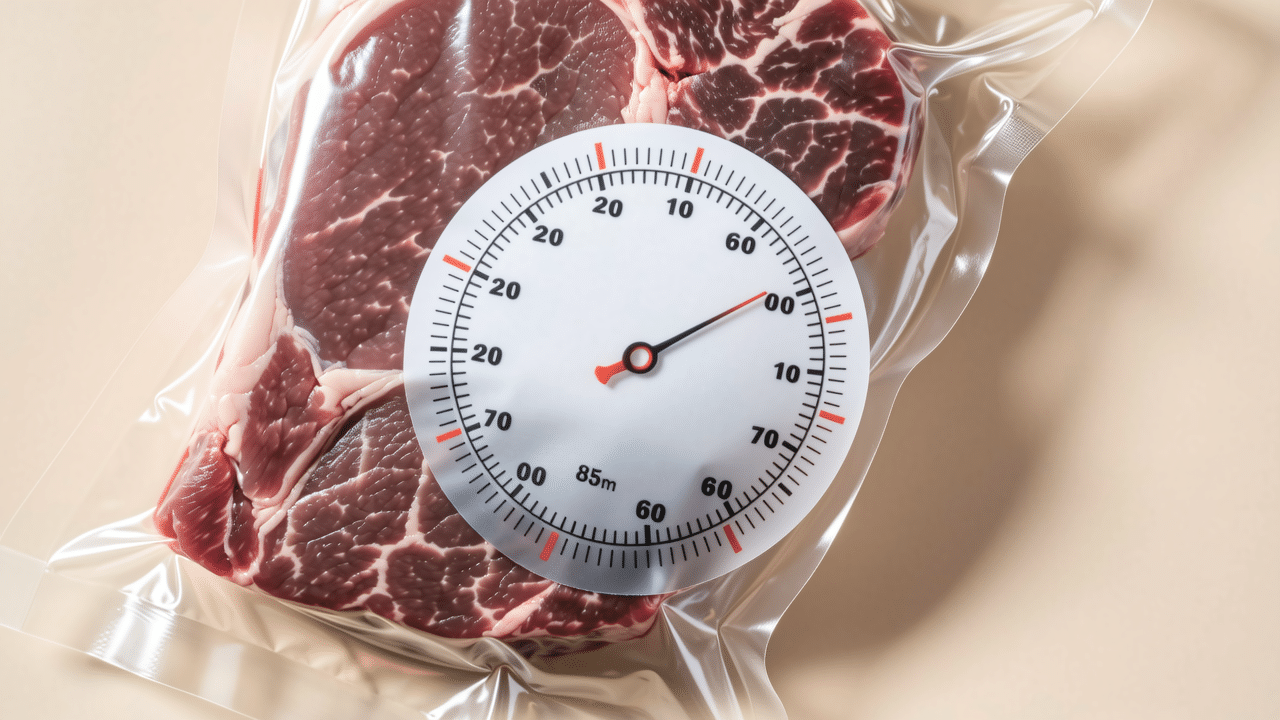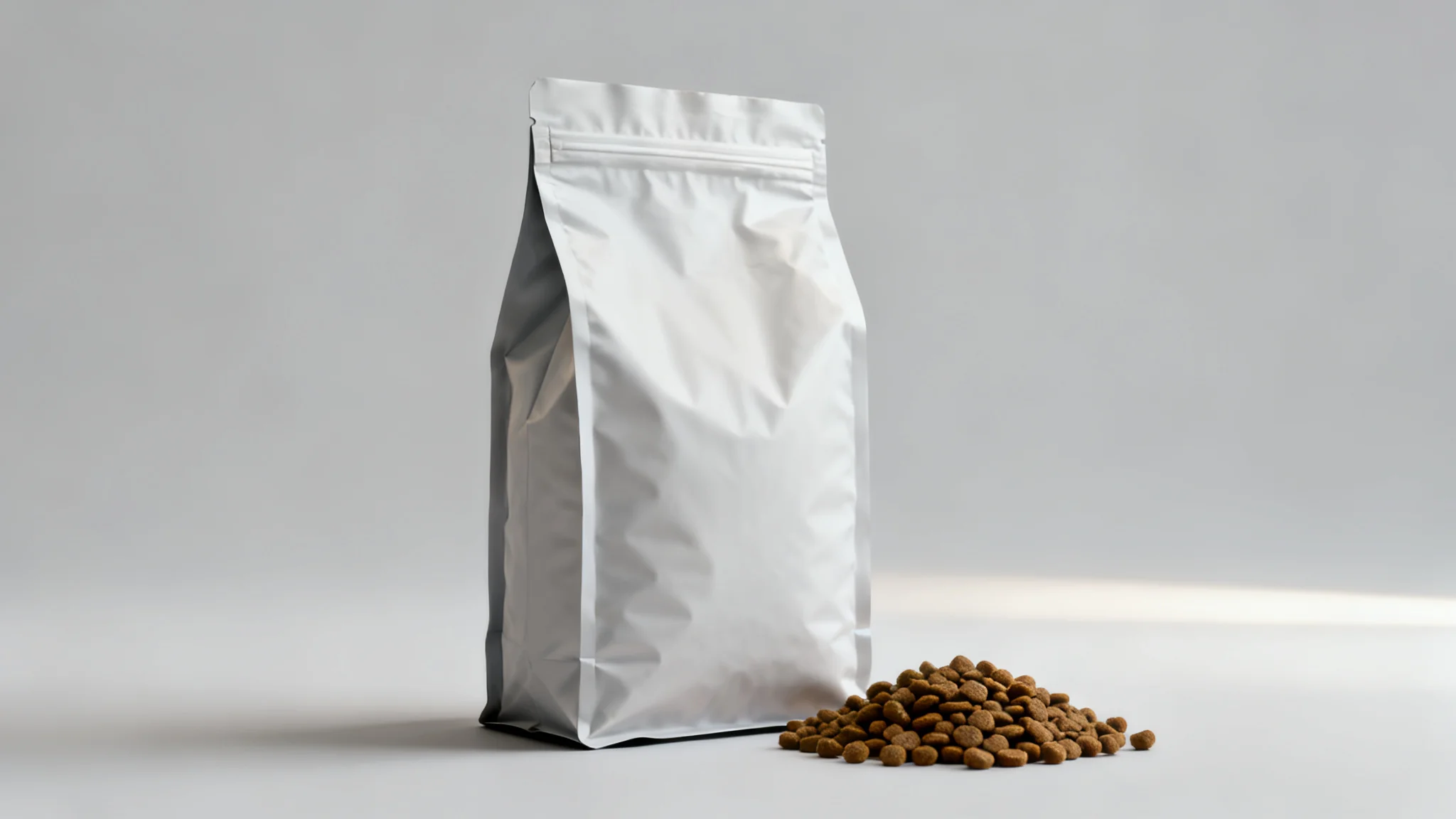
Dry pet food packaging gets specified in two very different conversations. One is the format discussion — stand-up pouch, side gusset, flat bottom, or roll stock. The other is the weight discussion, which is really a logistics discussion: how heavy is the bag, how high does it stack, how far does it travel, and who lifts it at the other end. Teams that settle the format first often end up reworking the film structure once a 15 kg bag fails a pallet test.
This guide works the other way round. Weight and distribution define the constraints; the bag format and film structure follow from them.
Start with the weight ladder, not the pouch style
Dry pet food moves in bands. Trial and sample sizes sit under a kilogram. Everyday retail sits roughly between 1 kg and 5 kg. Bulk and multi-pet households sit from around 10 kg upward, and those are the formats where packaging decisions get expensive to change.
Each band shifts the dominant load case. In the light bands, the pouch carries almost no static weight, so the priorities are shelf presence, opening behaviour and reseal. In the heavy bands, the bag becomes a structural part of the handling system — the film carries load in the handle, the bottom gusset carries load in the pallet stack, and the side seals carry load every time the bag is lifted by a corner.
Write the load case down before choosing anything: a 12 kg bag lifted by a die-cut handle stresses the film very differently from the same bag palletised twelve high and left in a warehouse for months.
What each bag format is actually good at
Side gusset pouches
The side gusset is the workhorse for mid and heavy weights. The folded sides give the bag a rectangular footprint that palletises predictably, and the block shape uses trailer volume efficiently — which matters more than shelf appearance once you ship by the container. The trade-off is that gusset folds create film stress lines, so the seal at the gusset root deserves its own check rather than being covered by a general seal inspection. Formats and structures are set out under side gusset pouches.
Flat bottom pouches
Flat bottom bags stand unaided, hold a wide print area, and read as premium on shelf. The sealed base adds material and process steps, and the base corners are the parts that suffer when a filled bag is dropped. They suit retail bands well; they become less attractive as weights climb and cost per kilogram matters.
Stand-up pouches
Stand-up pouches dominate small and mid retail. For dry kibble the limiting factor is usually the bottom seal, which has to survive both the fill weight and repeated handling. Where the fill weight is high, a stand-up pouch with a wider base and heavier gauge film may be the practical compromise between shelf impact and stackability. See stand-up pouch options.
Roll stock
Roll stock is cheapest per unit where the format is fixed and volumes are steady, because the bag is formed on the packing line with no separate pouch-making step. It requires the form-fill-seal line and the film to be matched — web width, seal layer, and the machine’s dwell time all have to line up. Roll stock is a poor fit for short runs and frequent artwork changes.
Film stiffness, thickness and the limits of “stronger”
When a heavy bag tears at the handle, the first proposal is usually thicker film. Thickness raises tensile load capacity, but it also changes sealing behaviour, reduces yield per kilogram of resin, and can make the bag harder to open. Tensile properties of thin plastic sheeting are characterised under ASTM D882, and the useful question is not the peak value but where the film sits in its yield and tear behaviour at the temperatures it will actually see.
Two structural choices matter more than raw thickness in most heavy-duty formats. Orientation in the handle direction raises load capacity without adding weight, and a puncture-resistant layer helps with hard kibble edges pressing against the film in a stacked pallet. Both change print and lamination constraints, so they belong in the first trial.
Seal strength deserves equal attention. Handle and gusset loads concentrate at seal ends, and a seal that measures well on a flat specimen can still peel at a gusset corner. Seal strength is measured under ASTM F88, and it is worth reading alongside a visual record of where the bag actually failed rather than as a stand-alone pass mark. Testing practice is described in ASTM F88.
Stacking, pallet patterns and the distance the bag travels
Pallet configuration decides how much of the bag’s life is spent under load. Dry pet food is dense, so a pallet of 15 kg side gusset bags reaches a substantial total mass, and the bottom bags carry the column above them for as long as the pallet sits. Compressive load, warehouse humidity, and time interact: a stack that holds for a week may creep over a season.
Distribution distance changes the profile further. Domestic palletised freight involves repeated forklift handling and short vibration exposure. Export containers add long-duration vibration, wider temperature swings, and higher humidity during ocean transit. Performance testing of shipping containers and systems is standardised under ASTM D4169, which is a reasonable framework for defining what the pack has to survive before anyone approves a structure.
Practical levers are the pallet pattern, the number of layers, whether stretch wrap or a slip sheet restrains the bags, and whether an outer pack takes part of the load. Making the film thicker rarely fixes a creep problem that comes from stacking height.
Opening, resealing and the second week of use
Large dry pet food packs stay open for weeks. Barrier properties stop mattering the moment the bag is opened; what matters afterwards is how well the pack can be closed again and how much air exchanges each time.
Zippers handle resealing, but zipper position relative to the top seal, the force needed to open and close, and whether kibble dust lodges in the track all affect whether it still closes on day twenty. A wide opening makes scooping easier and exchanges more air. A narrow opening preserves freshness but frustrates users with large hands or a scoop.
Handle design belongs in the same conversation. Die-cut handles are inexpensive and work well up to moderate weights; separate or welded handles distribute load better as weights climb. A handle that cuts into the hand will be avoided, and a bag that gets dragged instead of lifted fails sooner.
What to fix before committing to tooling
Run a structured first trial rather than approving on appearance. Useful points to record:
- Fill weight range actually run on the line, including the low and high ends of the tolerance.
- Seal appearance at the gusset root, the base corners and both ends of the handle, rather than only mid-seal.
- Filled bag dimensions measured after 24 hours, since film relaxation changes the true footprint.
- A pallet built to the intended layer count and left loaded for a defined period, then inspected from the bottom up.
- Repeated open-and-close cycles on the zipper using the intended fill material, not a substitute.
Roll stock runs should additionally log web tension, seal temperature, and line speed together, because the same film can behave differently across shifts. Material directions for specific formats are listed under roll stock structures and flat bottom pouches, and product-specific structures sit under pet food packaging.
One more constraint sits outside the film: labelling and ingredient declarations vary by market, and the pack has to accommodate them without a redesign. Confirm the applicable rules for each destination before the artwork is locked.
Frequently asked questions
Should a 15 kg dry pet food bag use a handle?
If a person has to move it by hand, yes — but the handle has to be designed for that weight, not added to a retail format. A die-cut handle in a film that suits 5 kg will concentrate stress and tear. The alternative is to make the pack a two-person or mechanical lift and design the base and seals for that handling pattern.
Is a thicker film always better for stacking?
No. Stacking performance depends more on base geometry, film creep behaviour and pallet pattern than on gauge. Adding thickness raises cost and can worsen sealing consistency. It is a reasonable last step after the structural options have been tested, not a first response.
How many layers can be stacked?
There is no universal number. It depends on filled bag dimensions, film and gusset geometry, warehouse temperature, humidity and how long the pallet stays loaded. The workable approach is to build a full-height test pallet, hold it under expected conditions, and inspect the bottom layers after a defined period.
Do trial and retail formats need different structures?
Often yes, and it is worth deciding early: small packs are driven by shelf presence and opening behaviour, heavy packs by load paths and sealing. One structure across a very wide weight range usually compromises both ends.