

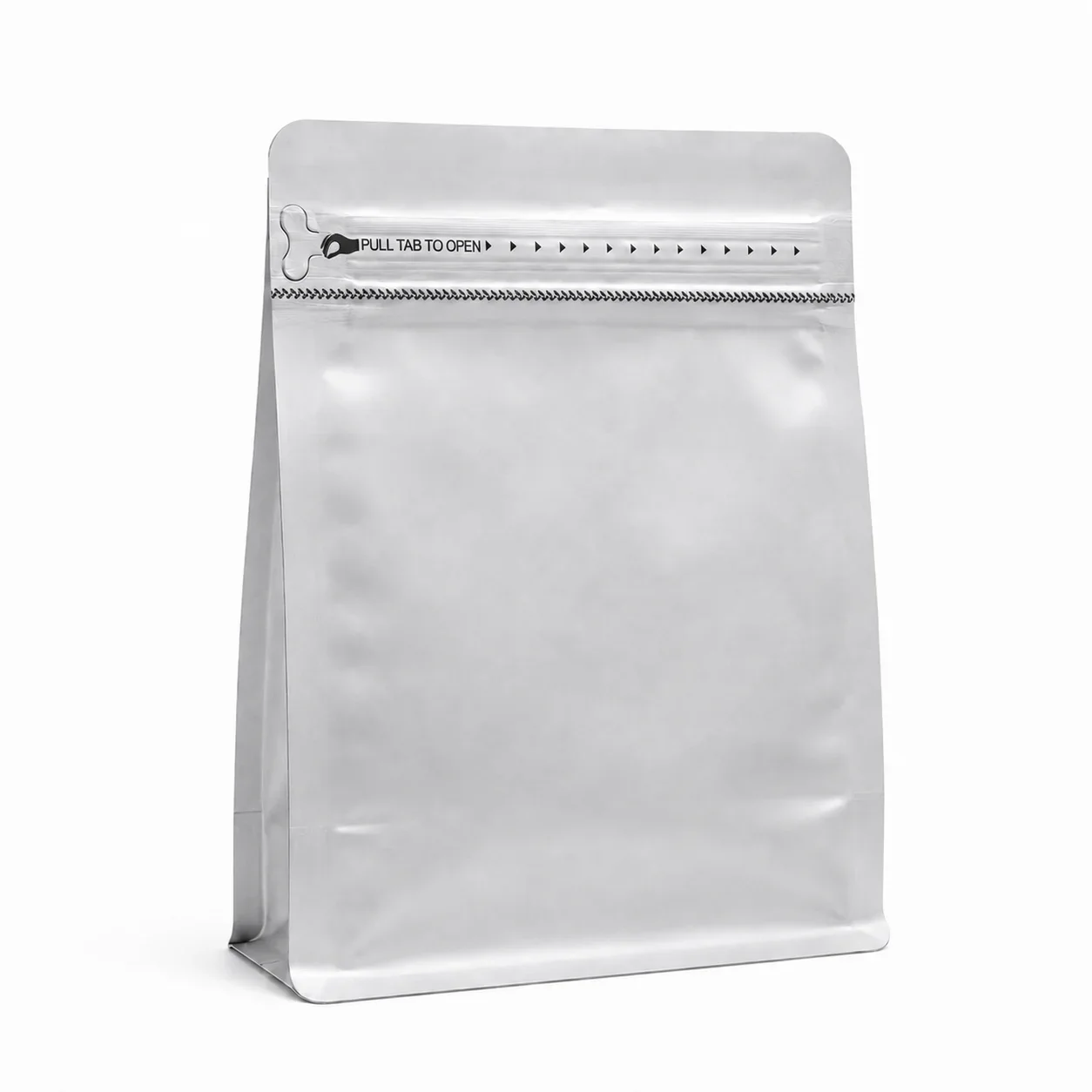
A four-side seal pouch is exactly what the name suggests: a pouch sealed along all four edges, with a flat front panel and a flat back panel. That single structural decision changes almost everything about the packaging — how much artwork you can print, how the bag behaves on a shelf, how it is filled, and what it costs per thousand units. It sits between the simple three-side seal pouch and the shaped, gusseted stand-up formats, and it is one of the most requested structures we quote for premium dry goods.
What a Four-Side Seal Pouch Actually Is
Two films are placed face to face and sealed on the left, right, top and bottom edges. Because there is no back fin seal, there is no visible seam strip on the reverse. The result is a pouch with two clean, fully printable faces and a very stable, flat profile. Flatness is the defining characteristic: the pouch does not bulge the way a pillow bag does, so it stacked neatly in a carton and presents consistently on a retail peg or in a display tray.
Why the Flat Faces Matter for Branding
With a pillow bag or a back-seal pouch, roughly a fifth of the printable surface is consumed by the fin seal, and the curvature makes fine text hard to read. A four-side seal pouch gives you two uninterrupted rectangular faces. That means more room for a full-bleed background, cleaner typography, and mandatory labelling that can be placed precisely where it will be read. For brands that sell on shelf presence — confectionery, sachets, sample packs, premium single-serve items — the extra printable area is the main reason to choose this format.
Structure, Materials and Barrier Choices
The structure follows the product. For dry snacks and confectionery, a two-ply PET/PE or matt-BOPP/PE build is usually enough. For coffee, nuts, dried meat or anything sensitive to oxygen and moisture, a three-ply PET/AL/PE or PET/VMPET/PE structure adds the barrier needed for a twelve-month shelf life — measured under a standard method such as ASTM F1249 for water vapour. Where recyclability is a priority, a mono-material PE or PP build keeps the pouch in a single recycling stream; we cover the design rules in design for recyclability, and CEFLEX publishes the industry design guidelines for recyclable flexible packaging. Very small sachets often use a lighter barrier because the fill weight and shelf life are short.
Where the Cost Comes From
A four-side seal pouch costs more than a three-side seal pouch for two reasons. First, four seals require more machine time and tighter registration, and the material lost to the seal area is larger. Second, because print quality is a core selling point, finishing options such as matt varnish, spot UV or a metallised base layer are frequently added. The per-unit premium narrows as volume rises, because the sealing and printing time is amortised across more units. Where a gusset or a flat bottom is not actually required, switching from a flat-bottom bag to a four-side seal pouch is often the cheapest way to get a premium look — flat bottom pouch costs are usually higher for the same fill weight.
Four-Side Seal vs Other Pouch Styles
Choose a three-side seal pouch when the product is small, light and price-sensitive. Choose a stand-up pouch when you need shelf-standing stability and a bottom gusset for volume. Choose a flat-bottom pouch when the product is heavy and must stand squarely at scale. Choose a four-side seal pouch when print area, flatness and a premium flat finish matter more than the lowest possible unit cost.
When a Four-Side Seal Pouch Is the Wrong Choice
It is a poor fit for products above roughly one kilogram, where a flat bottom is more stable. It is also inefficient when the pouch must stand unaided at retail, because without a gusset it will not. And it is over-specified for high-volume commodity filling where a pillow bag would do the job at a lower cost.
Specifying It Correctly the First Time
Send the fill weight, the product type, the required shelf life, the pouch dimensions in millimetres, the print coverage, and whether the pouch will be hand filled or run on an automatic line. With those six inputs a supplier can quote accurately on the first pass instead of after three sample rounds.
Talk to Us About Your Structure
If you are comparing pouch formats for a new product, contact our packaging team with your fill weight and shelf-life target and we will recommend a structure and a format. More pouch specifications and format options are listed on our pouch types page.
