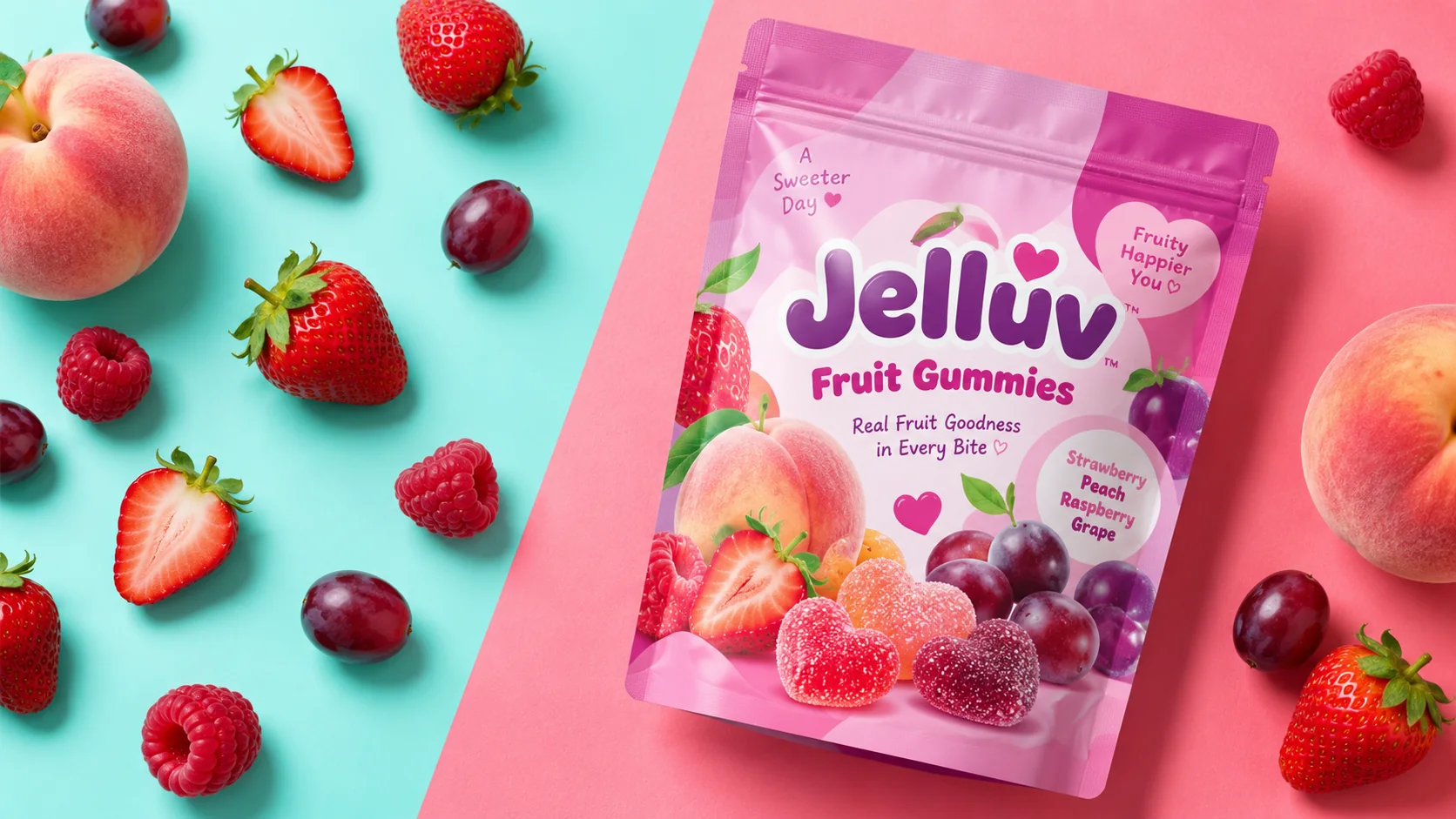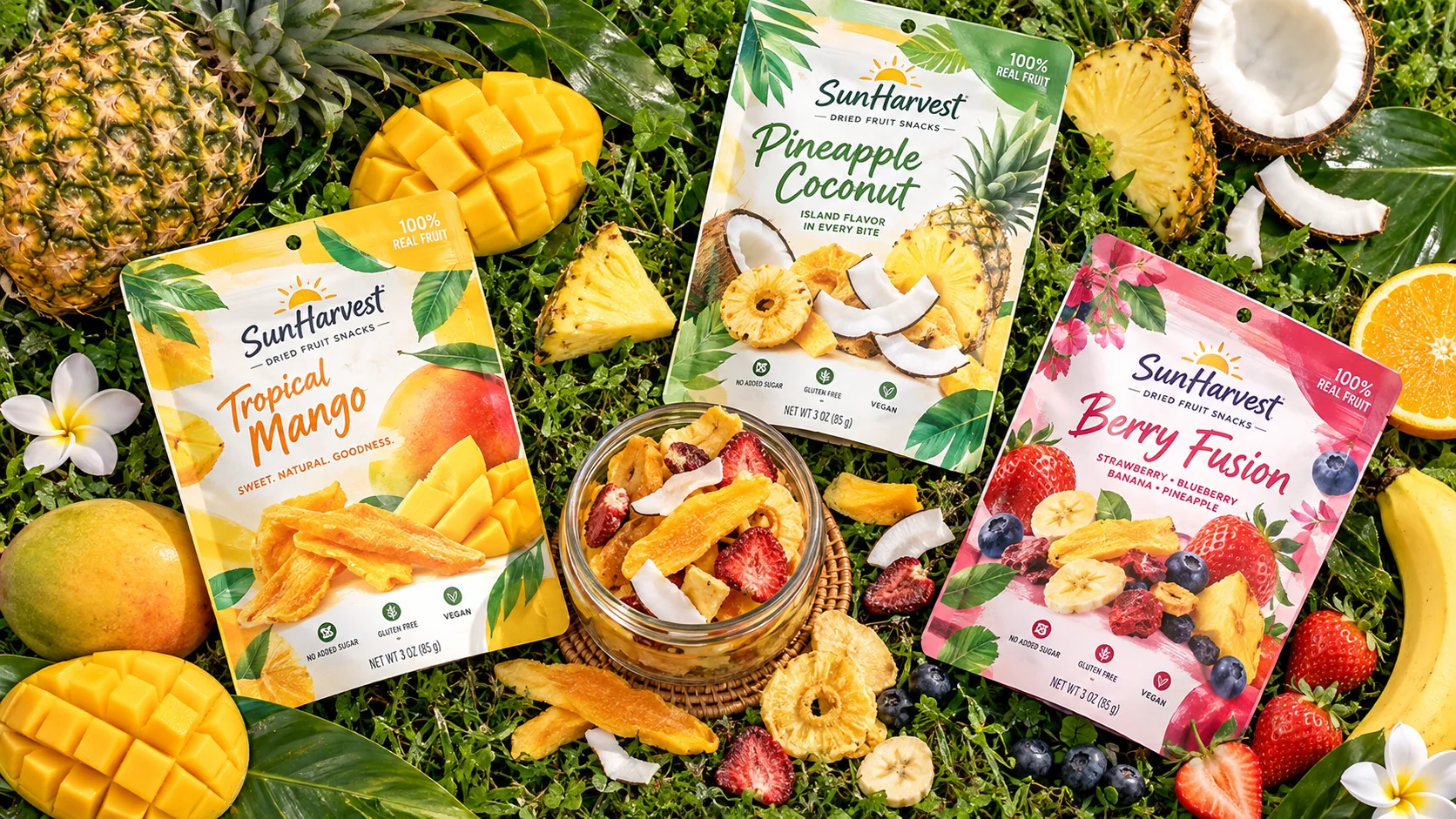
A useful specification begins with the recipe and the route to market. We want to know the measured water activity, acceptable texture change, piece shape, added oil, fill method and the climate in which the pack will be sold. That information is more valuable than asking for a vaguely defined ‘high-barrier pouch.’ Relevant formats can then be compared through PURESTPACK’s agricultural and dried-goods packaging and snack packaging pages.
Dried mango, pineapple rings and coconut chips often share a supermarket category, but they are not the same packaging job. Mango can become leathery or sticky as moisture moves. Coconut brings more fat—and therefore more concern about oxygen. A hard pineapple edge can abrade a pouch during shipping. Mixed fruit combines several of these problems in one bag.
Why moisture content alone does not define the packaging need
Two dried-fruit products can report similar total moisture yet respond differently during storage because water activity describes how available that water is for reactions and microbial growth. The USDA Agricultural Research Service explains that water activity is related to equilibrium relative humidity and is distinct from moisture content. Its reference table places dried fruit around a typical water activity of 0.60, but an individual product must be measured rather than assigned that value by category.
In practice, do not choose a pouch from “dried fruit” on the label alone. Measure the actual product, define its acceptable texture range and determine how quickly it changes under expected humidity. The USDA ARS water activity reference is a useful explanation of the concept, not a replacement for product data.
Start with the way the product is likely to fail
| Failure mode | What may drive it | What to evaluate |
|---|---|---|
| Texture becomes tough, soft or sticky | Moisture gain or loss; sugar migration; temperature | Water-vapor barrier, seal integrity, reclosure and climate-conditioned shelf-life tests |
| Flavor becomes stale or oily | Oxygen exposure; oxidation of product or added oils | Oxygen barrier, residual headspace oxygen, light exposure and seal leakage |
| Color darkens or fades | Light, oxygen, heat and recipe chemistry | Opaque versus clear structures, display conditions and product-specific stability |
| Pieces pierce or abrade the pouch | Sharp pineapple rings, hard coconut chips or compressed fill | Puncture and flex durability with production-filled packs |
| Seal is weak or contaminated | Sugar, oil or small pieces in the seal area | Filling path, sealant choice, jaw settings and seal-window trials |
Moisture control: test both humid and dry distribution conditions
A fruit snack sold into a humid coastal market may take up water and become sticky, while the same product in a dry climate can lose moisture and become harder. Packaging should limit movement in both directions to the degree required by the product. This is why a single “high barrier” claim is not enough. Development teams need a target water-vapor transmission rate, an agreed test condition and a shelf-life protocol that matches the likely supply chain.
Reseal design matters when the pack contains several servings. A zipper may reduce daily exposure, but its location, track design and resistance to fruit particles affect use. Run consumer-style opening and closing cycles with filled packs. Observe whether sugar or small pieces obstruct the zipper and whether the pouch remains stable while users remove a serving.
Oxygen and light: separate recipe risk from visual preference
Some dried fruits are mainly texture-sensitive; others contain lipids, added oils or color compounds that make oxygen and light more important. Coconut chips, for example, may require a different oxygen strategy from low-fat mango strips. Mixed-fruit packs inherit the most demanding relevant risk unless the recipe or shelf life is adjusted.
A clear window improves product visibility but creates a deliberate trade-off. Instead of assuming that every premium pack needs a window, compare a fully opaque structure with a limited window under actual retail lighting. If visibility is important, define the maximum acceptable window area and confirm that the clear portion provides the required barrier.
Choose the pouch around serving pattern and equipment
Stand-up pouch with zipper
This format suits multi-serve retail packs where shelf presentation and reclosure matter. Check bottom-gusset stability, zipper placement and the distance needed above the zipper for final sealing. The pouch should remain easy to open without forcing users to cut through the reclosure.
Three-side-seal pouch
A flat pouch is useful for samples, single servings and compact multipacks. It can reduce unused internal volume, but it does not stand on shelf without secondary support. PURESTPACK’s three-side-seal pouch overview explains the format; suitability still depends on the filling and final-seal process.
Rollstock for form-fill-seal lines
Rollstock can support efficient automated production, but film stiffness, coefficient of friction, curl, registration and hot-tack behavior must match the machine. Request a line trial at normal speed. A web that seals well during a slow setup may perform differently during continuous production.
Seal integrity deserves its own validation plan
Sweet, tacky and irregular pieces can interfere with the top seal. Review the drop path and headspace before increasing seal temperature. Excess heat can distort the package or narrow the operating window without addressing contamination.
ASTM lists flexible-packaging methods including D3985 for oxygen transmission, F1249 for water-vapor transmission, F88/F88M for seal strength and F1921 for hot tack. These methods answer different questions and use defined test conditions. Select those relevant to the package, record the conditions and agree on acceptance limits. See ASTM’s current paper and packaging standards directory.
How a dried-fruit pack is best developed
- Measure the product. Gather water activity, moisture, oil/fat content, piece dimensions and known sensitivities.
- Define acceptable change. Agree on texture, flavor, color and package-integrity limits rather than using “fresh” as an undefined goal.
- Describe distribution. Include seasonal humidity, temperature, altitude where relevant, case count, parcel shipping and retail lighting.
- Screen structures. Compare barrier, puncture, flex durability, sealant compatibility and transparency against the product risks.
- Trial the line. Evaluate feeding, forming, filling, seal contamination, hot tack, registration and normal production speed.
- Validate filled packs. Conduct shelf-life, leak, seal and distribution tests using production-representative samples.
What to include in the first supplier brief
- Fruit type, formulation, coatings and inclusion of oils or powders
- Measured water activity and moisture where available
- Piece size, sharp edges, target fill weight and desired headspace
- Target shelf life and sales regions
- Premade pouch or rollstock; machine details and expected speed
- Need for zipper, tear notch, hang hole or clear window
- Required food-contact documentation and test methods for the target market
A supplier can offer a more useful structure recommendation when these facts are available. Without them, the conversation tends to collapse into film thickness and price, neither of which predicts shelf life by itself.
Questions that come up in dried-fruit projects
What is the best packaging material for dried fruit?
There is no universal best material. The structure should meet the measured moisture, oxygen, light, puncture and sealing needs of the recipe for its intended shelf life and route to market.
Do dried fruit pouches need an oxygen absorber?
Not automatically. The need depends on oxygen sensitivity, residual oxygen, package barrier, pack volume and shelf-life target. Any absorber must be assessed as part of the complete food and package system and used in line with applicable requirements.
Can a clear window be used on a high-barrier dried fruit pouch?
Yes, if the clear window material and area still allow the finished pack to meet the product’s requirements. Validate the windowed construction rather than relying on the barrier value of the opaque panel.
Is a thicker pouch always more protective?
No. Thickness alone does not establish oxygen or water-vapor barrier, puncture behavior, flex durability or seal compatibility. Layer selection and converting quality matter.
The final decision should come from filled-pack trials, not from a material name on a quotation. When the product limits, test conditions and packing process are recorded clearly, the converter can solve a real packaging problem instead of guessing at one.