

Two Very Different Products Share One Name
Vacuum sealed bags are sold both in supermarkets for home kitchens and in bulk to food factories, yet the two are not interchangeable. A consumer bag and an industrial vacuum pouch differ in film structure, thickness, seal strength and the machine that closes them. Buyers who treat them as the same product usually end up with either weak seals on a commercial line or unnecessarily expensive bags in a home drawer. This guide separates the two so the right specification is easier to choose.
How Home Vacuum Sealing Works
Home vacuum sealers are usually external or “suction” machines. The user places food in a channel-style bag, closes the lid, and the pump draws air out of the open end before a single heated bar seals it. Because the vacuum is applied at the bag mouth rather than around the whole pack, the achievable vacuum level is moderate. Home bags are typically made of PE with a textured or embossed inner channel that lets air travel to the pump. They are thin, sold in retail rolls, and designed for short-term refrigeration or freezer storage measured in weeks rather than months.
How Industrial Vacuum Packaging Works
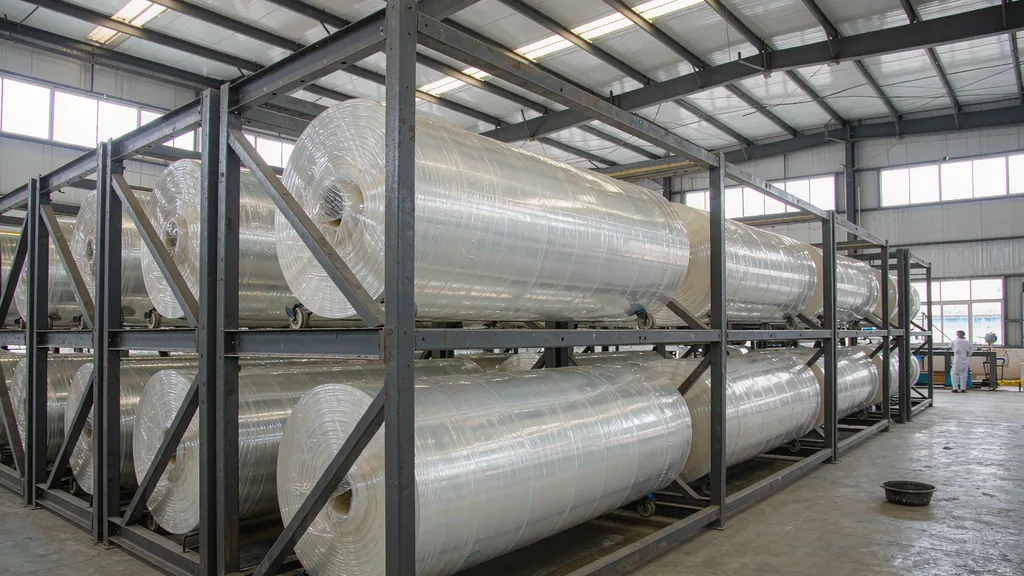
Industrial vacuum packaging mostly uses chamber machines, where the entire pouch is placed inside a vacuum chamber. Because the chamber is evacuated, air is removed from every direction and the vacuum level is much higher and more consistent. Industrial pouches are usually multi-layer laminates, for example PA/PE or PET/AL/PE, chosen for puncture resistance, oxygen and moisture barrier, and the ability to survive pasteurisation or retort where required. The film is thicker, the seal is wider, and the packs are built to hold food safe for months across chilled or ambient distribution.
Film Structure and Barrier
The clearest technical split is the film. Home bags rely on plain PE and offer limited oxygen barrier, which is fine for a home freezer but not for a product that must survive retail logistics. Industrial vacuum bags add nylon for toughness and, in barrier versions, aluminium foil or EVOH to block oxygen and light. If a product is oily, sharp-edged or bone-in, puncture resistance becomes the deciding property, and that alone pushes the specification away from anything sold on a retail shelf. Sealing performance also differs: industrial lines need a broad, strong seal that holds under vacuum and handling, while a home sealer only has to close one end.
Machines, Seals and Consistency
Machine type drives consistency. A chamber machine gives repeatable vacuum and seal parameters, which matters when thousands of packs must look and perform identically. External home sealers vary with how the operator loads the bag, so results differ from pack to pack. For anyone scaling from a kitchen operation to light commercial production, the practical step is to move to chamber sealing and a laminate pouch, rather than to keep using retail bags on a stronger sealer. The same logic applies to resealable formats, where the choice between zipper types and seal strength is covered in our guide to selecting zipper pouches.
Cost, Waste and the Recycling Question
Home bags are cheap per unit but are not built for reuse across many cycles, and their thin single-material film is often not collected for recycling. Industrial pouches cost more but use less material per pack of food because they extend shelf life and cut spoilage, which usually dominates the total cost of ownership. Multi-layer laminates, however, are hard to separate, so end-of-life recyclability is limited, a challenge we examine in our article on why flexible packaging recycling rates stay low. Where recyclability matters, a mono-material structure may be worth the trade-off in barrier performance.
Which One Should You Buy
For a home kitchen, a retail vacuum sealer and its textured PE bags are the right answer: simple, inexpensive and adequate for weeks of freezer storage. For a food business that needs consistent vacuum, longer shelf life and pack-to-pack reliability, an industrial chamber machine and a laminated vacuum pouch are the correct choice. The mistake to avoid is mixing the two, using retail bags on a commercial line or paying for barrier laminates where a plain bag would do. Format and print decisions for the finished pouch, including structures such as four-side-seal, are set out in our guide to four-side-seal pouch structure and cost.
Bottom Line
Vacuum sealed bags for the home and for industry serve the same idea, removing air to slow spoilage, but they are engineered for different machines, shelf lives and budgets. Match the bag to the machine and the distribution channel, and the choice becomes straightforward. Need help specifying a vacuum pouch for your product? Contact our team to discuss film structure and sealing, or explore more at www.purestpack.com.
